Archival Note
Published in Dalit Voice (Vol. 22, Issue No. 20, 16 October 2003), this essay by V. T. Rajshekar intervenes in debates over the social and political composition of the anti-caste movement at a time when questions of Bahujan unity and electoral realignments were reshaping Indian politics.
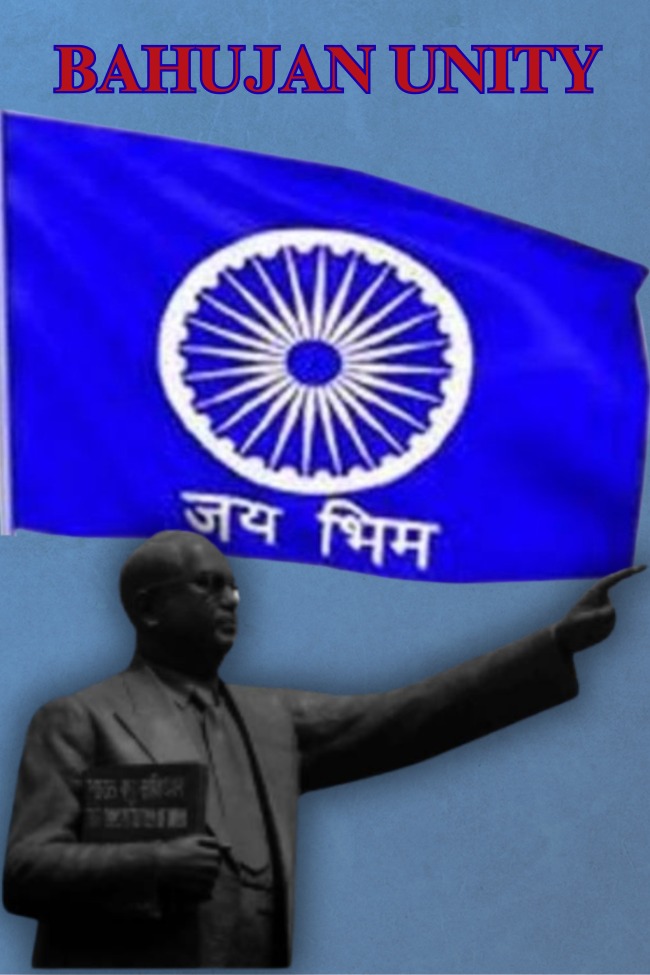
Rajshekar argues that the Brahminical Social Order, rather than the Backward Classes (BCs), is the principal adversary of Dalits. He contends that excluding BCs from the Ambedkarite movement weakens the struggle against Brahminism and calls for a renewed Bahujan alliance grounded in the shared emancipatory vision of Phule, Shahu, Periyar, and Ambedkar.
More than two decades later, the essay remains relevant as anti-caste politics continues to grapple with questions of coalition-building, social solidarity, and the relationship between caste oppression and political strategy.
Dalit movement will suffer if BCs are excluded
The one-line answer to the question, “Who is the enemy of Dalits?” is the Brahmins, not BCs, who are the natural allies of Dalits.
Both the Dalits and BCs are the victims of the Brahminical Social Order. The historical truth also must be considered that the BCs and Dalits are from the same stock. Of course, we cannot ignore the involvement of forward BCs in the atrocities against Dalits. Persons enacting the rule seem to be cruel because they are in direct touch, but the actual cruelty lies in the rule and the frames of the rule. The same thing is with BCs and the BSO.
So, I suggest establishing a positive relationship between Dalits and BCs because the root cause of the problem is not the BCs but the Brahminical system.
Dalits alone can save BCs: We have to remove the false Kshatriyatva from the minds of BCs. Of course, Dalits cannot say that it is not their duty. It is their duty because they are the pillars of the Ambedkarite movement. The Dalits, as leaders of the Indian revolution, must lead the BCs also.
Our duty is to generate attachment of BCs with the ideology of Phule-Shahu-Ambedkar. The first step for this is the detachment of BCs from the Brahminical fold. Of course, BCs cannot detach themselves. It is the Dalits who have to do this job.
Restricting the movement to Dalits will not only not help our movement, but it will take the movement backward. On the contrary, we will help the BSO only. Our movement is to abolish the BSO. One of the purposes of our struggle is this. Our target should not be any individual but the culture which creates individuals like Mulayam, Kalyan, Katiyar, and even Paswan. If you want to abolish the BSO, a major part of this system should get out from the BSO, and that major part is the BCs. By avoiding the relationship between Dalits and BCs, we cannot run the Ambedkarite movement. On the contrary, we put a question mark on Phule-Shahu-Periyar-Ambedkar’s mission.
Mulayam is a Hindu: It is a misconception that BCs cannot accept Dalit leadership. Jagjivan Ram did not accept the leadership of Dr. Ambedkar. That does not mean that Dalits did not accept the leadership of Babasaheb. Today, the movement is identified with the name of Babasaheb, not Babuji. So, you cannot generalize the relationship between Dalits and BCs by citing the example of Mulayam and Kalyan (both BCs), but we must understand that they are not accepted by all the BCs. Mulayam, Kalyan, and Paswan are driven by the Brahminical force. Mulayam and Kalyan do not accept the leadership of Kanshi Ram not because of their BC origin but because of their “Hindu mentality.”
Thakur-Brahmin alliance: A leader having the Indian Constitution in one hand and the Manusmruti in another must not be tolerated, even if he is a Dalit.
When Thakurs and Brahmins can join hands to save their BSO, why not Dalits join with BCs? Look how BC MLAs in the BSP have shown their loyalty to the BSP. None of the BC MLAs other than 3 Yadavs left the party (still there are 2 Yadav MLAs with the BSP). While 1 Nishad (ST) and 1 Khatik (SC) have left the BSP, BC MLAs like Rajbhar and Maurya are still with the BSP. Who says that BCs cannot accept Dalit leadership? In UP, Swamiprasad Maurya, BSP legislature party leader, and Sukhdev Rajbhar (chief whip of the BSP) are BCs. In UP, 90% of the Rajbhars vote for the BSP. Similarly, the Maurya and Nonia (BC) castes also cast over 70% of their votes for the BSP.
We cannot put a line between Dalits and BCs because such a division will be a division of ourselves only. Koli is a caste whose subcastes are in different categories: SC, ST, BC, and outside these categories, i.e., general. Where will such castes stand? A caste like Bhar is BC in UP, SC in MP, and ST in Maharashtra.
Psychological violence: We must understand the fact that the BCs are not oppressors. Rather, they are an instrument in the hands of the oppressive forces, the BSO. We must understand that psychological violence is more injurious than physical violence. We should learn something from dogs. If somebody throws a stone at a dog, it does not run after the stone but after the hand that throws the stone. BCs are like stones that are being thrown by the BSO mind. If we do not make them (BCs) part of our struggle, they will go more and more into the BSO camp. We must develop the culture of Bahujan Samaj instead of Dalit Samaj. We should learn a lesson from the collapse of the RPI. Without the BCs, Dalits cannot capture power in the true sense. The true sense means to capture power, retain it, and use it to preserve and propagate the ideology set by our forefathers.