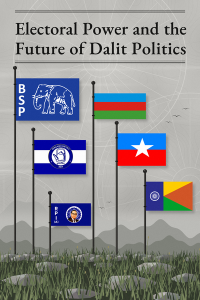
Electoral Power and the Future of Dalit Politics

Since February, a group of mostly lifelong BJP voters from the Brahmin community has been meeting in Lucknow to plan the party’s defeat in Uttar Pradesh. They have formed the Rashtriya Adhikar Morcha (RAM), led by former judicial officer Alankar Agnihotri, who resigned in February over the University Grants Commission’s proposed equity rules. Agnihotri has announced that RAM will contest 150 seats in the 2027 Assembly elections and possibly extend unconditional support to Mayawati’s Bahujan Samaj Party (BSP) in the remaining 253. The offer puts the BSP in an awkward position: a party established to challenge upper-caste dominance is being proposed as a vehicle for Brahmins disaffected with the BJP, and the proposal cuts against Mayawati’s stated preference for contesting elections independently.

In his speech “Two Serious Mistakes That Killed the Dalit Movement,” delivered at the BAMCEF Karnataka State Convention in Gulbarga on 22 November 2009, V. T. Rajshekar criticised the Dalit movement’s excessive concentration on electoral politics. The BSP, now courted by the community it was founded to oppose, shows where that concentration can lead.

On 29 January, the Supreme Court stayed the University Grants Commission’s Promotion of Equity in Higher Education Institutions Regulations, 2026, directing that the 2012 regulations remain in force while the legal challenge proceeds. The new rules followed a legal campaign initiated in 2019 for stronger protections against caste discrimination in higher education. Mayawati welcomed the stay, arguing that the UGC should have consulted all stakeholders and ensured adequate representation for upper-caste members on inquiry committees. Her position on the rules is close to Agnihotri’s own objection to them, which gives RAM one reason to look to the BSP.

Mayawati has spoken forcefully against caste discrimination when responding to particular incidents. On 14 August, she condemned the purification of a stage in Haldwani after Congress president Mallikarjun Kharge addressed a rally there, demanding action against those responsible. She also criticised RSS chief Mohan Bhagwat’s suggestion that beneficiaries who no longer need reservations should give them up. These interventions show that the BSP continues to invoke its anti-caste politics but has been notably absent from social movements that have defined the times.

Mayawati’s electoral strategy has increasingly centred on recovering upper-caste support. On her 70th birthday on 15 January, she said the BSP would contest elections independently, leaving open the possibility of future alliances if partners could transfer their votes to the party. She subsequently renewed her outreach to Brahmins, drawing on the BSP’s 2007 Uttar Pradesh victory, when it won 206 Assembly seats with 30.43 per cent of the vote. That coalition brought Brahmin voters into an electoral arrangement with Dalits under the slogan of Sarvajan politics. The strategy now faces a different political landscape. On 5 August, SP president Akhilesh Yadav said that the “P” in his PDA formula, originally standing for Pichhde, Dalit, Alpsankhyak (backward classes, Dalits and minorities), would also include Pandits. At the local level, however, Brahmin discontent with the BJP does not necessarily translate into support for the BSP. Brahmin voters distinguish their dissatisfaction with Narendra Modi from their views of Uttar Pradesh Chief Minister Yogi Adityanath. OBC and Scheduled Caste villagers described local Brahmin political dominance as a source of pressure on land and labour, including allegations that influential figures enabled below-minimum-wage payments and land seizures. The interests of Brahmin voters whom the BSP hopes to attract may therefore conflict with the demands of Dalit and OBC communities whose support the party also needs.

The BSP’s electoral decline has made the coalition issue more urgent. After the death of its lone Uttar Pradesh MLA, Uma Shankar Singh, on 5 August, the party was left without a representative in the state Assembly. It had already lost all its Lok Sabha seats in the 2024 general election, when its Uttar Pradesh vote share fell to 9.39 per cent, against the SP’s 33.59 per cent. Its organisational decisions have also exposed the concentration of authority around Mayawati. In September, she removed her nephew Akash Anand from his national convenor position and expelled him from the party, before appointing his younger brother Ishan to the post. After Akash apologised publicly on 2 October, Mayawati reinstated him and restored his position on 5 October. The repeated reversals have left senior party responsibilities dependent on Mayawati’s personal decisions. The BSP also failed to win a seat in the May 2026 Assembly elections in West Bengal, Tamil Nadu or Kerala, polling less than one per cent in each state. In Bihar’s 2025 Assembly election, it won one seat. Its response to the Special Intensive Revision of electoral rolls in Uttar Pradesh followed the same pattern of distance from other Opposition parties. The final roll, published on 10 April, contained 13.39 crore electors, down from 15.44 crore before the exercise; more than 2.04 crore names had been removed, while approximately 84 lakh were added during the claims-and-objections period. Mayawati called for more time to protect poor people and migrants from exclusion, but the BSP did not join the wider Opposition campaign against the revision. These developments point to a party whose electoral reach and organisational depth have contracted while its leadership remains committed to controlling its political direction independently. Rajshekar described this vulnerability in a movement that puts office ahead of institutions of its own.

Chandrashekhar Azad’s Aazad Samaj Party (Kanshi Ram) has pursued a different route, combining street mobilisation with electoral expansion. Azad first gained prominence through the Bhim Army, founded in 2015 to organise Dalit communities against caste discrimination and violence. His participation in protests against the Citizenship Amendment Act and National Register of Citizens, the 2020 Hathras case and other caste atrocities established him as a Dalit activist before he entered Parliament by winning the Nagina Lok Sabha seat in 2024 with 5.12 lakh votes. In July 2026, he announced plans for a political front outside both the BJP-led NDA and the INDIA bloc. His party subsequently named 45 constituency in-charges for the 2027 Uttar Pradesh Assembly elections: 18 from Scheduled Castes, 16 from OBCs, 10 Muslims and one Sikh. The composition signals an effort to build a wider Bahujan constituency. Mayawati has accused Chandrashekhar Azad of undermining the BSP and Bahujan unity, portraying him and other rival leaders as opportunists seeking political mileage from Dalit issues, while Azad has continued to raise issues concerning caste violence and the exclusion of marginalised voters. His trajectory shows how mobilisation outside electoral institutions can create a route into Parliament. Aazad Samaj Party must now turn Chandrashekhar Azad’s individual electoral presence into an enduring political organisation rooted in Dalit movements and capable of building a broader political base.

In Tamil Nadu, the Viduthalai Chiruthaigal Katchi (VCK), led by Thol Thirumavalavan, won two Assembly seats in the 2026 election as part of the DMK-led alliance. After Vijay’s Tamilaga Vettri Kazhagam (TVK) emerged as the single-largest party with 108 seats but fell short of a majority, reports citing VCK sources said the party had discussed seeking the deputy chief minister’s post for Thirumavalavan and cabinet positions for its legislators if it joined a TVK government. Thirumavalavan subsequently announced unconditional outside support for TVK, saying the aim was to prevent President’s Rule, while maintaining that VCK would remain in the DMK-led alliance and would not join the government. The shift from reported discussions over a share in power to support without government participation leaves VCK with a problem: how a Dalit party can translate its electoral presence into executive influence while preserving its independent political position.

In Maharashtra, Prakash Ambedkar’s Vanchit Bahujan Aghadi (VBA) has sought to rebuild its electoral position through alliances and legal challenges concerning voting rights. After winning no seats in the 2019 Maharashtra Assembly election or the 2024 Lok Sabha election, it allied with Congress for the January 2026 municipal elections but failed to win a seat in Mumbai’s Brihanmumbai Municipal Corporation or Nanded-Waghala; it won four seats in Latur. The party has also challenged Maharashtra’s Special Intensive Revision of electoral rolls. In October, the Bombay High Court deferred its hearing on a petition filed by two Mumbai residents, including VBA youth president Sagar Ramesh Gawai, after being told that related questions were before the Supreme Court. The petition sought safeguards against voter exclusion and an interim direction preventing deletions from the state’s rolls. Prakash Ambedkar has also urged Rahul Gandhi to bring opposition parties and organisations together to challenge the Election Commission’s process. Yet during the November 2024 Maharashtra Assembly election, he declared that the VBA would support whichever party or alliance could form the government, adding, “We will choose power!” This emphasis on access to power sits uneasily with his appeal for opposition unity around the electoral-roll issue. Rajshekar’s criticism of a movement that concentrates on office applies to this emphasis. If the VBA seeks to build an independent political force, its alliance strategy has to reconcile electoral bargaining with the causes it claims to represent.

Within the BJP-led NDA, Chirag Paswan and Jitan Ram Manjhi have clashed over how Scheduled Caste and Scheduled Tribe reservations should be distributed. On 29 August 2026, Paswan, the chief of the Lok Janshakti Party (Ram Vilas), demanded that Manjhi and his son, Bihar minister Santosh Kumar Suman, resign over their support for sub-classification and the creamy-layer principle. Manjhi, founder of the Hindustani Awam Morcha (Secular) and a member of the Musahar community, has argued that communities such as Musahars, Bhuiyas, Nats and Doms remain underrepresented and need a greater share of existing quotas. Paswan rejected sub-quotas, arguing that they would divide Dalits and weaken their collective position. In its August 2024 judgment in State of Punjab v. Davinder Singh, the Supreme Court permitted states to sub-classify SC and ST reservations on the basis of evidence of unequal representation.

Ramdas Athawale’s Republican Party of India (Athawale), another NDA ally, has called for any decision on sub-classification of Scheduled Caste reservations to follow the publication of caste census data. Athawale has argued that the population of individual SC communities should guide the distribution of Maharashtra’s 13 per cent quota, raising particular concerns about the Matang community. His position differs from Paswan’s opposition to sub-quotas. Athawale has also faced repeated disputes over the RPI(A)’s share of electoral opportunities within the BJP-led alliance. The BJP and Eknath Shinde-led Shiv Sena excluded the party from their seat-sharing agreement for the January 2026 Mumbai civic elections, prompting Athawale to accuse them of betraying the alliance; the RPI(A) subsequently fielded candidates independently in Mumbai. Ahead of the 2027 Uttar Pradesh Assembly elections, Athawale has demanded 25 seats for his party and said it would contest independently if an agreement with the BJP failed. His continued presence in the Union government has not secured his party a dependable share of electoral space, leaving it to negotiate its position with a much larger ally.

The fortunes of these parties unfold alongside a much wider field of Ambedkarite and anti-caste organising. At the University of Hyderabad, the Ambedkar Students’ Association (ASA) launched an indefinite relay hunger strike in May after the administration imposed a ₹5,000 fine on a student accused of assaulting and subjecting Dalit student Anuj Kumar to casteist abuse. ASA demanded the release of a fact-finding committee report and stronger disciplinary action, arguing that the punishment failed to address the seriousness of the allegations. Outside electoral politics, Dalit and Bahujan mobilisation has continued around the distribution of reservations, caste discrimination within institutions and access to land. In Maharashtra, Ambedkarite organisations representing 59 Scheduled Caste communities mobilised against the proposed sub-categorisation of SC reservations, demanding withdrawal of the Badar Committee report. In Bihar, the Aarakshan Badhao, Samvidhan Bachao Sangharsh Samiti marched in Patna to demand restoration of the 65% reservation quota struck down by the Patna High Court, alongside reservation in private-sector employment and government contracts. The All India Independent Scheduled Castes Association (AIISCA), led by Rahul Sonpimple, has taken the demand for private-sector reservation beyond individual states, announcing a nationwide campaign for reservation in private employment and private educational institutions. The issue of institutional accountability has also driven sustained mobilisation in Mumbai after IIT Bombay student Sahil Wakode’s death. AIISCA, Aamchi Padhai Aamchi Ladhai, the Progressive Students Union and the Samyak Vidyarthi Andolan have joined protests demanding an independent inquiry into his family’s allegations of caste discrimination and harassment. Activists formed a Justice for Sahil Joint Action Committee at Azad Maidan, taking the demand beyond the campus. Elsewhere, the Kula Vivaksha Vyatireka Porata Sangham and Dalit Shoshan Mukti Manch in Andhra Pradesh have mobilised over land rights and living conditions in Dalit settlements. Dalit Christians have organised around caste-based exclusion from state protections: on 10 August, organisations marked Black Day with protests demanding Scheduled Caste status. The Telangana Christian Joint Action Committee demonstrated at Jantar Mantar, while the Vellore Catholic Diocese SC/ST Committee, the CSI Church’s Vellore Diocese and the All Minorities Federation organised a protest involving more than 400 people in Vellore. These campaigns differ in their immediate demands, yet each has involved organised pressure on institutions and governments over decisions affecting Dalit and marginalised communities. Rajshekar asked for institutions of the community’s own; these campaigns mostly press existing ones.

The BSP’s decline and the relative irrelevance of Dalit parties more broadly sit alongside the continuing activity of anti-caste organisations, and the parties that have gained ground are those doing movement-style work. Together these point to a distinction between electoral strength and the capacity to organise politically. Electoral results show whether a party can win seats and exercise power, but they do not capture the ability of a movement to mobilise communities or force institutions to answer for caste discrimination. The BSP’s rise rested on an organisation that mobilised Dalit voters and brought other Bahujan communities into a wider political coalition. Its decline shows what happens when electoral strategy outlasts the organisational base that once sustained it. Azad, Thirumavalavan, Prakash Ambedkar and Athawale have pursued different routes to representation, from independent mobilisation to alliances with larger parties. Their trajectories however show the fragile possibilities of converting electoral presence into independent political power.

V. T. Rajshekar argued that electoral victories could not sustain a Bahujan movement without independent institutions and political education rooted in the community. The campaigns around reservations and caste discrimination suggest that social movements may offer greater scope for political change than electoral parties currently do. Dalit and anti-caste communities continue today to organise collectively and challenge the institutions that sustain caste, even as the future relationship between these movements and electoral politics remains unresolved.
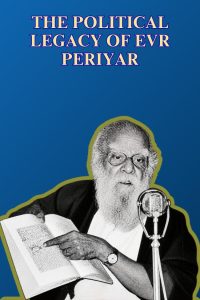
The Political Legacy of EVR Periyar

Archival Note

Published in Dalit Voice (Vol. 24, Issue No. 5, 1 March 2005), this essay by Rajendra of Ambedkar Pratishthana defends Periyar E.V. Ramaswamy against attempts to portray him as anti-Dalit. The essay recalls Periyar’s role in the anti-caste struggle, his break with the Congress and his relationship with Dr. B.R. Ambedkar. It asks the present generation to remember Periyar alongside Phule, Ambedkar and Shyam Sunder as part of the history of the anti-caste struggle.

The essay places particular emphasis on Periyar’s relationship with Ambedkar. It recalls Periyar’s efforts to bring Ambedkar into the Jat-Pat-Todak Mandal conference and the mutual respect between the two leaders. For Rajendra, Periyar’s importance lies in a politics of self-respect that directly challenged Brahminical social authority. He also presents Periyar within a wider Bahujan politics, arguing that Dalits and Backward Castes have a shared stake in fighting Brahminism. This makes the essay an important record of a political tradition that saw Ambedkar and Periyar as connected figures in the anti-caste movement rather than as representatives of opposing camps.

Published in September, the month of Periyar’s birth anniversary, the essay speaks to a contemporary tendency to divide anti-caste politics between Ambedkarite and Periyarist traditions, particularly in Tamil Nadu. That division can obscure the historical connections between the two movements and the different ways in which they confronted caste. Periyar’s emphasis on self-respect remains important because it locates caste oppression in the social relations and cultural authority that make hierarchy appear natural. His work also shows why anti-caste politics must challenge the ideas and institutions through which caste reproduces itself, alongside the struggle for political and legal rights. Revisiting Periyar through this history helps recover a broader anti-caste tradition in which his contribution and Ambedkar’s can be understood together without treating them as interchangeable.


Periyar E.V.R. As Champion Of Dalits

Periyar E.V. Ramaswamy is a leader of international repute and is hailed as a great thinker, reformer, revolutionary and humanist. The United Nations itself recognised this during his lifetime.

So any discussion on his sterling qualities and services to the oppressed people, victims of Brahminism, is ridiculous. Some Dalits under Brahminical influence have lately started branding Periyar as anti-Dalit. They should not be ungrateful to the extent of falsifying history itself. Dr. Ambedkar wanted his children to be sincere and truthful.

The present generation should know the history of their progress and the services and sacrifices of elders like Phule, Periyar, Babasaheb and Shyam Sunder.

Vaikom struggle: Periyar’s self-respect movement began in an aggressive way at Vaikom, in the present Kerala. It was on behalf of the Untouchable castes who were not allowed even to walk on a street right before a temple. Periyar rushed there and fought on their behalf.

This historic agitation led by Periyar attracted Muslim leader E.V.K. Abdulla and Christian leader Gorge Joseph. Gandhi, as a true Hindu, criticized Periyar for supporting the Untouchables. Sikhs came from Punjab and ran the free kitchen (langar). This will establish the truth of Periyar’s universal leadership.

Periyar was then arrested by the Trivancore state police and kept in prison for this agitation. Yet the agitation continued. Finally, the Untouchables won the right to walk on the road. This may not be a material gain, but a self-respect achievement for Untouchables. The agitation became famous as “Vaikom struggle”. Dr. Ambedkar wrote an Editorial about this historic achievement in his journal, Mooka Nayak.

Declaration to destroy Congress: The Congress, the original Brahmin party of India, passed a resolution in 1917 showing its concern for the welfare of Untouchables. M.K. Gandhi, the dictator of the Congress, claimed credit for this action of the Brahmin party. But the truth is Gandhi came to know about the British giving recognition to Untouchables and providing political rights based on the census of 1911, for which Prince Agha Khan was responsible.

From that day onwards, Congress started discussing social reforms in its sessions. But even such discussions were stopped when the Brahmins set fire to the Congress session pandal in Maharashtra. At the Madras session of the Congress, Periyar Ramaswamy, who was then an active worker of the Congress, forced a discussion on social problems, mainly Untouchability.

Rowdies engaged by Brahmins then dragged Periyar out of the pandal and thrashed him. Periyar declared on the spot that he would destroy the Congress in Tamil Nadu and he did it. The Congress is wiped out in Tamil Nadu.

Dr. Ambedkar respected Periyar: Dr. Ambedkar had great respect for Periyar and Periyar had respect for Dr. Ambedkar. It was Periyar who advised the organizers of Jat-Pat-Todak Mandal of Lahore, when they invited him to the conference, to invite Dr. Ambedkar, being a better person, well read, better informed and able to speak English.

Jat-Pat-Todak Mandal approached Dr. Ambedkar, who agreed and prepared a speech for the conference. But Gandhi planned his usual trick, which resulted in Dr. Ambedkar cancelling his engagement.

Later, Dr. Ambedkar got his speech published as a book, titled Annihilation of Caste.

Three greatest personalities: Some Dalit leaders are critical of Periyar just because he belonged to a Backward Caste. They also quote and misquote Dr. Ambedkar on the subject. They know only the title of this book. But they do not know the history behind this book.

Dr. Ambedkar always made it a point to meet Periyar when he visited Madras. One such visit was when Jinnah attended the Muslim League meeting at Madras. On this occasion, all the three greatest personalities of the day, Dr. Ambedkar, Jinnah and Periyar, met and discussed the Indian caste problem. A photo with these three taken during that meeting of the great statesmen is in my possession. Another important photo with me is of Periyar with the great Bheem Sena leader Shyam Sunder.

Birthday celebration in UP: Kanshi Ram is another great revolutionary of India. He organised the Bahujan Samaj Party which came to power in UP and celebrated Periyar’s birth anniversary.

Kanshi Ram knows who is who among the Bahujans. If Periyar had been anti-Dalit, as made out by some Dalits in Tamil Nadu, would India’s topmost Dalit leader praise Periyar? Similarly, our Editor has assigned the No.2 place to Periyar among the three greatest revolutionaries of “independent” India.

With all these facts, why do some Dalits call Periyar anti-Dalit? The mistake is not of Dalits but of the Backward Castes. It is easy to call it Brahminism.

The pity is the Backward Castes are the agents and foot-soldiers of Brahmins.

They ill-treated Dalits all over India, including Tamil Nadu, pushing Dalits to Islam at Meenakshi Puram 25 years ago. The BCs must mend their attitude towards Dalits, Muslims and Christians.

Dalits are duty bound to lead the entire Bahujan Samaj. That can be fulfilled only when BCs, at least the Most Backward Castes (MBC) like the barber, dhobi, potter, blacksmith etc., understand the importance of building Bahujan Samaj. Muslims and Christians also are distancing themselves from BCs. As an Ambedkarite, I call upon the BCs to join Dalits to fight Brahminism.

Periyar spent his whole life in this work for over half a century.

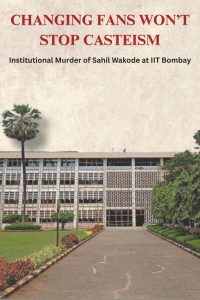
Changing Fans Won’t Stop Casteism: Institutional Murder of Sahil Wakode at IIT Bombay

There is a persistent, naive belief in India that premier engineering institutes are pristine spaces of pure meritocracy, immune to the social hierarchies of the world outside. The institutional murder of 22-year-old Sahil Ravindra Wakode at IIT Bombay violently shatters this myth. Sahil, a first-generation student from Yavatmal, entered IIT carrying the monumental hopes of his parents, who had endured lifelong socioeconomic deprivation. Academically stellar, with a category rank of 614 in JEE Advanced and an 8.5 CGPA in his first year, he was exactly the kind of brilliant mind these institutions claim to nurture. Yet, upon stepping into this elite campus, he encountered an environment engineered not for his intellectual growth but for his profound psychological alienation.


A Predictable Structural Output

What transpired on September 18, 2026, was not an isolated tragedy or an individual anomaly. It was the predictable output of a structurally casteist institution.

Data shared by IIT Bombay sociologist Prof. Suryakant Waghmore reveals a grim reality: between 2019 and 2023, of the students who dropped out of IITs, 56% were from the General Category, 25% OBC, 13% SC, and 5% ST. These disproportionate figures are the direct consequence of systematic, daily caste-based hostility. The mechanism of this exclusion is well-documented: marginalized students, often first-generation learners from rural or non-English medium backgrounds, are thrust into a hyper-competitive campus culture dominated by upper-caste privilege. A recent interim report by the National Task Force (NTF) explicitly noted that students from disadvantaged communities face severe isolation because they are routinely excluded from the dominant campus culture, failing arbitrary social “vibe checks” set by privileged peers. Ground reports reveal that Dalit and Adivasi students are frequently stigmatized as “reservation candidates,” alienated from informal peer study groups and subjected to constant indirect pressure and microaggressions from unsensitized faculty.

When academic struggles arise, this pre-existing environment of social boycott and lack of institutional mentorship compounds their stress into profound psychological trauma, ultimately forcing them to drop out simply to survive.

During a mid-term examination, Sahil was caught using his mobile phone to search for answers on ChatGPT. Under extreme academic stress, this is a disciplinary infraction that warrants standard administrative recourse. Instead, the invigilator, Prof. Suryanarayan Doolla, allegedly bypassed procedural norms, subjecting Sahil to profound public humiliation and threats of immediate expulsion. This hostility was not a sudden outburst. For three months prior, Sahil’s father alleged that Prof. Doolla had constantly taunted and humiliated Sahil over his caste.

This tragic pattern echoes the institutional deaths of Darshan Solanki (2023) and Aniket Ambhore (2014), where internal mechanisms ultimately operated to shield the administration, and there is little reason yet to expect a different outcome this time.  In Solanki’s case, the 12-member internal committee headed by Prof. Nand Kishore shamelessly blamed his death on ‘poor academic performance’ and ‘aloofness,’ deliberately ignoring multiple testimonies and prior SC/ST Cell surveys that documented severe caste-based alienation on campus. Similarly, after Aniket Ambhore fell to his death, the A.K. Suresh Committee report recorded that professors had humiliated him for being a ‘category student’ and suggested he belonged in a ‘normal’ engineering college. Rather than penalizing the offending faculty, the institutional response minimized this overt casteist violence as mere ‘academic pressure,’ protecting the institution’s reputation at the direct expense of truth and accountability.


Administrative Deflection: Individualizing the Systemic

The administration’s immediate reflex was to criminalize Sahil, reducing a systemic failure to a singular moment of student misconduct. Within hours of his death, IIT Bombay hastily issued a statement explicitly accusing him of copying via AI, feeding a convenient “cheating” narrative to the media. When student outrage erupted over this blatant lack of empathy, the administration deleted the statement, only to issue an apology days later on X (formerly Twitter) which admitted it was ‘inappropriate’ to characterize details before investigations concluded, stripped of any meaningful accountability.

CCTV footage from the exam hall and hostel lobby entered the public record as part of the investigation. A source described the footage: between 12:30 and 12:45 PM, just minutes before the exam was to end at 1 pm, Sahil was seen bending and checking something in his pocket, after which Prof. Doolla was seen questioning him and taking him aside, away from other students. The same source said Wakode was then seen leaving the hall and, by around 1:25 pm, entering his hostel room, after which he did not leave again before he was found dead.

This timeline, once public, kept the story anchored to the exam-hall infraction: a student caught peeping at his phone, confronted by his invigilator, entering his room forty minutes later. What it does not show, and cannot show, is the three months of alleged caste-based taunting that preceded it. By foregrounding a visual record of the “cheating” moment while offering no equivalent documentation of the harassment the family alleges, the timeline reinforces the same individualizing frame as the administration’s original statement: it locates the cause of Sahil’s death in a single infraction rather than in a pattern of institutional hostility building for months.


The Crisis of Representation and Profound Isolation

The root cause of this unchecked harassment is the glaring absence of marginalized communities in positions of academic power. Out of 6,000 professors across IITs in the country, only 149 belong to Scheduled Castes (SC) and 21 to Scheduled Tribes (ST). This meager 2.8 percent vividly illustrates a reality of academic apartheid. Representation is an active structural antidote to institutional violence. When campuses lack Dalit, Adivasi, and Bahujan faculty, marginalized students are cut off from organic mentors who can decode their unique sociological realities and intervene before distress turns fatal. Without such allies in academic and administrative bodies, grievances of casteism inevitably hit a brick wall of apathy erected by an overwhelmingly upper-caste establishment, one that routinely lacks the sociological vocabulary to perceive caste violence, dismissing it as ‘individual merit failure.’ True representation breaks this cycle because faculty from oppressed backgrounds possess the institutional legitimacy to challenge biased disciplinary actions and dismantle the discriminatory peer dynamics and psychological isolation that force first-generation learners to internalize their trauma.

The systemic closing of ranks to protect upper-caste faculty is horrifying. Following protests by nearly 6,000 students, IIT Bombay merely removed Prof. Doolla from his post as Dean of Administrative Affairs, flatly refusing to suspend him from his active professorship. This distinction is a deeply sinister protection racket. By retaining his teaching, research, and departmental evaluation roles, the administration ensures that an individual accused of severe caste-based intimidation continues to wield life-and-death academic power over students in the very classrooms where these abuses occur. It signals to the campus that an accused upper-caste professor can be temporarily shuffled out of the public eye to defuse protests, while his systemic authority to grade, pass, or fail vulnerable students remains completely untouched. This ongoing structural proximity to power leaves marginalized learners utterly defenseless, trapped under the authority of the very educator accused of driving their peers to the edge.

In response to the criminal FIR filed under the SC/ST (Prevention of Atrocities) Act against Prof. Doolla, the ‘IIT Bombay Faculty Forum’ and the ‘IIT Delhi Faculty Forum’ rushed to issue coordinated defensive statements, framing Doolla as an educator ‘discharging his academic duties’ against a student accused of ‘academic malpractice.’ The IIT Delhi Faculty Forum audaciously condemned the massive student-led demonstrations, warning against what it termed ‘mob-driven behaviour’ that supposedly pressured the administration into taking action. This rhetorical framing is a cynical, institutional inversion of reality: it pathologizes student solidarity and legitimate political outrage as a ‘mob,’ criminalizing accountability while shielding an upper-caste professor from legal scrutiny. This collective closing of ranks exposes an ugly, protective arrogance: the system will ruthlessly safeguard its own elite status and shield its perpetrators at the direct expense of marginalized student lives.


Performative Gestures vs. Structural Remedies

Despite four students losing their lives under the tenure of the current Director, Prof. Shirish Kedare, the administration’s most heavily publicized “solution” to this crisis was a cynical architectural modification: removing ceiling fans from hostel rooms and installing wall-mounted ones. This administrative reflex lays bare a profound moral bankruptcy and an evasion of institutional responsibility. This shows a lack of comprehensive and considerate thinking toward student welfare. In the presence case, too, modifying ceiling fans treats only the final, terminal physical symptom of unbearable psychological distress, while leaving the actual, rotting disease, institutional casteism and unchecked faculty harassment, entirely untouched. This intervention operates on a perverse and absurd logic: it assumes that removing a mechanism of self-harm eliminates the profound despair that causes it, ignoring the toxic, hostile environment engineered by upper-caste hegemony that drives these brilliant minds to the edge. It is a hollow, paternalistic cosmetic fix designed solely to insulate the administration from legal liability and public outrage, substituting genuine, structural accountability with superficial tinkering that treats human lives as mere logistical inconveniences.

Nationwide, a staggering 171 students have committed suicide in IITs over the last 20 years. Altering the method of death while leaving the toxic environment intact is an insult to the lives lost. Real remedy cannot be found in performative, procedural gestures. The solutions must be structural and uncompromising:

Mandatory Anti-Caste Sensitization: Professors and administrators must undergo rigorous, mandatory anti-caste education to dismantle centuries-old biases, moving far beyond superficial paper compliance. This demand is a direct corrective necessitated by Prof. Doolla’s alleged conduct and the elite institutional immunity that protected him. Had rigorous anti-caste training been mandatory, the months of alleged casteist taunts, public humiliation in the exam hall, and the subsequent closing of ranks by faculty forums would have been treated as structural crimes rather than routine disciplinary exercises. Sensitization must dismantle the upper-caste impunity that allows figures in power to weaponize academic rules against marginalized students without administrative consequence.

Independent Investigations & Accountability: Internal inquiries are historically biased. Investigations into student deaths and allegations of caste discrimination must involve independent committees with external democratic representatives to ensure transparency, able to investigate faculty conduct and administrative attempts to shield those accused of misconduct. Their findings must lead to clear institutional action rather than being buried in internal procedures. No faculty body or administrative office should be allowed to investigate itself when students’ lives and allegations of caste discrimination are at stake.

Robust Mental Health Infrastructure: The emotional bankruptcy of these institutions must end. As demanded by the protesting students, there must be an independent audit of the Student Wellness Centre, the appointment of at least one counselor per hostel (or per 250 students), and 24/7 availability of trained psychiatrists equipped to understand the sociological realities of caste trauma. Students must be able to seek help without being treated as the problem or fearing consequences within the institution. Mental health support must recognise caste humiliation and discrimination as sources of distress rather than reducing every crisis to academic pressure.

True Representation: Aggressive and inclusive faculty recruitment policies must be enforced to bridge the 2.8% representation gap, bringing Dalit, Adivasi, and Bahujan voices into positions of academic authority. This cannot mean a few token appointments while decision-making remains dominated by the same social groups. Reserved positions must be filled and representation must extend to committees and positions with real institutional authority. Students should not have to navigate institutions where almost no one in a position of power shares or understands their social experience.

Until this arrogant system of so-called ‘merit’ acknowledges that its campuses function as exclusionary spaces for the marginalized, institutions like IIT Bombay will continue to fail their students. Accountability must be demanded, and the structural roots of casteism must be dismantled, so that no more students are driven to the edge by the very institutions meant to educate them.


Mujammil Shahin Siraj Shaikh is a Pune-based independent researcher and prospective PhD scholar examining structural inequality, public policy, and institutional power in modern India.

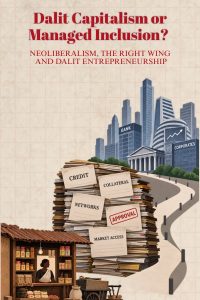
Dalit Capitalism or Managed Inclusion? Neoliberalism, the Right Wing and Dalit Entrepreneurship

Dr. Milind Kamble of the Dalit Indian Chamber of Commerce and Industry said in an interview, “Capital can break caste system… Market and money will defeat anti-capital Marx and Manu.”

His argument might seem attractive, but I disagree. Capital cannot break the caste system because the market is not casteless. It carries caste into every transaction that takes place before the consumer reaches the shop. Certainly, accumulation of capital can improve economic standing, especially among marginalised sections, but it absolutely will not defeat Manu or the caste system. Dr. Kamble is confusing individual economic mobility with the abolition of caste as a social and economic structure. His entrepreneurial agenda does not resolve the concerns that structure and constrain many lives. Who owns land? Who has collateral? Who can access networks? Who can survive a period without income? Who can get a loan without family wealth behind them? Who has the social connections to find suppliers, customers and contracts? And who is trusted when they walk into a bank, a business association or a potential partnership?

Although India, under the leadership of Dr. Manmohan Singh, entered a phase of economic reforms in 1991, opening its economy to liberalised and globalised economic spaces, the trajectory changed significantly since 2014. The post-2014 phase represents a particularly aggressive intensification of neoliberal policies combined with right-wing populist politics. This has manifested through the divestment of profitable stakes in publicly owned companies and their outright sale to private ownership. In post-2014 India, Dalits are being told, again and again, to become entrepreneurs. They are even invited into the market as borrowers, as start-up founders, as “self-made” men and women who can pull themselves up through grit and a bank loan. DICCI has given it a name, “Dalit Capitalism,” asserting that “caste and capital can never co-exist.” However, to assume that capital accumulation can dismantle caste is to ignore how contemporary markets articulate and weaponise pre-existing social hierarchies to maintain structural stratification.It produces hierarchical adverse inclusion, in which Dalits are brought into the market, yet the structures that keep them subordinate remain untouched. This inclusion works through a predatory sorting mechanism where the market invites Dalit actors as economic agents while it simultaneously locks them into asymmetric low-tier commercial arrangements. Such low margin supply roles cannot challenge the pre-existing monopoly of dominant caste. As a result, entrepreneurship functions less as a pathway to mobility and more as a mechanism that reproduces existing hierarchies. Only a small minority are able to move upward through episodic access to capital and networks.

The mix of neoliberal economic policy and right-wing Hindutva politics has reshaped Dalit entrepreneurial inclusion in three connected ways. First, it encourages Dalits to see themselves as entrepreneurial subjects without redistributing land, capital, or other assets. Second, it expands formal credit on paper while leaving caste-structured barriers like collateral, networks, documentation, and bias firmly in place. Third, it depoliticises caste inequality by wrapping it in the language of opportunity, merit and self-help. In this setting, credit and entrepreneurship schemes work less as tools of emancipation and more as mechanisms of managed inclusion within an order that remains deeply unequal.

There is a mutual relationship between right-wing politics and neoliberalism that produces a strong ideological hegemony. On one side, neoliberalism generates social and economic crises that produce grievances, job scarcity, and financial uncertainty, which right-wing populism mobilises politically. Populist politics reinforces neoliberalism by creating doubt and controversy around the causes of economic insecurity, while directing public attention towards cultural and political conflicts rather than the material failures of capitalism. Through this, it delegitimises progressive economic alternatives, framing structural challenges to the free market as corrupt, globalist, or anti-national threats. Pühringer and Ötsch (2018) conceptualised this as a loop that constructs a binary worldview, effectively reorganising societal conflicts by splitting them into two polarised groups. In India, those two groups are the Hindu majoritarian masses versus the progressive dissidents and minority outsiders. Under the Bharatiya Janata Party, a right-wing Hindutva government that fiercely encourages privatisation and entrepreneurship, it is crucial to understand exactly where Dalits stand in the political economic landscape of India. Because the state is pushing for Dalit entrepreneurship by reframing credit and start-ups as the ultimate pathways to empowerment, the populist discourse successfully depoliticises caste inequality, shifting the burden of survival from the state onto the isolated individual.

A central feature of India’s material economy is the unequal distribution of assets. Around 58.4% of rural Dalit households reportedly do not own agricultural land, while at the individual level, around 71% of Dalits work as landless agricultural labourers, cultivating land owned by the dominant caste. The concentration of landlessness is particularly severe in states such as Punjab, Bihar and Haryana, where more than 85% of Dalit households reportedly own no land. At the same time, under the neoliberal policy reforms by the BJP government, the public sector enterprises that historically provided secure jobs with SC/ST-focused affirmative action are being aggressively privatised, and Dalits are being shifted to informal employment. Dalits and Adivasis account for over 40% of seasonal migrants, despite making up just 25% of the total population. In India, short-term labour migration is seven times more common than permanent relocation, and this gap widens to 16 times for these specific communities. Furthermore, these workers are frequently forced into the most dangerous, physically demanding, and toxic jobs in the country.

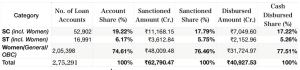
Over the years, the government has launched multiple schemes to provide credit through loans to SC/ST persons, focusing on entrepreneurial activities. For example, through Stand-Up India (2016), it aimed to provide loans of up to ₹ 1 crore to SC/ST and women entrepreneurs. National SC/ST Hubs were formed to give them market access, help with procurement, and training. A special credit-linked capital subsidy is also in place. However, official data presented by the Ministry of Finance compiled by SIDBI (Small Industries Development Bank of India) shows a contrasting view. While Stand-Up India has sanctioned over ₹ 62,000 crore in loans to around 2.75 lakh beneficiaries since 2016, only about 1/5th of these loans has reached SC/ST entrepreneurs with the majority going to general category women.

Table 1: Stand-Up India disbursements by social category, based on Department of Financial Services data.

From 2016 to 2025, around 22.49% of all money disbursed under the Stand-Up India scheme went to SC and ST entrepreneurs together. There are also high documentation requirements and margin requirements of up to 25%. This clearly indicates that even when formal credit is available, structural barriers like collateral, networks, and bureaucratic delays filter most vulnerable Dalit applicants out. Because of the lack of traditional collateral, 82% of Dalit borrowers rely on informal lenders and high-interest borrowing parties.

Furthermore, MUDRA Bank (Micro Units Development and Refinance Agency Bank), formally established in 2015, is a prominent credit scheme of the incumbent government, but the data exposes the structural limitations of the institution’s reality that the government does not want to focus on. Around 51% of MUDRA accounts belong to SC/ST/OBC categories. However, the way these accounts are divided is staggering. Over 70% to 80% of all MUDRA loans fall under the “Shishu” category (under ₹50,000). A loan of ₹30,000 or ₹40,000 cannot build a competitive, wealth-generating start-up. It can only buy a fruit cart, a sewing machine, or open a tiny roadside tea stall. Effectively, such amounts are more suited to small-scale livelihood activities than to building a competitive, wealth-generating enterprise. The state celebrating “start-up culture” is actually promoting necessity entrepreneurship, a term for entrepreneurship born out of an absolute absence of alternative employment options. A study by Jarwal and Kahal (2022) similarly finds that the growth of Dalit entrepreneurship as an impact of liberalisation policy can be positive; however, this has resulted in a proliferation of very small business units, which are mainly engaged in survival activities. The study further states that most Dalit-owned enterprises were established out of the necessity to survive. This is because their owners did not get employment opportunities, and had they received employment opportunities, they would have been earning more than what they are currently earning through necessity entrepreneurship. This necessity entrepreneurship keeps people alive at a subsistence level, but it does not generate institutional capital or challenge upper-caste corporate monopolies. According to official Economic Census Data analysed by the Economic and Political Weekly (2025), 89% of rural and 72% of urban Dalit-owned enterprises are OAEs (Own Account Enterprises). Most do not grow into larger firms; they function primarily as a substitute for daily wage employment and household income to keep the family fed. For many Dalit entrepreneurs, entry into the entrepreneurial market is shaped less by the pursuit of a profitable market opportunity than by the limited availability of secure employment. Entrepreneurship therefore becomes a strategy for economic survival rather than a straightforward pathway to wealth creation. Thus, as scholars have already shown, market inclusion alone is not an explanation of Dalit economic empowerment.

Such divergent scenarios between governmental schemes and Dalit economic conditions make the market an unequal playing field. Along with the unequal access to financial capital, there is also a profound social imbalance: private capital in India does not operate through a socially neutral field, as a mathematical principle unaffected by social forces. Its allocation is shaped by historically embedded caste structures and institutions, concentrated among predominantly Baniya and other mercantile castes. Avichal Dhiwar, founder of 20th March Venture Pvt Ltd, said in an interview, “Despite having complete paperwork, we faced a lot of problems getting loans from banks. They made it so tough for us that we eventually realised that they had no intention of extending us any loan.” This clearly shows the need for a mandatory public credit system to prevent systemic market exclusion of marginalised entrepreneurs. However, even necessary government loans and other forms of financial assistance reach only 10% of Scheduled Caste (SC) units, clearly indicating credit starvation. Furthermore, traditional business chambers, such as FICCI and CII, and trade networks have historically been dominated by these mercantile castes, who hold a monopoly over market trust and proudly flaunt it. When massive corporate monopolies run into billions of rupees in bad loans (Non-Performing Assets), the state steps in to bail them out, absorbing the damage; here, corporate risk is socialised. However, when a marginalised Dalit entrepreneur seeks a micro-loan, the state forces them to take on immense personal credit risk in a volatile market without any state security. Rather than providing security against the risks generated by market participation, right-wing neoliberal policy increasingly encourages historically excluded groups to become market participants and assume responsibility for navigating those risks themselves. For marginalised communities such a market means “competition among wolves and lambs“, as mentioned by Dr. Ambedkar in States and Minorities (1947). As Fischer (2020) argues, social policy under neoliberal restructuring does not necessarily remove structural inequality; instead, policies designed to promote inclusion can produce what he describes as hierarchical or adverse forms of inclusion, in which marginalised populations are incorporated into markets while remaining disadvantaged within them.

For Ambedkar, this distinction was fundamental. Economic reform could not be separated from social reform. Opening the market does not create equality when the social relations governing access to that market remain unequal. Credit can provide an opportunity to enter the market, but it also creates an obligation to repay within an environment where access to assets, networks and stable markets remains highly unequal. Without control over credit, markets will become a field of monopoly and exploitation. An increase in privatisation also results in the government abdicating its responsibility to safeguard its citizens.

In Annihilation of Caste (1936), Dr. Ambedkar said,“The problem of the Untouchables is a unique problem… You cannot have economic reform unless you pursue social reform. … The division of labour under the caste system is not a mere division of labour. It is a division of labourers.” In the private informal sector, Dalits often work as low-tier subcontractors for larger firms, which is not empowerment in any politically, socially, or economically meaningful sense. Here, inclusion into the market happens without dismantling the structural barriers, such as caste networks, which keep Dalit businesses at the periphery. Therefore, targeted entrepreneurial policies under the right-wing government does not dismantle caste-based economic exclusion, but primarily facilitates Dalit participation within markets whose underlying structures remain unequal. The right-wing government is therefore simultaneously promoting Dalit entrepreneurship while leaving many of the structural conditions that constrain Dalit entrepreneurship intact.

What can be done?

Rejecting market participation because caste structures already shape the market and the inability of the government to safeguard rights is not a feasible solution. While under neoliberalism, individual entrepreneurship can function as a form of economic mobility; enterprise can be re-signified as a potent tool for collective social emancipation. Crucially, this social emancipation is not achieved through isolated individuals taking on personal liabilities in a structurally unequal market. Rather, it becomes possible only when market participation is backed by stronger public regulation of credit markets and corporate concentration, along with the development of independent, community-owned institutional capacities.

The government is meant to play a crucial role in enforcing existing policies requiring corporations, such as the policy requiring public sector undertakings (PSUs) to procure 4% of their supplies from SC/ST-owned micro and small enterprises, and entrepreneurs. They are also expected to provide concessional loans through the Venture Capital Fund for Scheduled Castes, etc. However, trusting the right-wing neoliberal regime to implement these policies sincerely or effectively is not realistic. Doing so would directly contradict its ideological alliance with corporate capital. Therefore, there is a need for counter-hegemonic power, where Dalit communities stop acting merely as scattered voters or isolated market actors and instead use their collective leverage to disrupt the system. This can be done by moving from individual credit risk to structural social democracy and by aggregating thousands of small Dalit producers into a large cooperative, so they gain bargaining power to compete against corporate monopolies. Sustained institutional action and litigation can also be used to document state non-compliance with procurement obligations and seek appropriate judicial remedies, including through PILs, while RTIs can be used to obtain the relevant records.

Finally, the Dalit community must construct its own autonomous institutional capacity to provide Dalit entrepreneurs with finance, information, mentorship and bargaining power. It will be a community-led ecosystem that integrates community-owned credit cooperatives, independent capital funds and digital business directories that pool resources to guarantee internal markets. These institutions would be unlike DICCI, which operates primarily as a networking hub within the existing structures of caste capitalism.

Building autonomous Dalit institutions does not absolve the state of its responsibility to safeguard rights and provide social security. Micro-loans alone cannot produce emancipation if they merely manage poverty without changing the conditions under which Dalits participate in the market.


Mrunal Madhuri Milind Dupte is a development economics researcher, anti-caste writer and public speaker working on inequality, Dalit and Buddhist economics.

Why India Has No Second Ambedkar

Archival Note

Published in Dalit Voice (Vol. 1, Issue No. 17, 16 June 1982), this essay asks why India has failed to produce intellectuals who can challenge the ruling order rather than serve it. Rajshekar treats intellectual life as a political question, arguing that knowledge has little value when those who possess it refuse to confront power.

The essay places this argument alongside Dr. B.R. Ambedkar’s critique of the Brahminical character of India’s intellectual class. Rajshekar argues that when the intellectual class is tied to caste interests, it becomes an obstacle to the destruction of caste. He also attacks the pressures that push intellectuals towards careers, awards, money and proximity to power, while dissenters are branded as dangerous or “controversial”.

The essay then asks why India did not produce another Ambedkar after independence. Rajshekar connects this to the loss of the limited space he believed Ambedkar had found under British rule, arguing that Dalits and other oppressed communities were left without protection from the ruling order after independence. The essay’s central question is therefore about the political purpose of intellectual life: what happens to a society when those capable of challenging its dominant ideas choose accommodation instead?


The Role of Intellectuals in Society

Every society, every country in the world is shaped and led mainly by its intellectuals. All those who are remembered by history are mostly intellectuals. An intellectual may not get instant recognition by society when alive, but in course of time the person’s greatness will be recognised and recorded on the pages of history. Because an intellectual and intellectual alone can help bring about socio-economic changes.

The Buddha, Plato, Marx, Rousseau, Lenin, Abraham Lincoln, Maxim Gorky, Bernard Shaw, Mao, Thiruvallavar, Mahatma Phule were all great intellectuals. It is intellectuals who not only think but make others think.

After Dr. B. R. Ambedkar, M. N. Roy, Periyar E. V. Ramaswamy and Ram Manohar Lohia, we have hardly produced any intellectual giants in India. India’s Ruling Class has been systematically corrupting any up-and-coming intellectual, and if anyone dares to defy, he is mercilessly crushed. That is why rarely one wants to show originality, innovation. So much so, India has gone into total intellectual bankruptcy.

The very fact that India has not received a single Nobel Prize after it became independent proves that we are a country of mediocre dwarfs. But we are never tired of boasting that we have the second largest scientific manpower in the whole world. If so, what are they doing? Why not a single one has made an international mark?

The one agricultural scientist who received the Magsaysay Award was later found to have got it after making a false claim. But even this man has now taken up a cushy job outside India. This is the disease with our intellectuals. One social scientist, considered very distinguished, is seldom in India and even when at home never rubs the ruling class lest it may upset his lucrative income. Scientists like Khurana have settled down in the USA.

All this is because our society and our value system do not believe in encouraging and promoting intellectuals. India’s Ruling Class wants to make its people surrender their judgement to it. Every intellectual is a suspect. It looks upon him as a source of trouble.

Some of the finest budding, blooming flowers of our society were shot dead, dubbing them as Naxalites. Any person who does not fall in line and conform to the established thinking is considered a threat to society. Dissent is disliked, nay, dangerous. Truth should not be spoken. And those who speak the truth will be branded as “controversial” persons.

Any number of organisations, both govt. and non-govt., are set up to watch and weed out such “dangerous” persons. Innumerable State and private awards are instituted to win over any brilliant writer, scholar, to pocket if not corrupt him.

Courage is an essential prerequisite to become an intellectual. He has to suffer and sacrifice, pay for his commitment. That is why intellectuals and intellectuals alone can lead a society or a movement. An intellectual can lead as well as mislead. But in India, very often our intellectuals have been only misleading the society.

Nobody has painted such an Indian situation better than Dr. B. R. Ambedkar, and things have hardly changed since he wrote it:

“Whether you accept the theory of the great man as the maker of history or whether you do not, this much you will have to concede that in every country the intellectual class is the most influential class, if not the governing class. The intellectual class is the class which can foresee, it is the class which can advise and give lead. In no country does the mass of the people live the life of intelligent thought and action. It is largely imitative and follows the intellectual class.

There is no exaggeration in saying that the entire destiny of a country depends upon its Intellectual class. If the intellectual class is honest, independent and disinterested, it can be trusted to take the initiative and give a proper lead when a crisis arises.

It is true that intellect by itself is no virtue. It is only a means, and the use of means depends upon the ends which an intellectual person pursues. An intellectual man can be a good man but he can easily be a rogue. Similarly, an intellectual class may be a band of high-souled persons, ready to help, ready to emancipate erring humanity, or it may easily be a gang of crooks or a body of advocates of a narrow clique from which it draws its support.

You may think it a pity that the intellectual class in India is simply another name for the Brahmin caste. You may regret that the two are one, that the existence of the intellectual class should be bound with one single caste, that this intellectual class should share the interest & the aspirations of that Brahmin caste, which has regarded itself the custodian of interest of that caste, rather than of the interests of the country.

All this may be very regrettable. But the fact remains that the Brahmins form the intellectual class of the Hindus. It is not only an intellectual class but it is a class which is held in great reverence by the rest of the Hindus. The Hindus are taught that the Brahmins are Bhudevas (gods on earth). The Hindus are taught that Brahmins alone can be their teacher. Varnaram Brahmano Guru. Manu says, “If it be asked how it should be with respect to points of the Dharma which have not been specially mentioned, the answer is that which Brahmins who are Shishthas propound shall doubtless have legal force.”

When such an intellectual class, which holds the rest of the community in its grip, is opposed to the reform of Caste, the chances of success in a movement for break-up of the Caste System appear to me very, very remote.”

A film actor like Amitabh Bachchan or actress like Hema Malini may have millions of fans, but the glamour is temporary. The moment the youth fades, the star sinks. A cricketer or sportsman is adored till his capacity lasts. A wrestler, boxer or a King Kong will be feared until his body strength stays.

A politician like Indira Gandhi or Reagan is adored until the person is in power. Remember, people used to avoid Indira Gandhi like plague when she was defeated by the Janata. Those with money come and go. No Tata or Birla is remembered by history. A beauty queen is glorified till her skin fades.

There is nothing permanent with stars, sportsmen, body-builders, political personalities or wealthy tycoons. But that is not the case with an intellectual. He is respected not only in his lifetime but even after that.

Kalidasa was simply a poet under King Vikramaditya, but the king’s name has faded, but not that of Kalidasa, India’s greatest Sanskrit writer. Sometimes an intellectual is respected and recognised more after his death. Karl Marx’s name will be there as long as history is there. So too Plato, Jesus Christ, Mohamed Paigambar, Lenin, Mao, Martin Luther King.

Progress of any country depends only on its intellectuals. They alone can lead, but in India, alas, our intellectuals have been only misleading the society because they have been impotent and corrupt. That is why they compromise.

Look at the courage of J. B. S. Haldane. He subjected himself to great physical pain by himself becoming a guinea pig of his experiments. Have we produced a scientist of his calibre?

Our scientists are spending their time not in laboratories but in air-conditioned offices, busy pushing files. Intellectuals of India have not given evidence of their courage, their independence of thought and conviction, which are the indices to judge an intellectual.

They are not courageous, because they are so preoccupied with selfish interests. That is why they migrate to foreign countries in search of cushy jobs. Prime Minister Indira Gandhi on June 3 is reported to have expressed concern over “brain drain of scientific talent.” But this is not the first time she and other top leaders are expressing such a concern.

What is the use of a brain that allows itself to be drained? Better not have such brains. What we want is brains with hearts, and such brains will rarely allow itself to be drained. Heartless brains are more dangerous than brainless hearts. Therefore, let the heartless brains go. India will in no way become poorer.

A true intellectual will not sell himself. He can never be bought. He can never seek power and ambition. He will speak the truth, come what may, even at the cost of his life.

The evil has triumphed in India and the country is drifting because our intellectuals do not speak up. So much so, the country has grown sick and its sickness is affecting the outside world as well. But our intellectuals are unperturbed. To them, their caste and cash is more important than the eternal pursuit of truth.

What is the use of learning and knowledge when it does not bring cash or power? Popularity does not depend upon one’s ability but other factors. “Success in life” depends not on learning but on bank balance. In such a society, what use is learning or intellectual pursuits?

Intellectuals are laughed at, despised. Why should we strain the brain when money can be made without it? This is India today.

If our intellectuals are corrupt and spineless, the masses are dumb, deaf and blind because of poverty and illiteracy. The latter are illiterate because they are poor. When they are preoccupied all the time in an endless battle of the belly, where is the time for them to think, even if thinking is possible?

If this is the position of the poorest, what about the educated, employed people who come from this very same revolutionary section, Dalits and other persecuted minorities? The tragedy with this section is they have become easy-going, pleasure-seeking. Not only that. A considerable number of them, particularly the educated Untouchables, hide their identity and turn into bumlickers.

Yes, there are a tiny section of conscientious people among them who are angry. Who wants to rebel?

“The world owes much to rebels who would dare to argue in the face of the pontiff and insist that he is not infallible. I don’t care for the credit which every progressive society must give to its rebels.” (Dr. B. R. Ambedkar, preface to second edition of Annihilation of Caste.)

Ambedkar, however, lived up to the definition of a rebel, an intellectual giant. But such of the rebels are spotted out and finished at the very initial stage. Those who have managed to escape and build up their leadership are recruited by the ever-watchful political parties.

So there is an all-round famine. No ruling class will produce a revolutionary. On the other hand, the revolutionary section is starved to submission by the ruling class.

This answers the oft-repeated question: “Why India has not produced a second Ambedkar?”

Babasaheb lived a major part of his life when India was under the British, who were benevolent rulers. Not only they gave us education, denied to us by Brahmins, but even gave us modern, Western knowledge.

Not only that. If there was any “freedom struggle” and some leaders like Gandhi and Nehru were able to fight the British, it was because of the knowledge they gained from the very British education and the encouragement they gave to fight for liberty and fraternity.

But for the British rule, which in fact meant a Christian rule, India would not have been what it is today. So Ambedkar, despite his open criticism of the British Government, got all the encouragement from the British.

Nobody criticised the British right on their face as Ambedkar did. They gave him all the facilities and also protected him against his enemies. They gave all-out encouragement and built up his leadership.

Once the British were out, Dalits & the persecuted minorities of India had none to protect them. They were virtually thrown to wolves. The independence that India got on Aug. 15, 1947 was the independence given to the high castes to exploit, which they could not do earlier so freely.

The lambs are bound and bundled and handed to wolves on a silver platter. That is the reason why after independence India did not get a second Ambedkar.

No honest, dedicated leadership is tolerated by these ever-watchful headhunters. This is the heinous role played by India’s intellectual class.

Relationship of Caste and Hinduism

Archival Note

Published in Dalit Voice (Vol. 29, Issue No. 03, 01/02/2010), this essay by V. T. Rajshekar examines Hinduism through the question of caste. He traces caste divisions to the Purusha Sukta and the Bhagavad Gita, then turns to the Manusmriti and its treatment of Brahmins, Sudras and women.

Rajshekar connects these religious texts to the oppression of Dalits and cites accounts of violence against Untouchables alongside condemnations of caste from writers and public figures. His argument leads to a direct question: if caste is part of the religious order Rajshekar identifies as Hinduism, can Hinduism exist without caste?

The essay closes by putting that question to the Hindu believer featured in the film that prompted Rajshekar’s article. How can Hindu faith be reconciled with the caste system? And if caste is rejected, what does that mean for the religious traditions that Rajshekar argues have sustained it?

Read the full piece here


British Anthropologist Details Barbarity of Hinduism

“Revelations: How do you know god exists”, is a film by Anthony Thomas (Channel 4). I saw this film on Aug. 16, 2009. I was particularly interested in what the Hindus had to say. I lived in India for 15 years and found their belief system very confusing. The Hindus as well as the others interviewed failed to show us how he knew god exists.

PART-1

The caste system & origins of Hinduism:

Hinduism is based on myth. Seven rishis overheard “wisdom” being spoken by the gods. This wisdom they passed on to mankind as the four Vedas:

  1. Rig Veda
  2. Yajur Veda
  3. Sama Veda
  4. Atharva Veda

The Rig Veda is our principal concern. It is a composition of 1,028 poems. But more of this later.

HINDU & GREEK GODS

33 crore gods:

According to Lord Winstone (April 17, 2006), the Hindus have about 330,000,000 gods. Shiva, one of the main gods, has 1,008 epithets. Most deities have consorts: Shiva’s wife is Parvati, Vishnu’s wife is Lakshmi and Brahma’s wife is Sarasvati. Mention must be made of two other important gods: Durga and Kali. Sitala is the goddess of smallpox. And the Hindu deity Devagana, it is believed, lives in the anus. And so on.

The Greeks also believed in gods and goddesses. The Greek philosophers found that the gods and goddesses resembled mortals too much and the “myths were nothing but human notions”.

Xenophanes who lived about the year 570 BC was the exponent of this view. There followed developments from a mythological mode to one based on experience and reason. The aim of Greek philosophy was to find natural rather than supernatural explanations for natural processes. The Greek gods and goddesses were then relegated to the realms of fiction.

But the Hindus, on the other hand, continue to believe in their gods and goddesses to this day. The Hindu belief that human beings are born unequal is based on a Vedic hymn called Purusha Sukta found in the fourth veda, the Rig Veda.

According to the Purusha Sukta, the social divisions into which all human beings fall are:

(1) Brahmins, the highest caste, (2) Kshatriyas, the warrior caste, (3) Vaisyas, the merchant caste and (4) Sudras, the working caste.

GOD CREATED CASTE SYSTEM

Outside this demarcation based on strict hereditary lines are the outcastes or Untouchables, who do not belong to any caste at all. They are called Dalits today. It was further confirmed by God Krishna in the Bhagavad Gita (4.13):

The fourfold caste was created by me by the different distribution of guna and karma.

It was finally codified by someone called Manu, the greatest lawgiver.

Who was this Manu?

Manu was born directly of the god Brahma and was hermaphrodite. The human race began from Manu and his family. (Romila Thaper: A History of India, p. 28).

HINDU LAWS OF MANU

Gidoomal and Thomson on p. 17 of their book, A Way of Life, say:

Manu represents the beginning. A semi-divine mythical creature; he is the first man, the first king of India, the first to light the sacrificial fire and the first and the greatest lawgiver.

Every Hindu man and woman is expected to follow the laws of Manu which came to be called Varnashrama Dharma or Manusmriti. They were written down about 200 BC. Hindus follow the laws of Manu to the letter even to this day. And what are some of the laws set by Manu for Hindus to follow?

Here are some taken at random:

(1) The Brahmins are the highest caste. They are the gods among humans.

(2) The drum, the illiterate, the low caste, animals and women must be beaten to make them fit.

(3) A woman must never be independent.

(4) The Brahmin is holy and has a claim to veneration even if he commits shameful deeds.

(5) A Brahmin is born as the highest on earth, the lord of all created things. Whatever exists in the world is the property of the Brahmin on account of the excellence of his origin. The Brahmin is indeed entitled to it all.

(6) The lord has prescribed only one occupation for Sudras (the lowest caste). They must perform service without malice to the other three castes.

(7) Those who educate Sudras will go to hell. A Sudra is unfit to receive education. The upper varnas or castes should not impart education or give advice to a Sudra. Violators will go to hell, called Asamvritta.

(8) If a Sudra (low caste) listens to a recitation of the Vedas (Hindu holy books), his ears shall be filled with tin or lac. If he recites Vedic texts, his tongue shall be cut. Only the Brahmins are entitled to receive the teachings imparted in the Vedas.

ATROCITIES AGAINST DALITS

It is difficult to credit the misanthropic effusions as law to this man who, it is said, was the son of Brahma, the supreme god. No wonder Indian women in 2000 AD

“publicly burned copies of the Manusmriti declaring that the text was misogynistic” (Introducing Hinduism, Lall & Von Lodon, p. 30).

Then there are millions and millions of people in India who have no caste at all. They are without caste because of sins committed by them in a previous incarnation. They are called outcastes or Untouchables. Today they are referred to as Dalits.

The effect of Manu on the outcastes has been devastating. From the time they are born till they die they suffer discrimination and humiliation at every turn of their lives.

GOD ORDERED HINDUS TO KILL DALITS

They have no redress. Here are a few examples of atrocities chosen at random which are committed against the Untouchables:

(1) 1969: India: A Million Mutinies Now by V. S. Naipaul (Viking): “In 1969, 40 Untouchables (Harijans) were burnt alive in a hut.”

(2) April 14, 1992: Commemorating the birthday of Dr. Ambedkar: “20 houses belonging to Untouchables were burnt at Kadalur village (80 km from Madras).” Reported by Henry Thiagaraj in The Wounded Society.

(3) June 18, 2000: The London Observer. “A picture showing a village of low castes (Untouchables) being massacred by high caste thugs in Bihar, India.”

(4) March 30, 2003: The Guardian: “A young lower caste woman was set on fire and burned to death yesterday by the upper caste father of the man she accused of raping her.”

(5) Dec. 16, 2005: Dalit Voice (magazine, p. 9). Gohana (Haryana) incident in Aug. 2005 when 60 Untouchable houses were burnt with police looking on.

(6) 2006: Indian National Bureau of Crime report. 27,007 crimes had been committed against Dalits. Many go unreported (See box):

In 1999, William Dalrymple, reviewing Robert Deliege’s book, The Untouchables of India, says in the London Sunday Times:

“Hindus actually believe god has authorised atrocities to be committed against these Untouchables.”

UNIVERSALLY CONDEMNED

Never in any part of this wide, wide world, whether savage or civilised, is systematic murder of human beings given such divine approval, except in India. Dalrymple goes on to say in the same review:

“In many high caste-dominated villages no Untouchable is allowed to ride a bicycle, sit down or even wear shoes in the presence of a high caste Hindu… Reported incidents of serious violence against Untouchables run at about 9,000 cases annually and this is the tip of the iceberg”.

The caste system of which untouchability is the indispensable part is integral to Hinduism.

‘….those whose conduct has been evil will quickly attain evil birth, the birth of a dog, the birth of a hog, or the birth of a Chandala (Untouchable).

Chandogya, translated by Dr. S. Radhakrishnan and quoted by Pratima Bowes in her The Hindu Religious Tradition (p. 57).

The caste system and especially untouchability is universally condemned.

(1) Dr. Karan Singh, a leading Hindu thinker, in his Essays on Hinduism, quoted by Gidoomal & Thomson (p. 9), described the ill-treatment of Untouchables “over the centuries as a standing disgrace”.

(2) Pratima Bowes, The Hindu Religious Tradition (p. 17): The opinion (is) often expressed that the caste system is the centre of the Hindu religion and that the breakdown of this system means the end of this religion.

(3) Caspar Melville, editor of the New Humanist, Nov. 2005 (p. 19), is “against the caste system, the subordination of women and the invested power of the Brahmin”.

(4) Buddha to Manmohan Singh: The caste system has been condemned by writers and reformers from Buddha, Akbar, Mahatma Phule, Periyar, Gora, Tilak, Guru Nanak, Mahavira, Tukaram, Ram Mohan Roy, the Bhakti movement of Southern India to Manmohan Singh, the Prime Minister of India, and countless others.

(5) Jawaharlal Nehru in Glimpses of World History (p. 112) says: “The caste system had the seeds of decay in it. It was based on perpetuating inequality and injustice and any such attempt was bound to fail in the end. No sound and stable society can be built upon the basis of inequality and injustice or on the exploitation of one class or group by another.”

BLEAK FUTURE OF HINDUISM

I give you three sources:

(1) Loon and Lall: Introducing Hinduism (p. 127):

As knowledge of India grows around the world: Bollywood, Indian fashions, Indian classical music, tandoori cooking and India’s famed gurus Hinduism will come under increasing scrutiny.

On p. 161, they go on to say:

Secular Indians and many others with a humanist vision think of the future of India as bleak.

(2) Ram Gidoomal & Robin Thomson in A Way of Life, (p. 150) say:

Whoever is in power, the tensions over caste and class will continue.

(3) Nirad Chaudry in his Preface to Hinduism (p. XI) says:

I have lost faith in the tenets of Hinduism, indeed in all established religions long ago.

CONCLUSION

Hinduism without the caste system is like Hamlet without the Prince.

I would like to ask the Hindu believer in the film wrapped in saffron robes and daubed in symbols of Hindu piety how he could reconcile his Hindu faith without the caste system.

CERD Flags State Violence and Systemic Discrimination Across India

The UN Committee on the Elimination of Racial Discrimination (CERD) has raised serious concerns over the treatment of some of India’s most marginalised communities, including Dalits, Adivasi and tribal peoples, Rohingya, Bengali-speaking Muslims, migrants and asylum-seekers. Its findings follow the first review of India by the Committee since 2007 and examine the country’s combined 20th and 21st periodic reports under the International Convention on the Elimination of All Forms of Racial Discrimination.

The findings were issued after CERD’s 118th session, which also examined Finland, Honduras and Kuwait. This was part of the Committee’s regular review of states that have signed the Convention. CERD’s concluding observations are not court judgments and do not have the force of law. They assess how governments are implementing their obligations under the Convention and identify areas where the Committee finds serious problems.

In India’s case, CERD raised concerns spanning caste, ethnicity, religion, citizenship and policing. One of its gravest concerns was the alleged conduct of law-enforcement agencies towards Indigenous and Tribal Peoples, Scheduled Tribes, Scheduled Castes, particularly Dalits, ethnic and ethno-religious groups and non-citizens. CERD recorded reports of excessive force, racially motivated violence, extrajudicial killings, arbitrary and prolonged detention, torture, ill-treatment and sexual violence. It called for prompt, thorough and impartial investigations, with accountability where violations are established.

The reference to Dalits and Scheduled Castes also brings an older disagreement into the review. The Indian government maintains that caste should not be treated as equivalent to race or “descent” for the purposes of CERD. Its submissions nevertheless contain information on Scheduled Castes and Scheduled Tribes and measures intended to address their disadvantages. CERD’s treatment of caste within its examination of descent and discrimination places caste exclusion within the scope of the Committee’s scrutiny, even as the Indian state rejects that equivalence.

CERD also drew particular attention to Rohingya, Bengali-speaking Muslims, migrants and asylum-seekers. It noted an increase in law-enforcement operations involving these groups, particularly after a 2017 Home Affairs order and the April 2025 Pahalgam attack. Reports of police stops and identity checks based on racial profiling allegedly resulted in arbitrary arrests and detention, torture and other mistreatment. The Committee also raised concerns about deportations and forcible returns involving people who may require international protection.

During the review, CERD Country Rapporteur Stamatia Stavrinaki referred to independent monitoring that recorded more than 1,300 anti-Muslim hate-speech incidents in 2025, including recurring rhetoric attributed to senior officials. India’s delegation responded that legislation enacted in 2023 criminalises acts amounting to hate speech and hate crimes, with additional protections applying when offences target Scheduled Castes and Scheduled Tribes. It also pointed to freedom of religion as a constitutional guarantee.

But CERD’s observations focused on what these protections mean in practice. Alongside the government’s account of its legal safeguards, the Committee recorded concerns about discrimination, hate speech, violence and the conduct of law-enforcement agencies. It called on India to address hate crimes against Rohingya, Bengali-speaking Muslims, migrants and asylum-seekers, refrain from collective expulsions and ensure access to international protection. This includes respecting non-refoulement, the principle that people should not be returned to a place where they face a serious risk of persecution or other grave harm.

The findings also address citizenship and documentation. CERD noted the absence of adequate disaggregated data on Indigenous and Tribal Peoples, ethnic and ethno-religious groups, migrants, refugees, asylum-seekers and stateless people. It highlighted the categorisation of Bengali-speaking Muslims as “non-original inhabitants” and reports that they face more stringent scrutiny during National Register of Citizens verification. The Committee also noted that much of India’s available data on Scheduled Castes, Scheduled Tribes and refugees still derives from the 2011 Census, while acknowledging the delayed 2026 Census and its proposed collection of caste data through self-identification.

The treatment of Bengali-speaking Muslims in the NRC process raises a broader question about how citizenship is administered. CERD’s concern is not simply that documentation is required, but that particular ethnic and religious groups are reportedly subjected to different levels of scrutiny. In a political environment where Muslims are repeatedly cast as outsiders or demographic threats, administrative categories such as “non-original inhabitants” can acquire consequences beyond paperwork. The NRC thus becomes part of a wider system in which belonging is subjected to heightened state verification.

The concerns around Rohingya also sit within a longer history of UN scrutiny. A 2025 communication by UN Special Procedures carried allegations that deportation operations against Muslims, including Rohingya, intensified after the Pahalgam attack, involving raids, arrests, ill-treatment and forcible returns. Those allegations came through a separate UN process and were not findings by CERD or a judicial determination.

India is not a party to the 1951 Refugee Convention or its 1967 Protocol and has no comprehensive national refugee law. UNHCR therefore carries out protection-related functions for refugees and asylum-seekers in the country. This absence has become more significant alongside changes to India’s citizenship and immigration regime.

The Citizenship (Amendment) Act, 2019 was defended by BJP ministers as addressing the unfinished business or “wrongs” of Partition. Yet the CAA was not a refugee law. It created a religion-based route to accelerated citizenship for specified non-Muslim communities from Pakistan, Bangladesh and Afghanistan. It did not establish a general system of refugee protection based on persecution or the risk of serious harm.

And in 2025, Parliament enacted the Immigration and Foreigners Act, replacing four earlier laws governing the entry and treatment of foreign nationals. The new law consolidated the state’s immigration powers without creating a corresponding refugee protection framework. CERD’s call for protection against collective expulsions and respect for non-refoulement therefore comes alongside a strengthened legal machinery for controlling and removing foreign nationals, while India still lacks a dedicated process for determining who requires refugee protection. For Rohingya and other asylum-seekers, that leaves a basic question: what domestic procedure requires the danger they may face after removal to be considered before the state deports them?

India’s delegation, led by Solicitor General Tushar Mehta, defended the country’s legal framework and its claims of pluralism and equality. The government reiterated its position that caste should not be equated with race or “descent” under the Convention and pointed to legislation addressing hate speech and protections for Scheduled Castes and Scheduled Tribes.

CERD’s findings place those claims alongside reports of how state institutions operate on the ground. The Committee’s concerns cover law-enforcement violence against Dalits and Adivasi and tribal communities, anti-Muslim hate speech, racial profiling of Bengali-speaking Muslims and Rohingya, and the treatment of people whose citizenship or immigration status is under scrutiny.

For Dalit and Adivasi communities, and for Muslims and other minorities whose belonging is increasingly subjected to state scrutiny, the findings also expose how Hindu nationalism operates through state power. Caste discrimination, communal targeting, citizenship enforcement and policing are often treated as separate questions, even as they converge in the lives of communities whose relationship with the state is shaped by unequal power. CERD’s observations bring these questions into the same examination of discrimination and direct attention towards the institutions through which unequal treatment is carried out.

The Scaffolding of Ghosts: Metaphors of Precarity, Institutional Parasitism and the Dalit-Bahujan Guest Faculty in Indian Higher Education

“They take our sweat to cement the arches of their intellectual temples, but reserve the sanctuary for their own kin. We are allowed into the university only as day-laborers of the mind, expected to clean the dust of their theories and vanish before the sun sets.”

— Notes from an Unappointed Ad-Hoc Scholar


I. Introduction: The Ivory Plantation and the Underground Specters

The modern Indian university is not an agora of enlightenment; it is a meticulously landscaped plantation whose ivory towers are held upright by bamboo scaffolding made of invisible hands. If you walk through the marble corridors of Delhi University, the red-brick courtyards of Hyderabad, or the ancient stone arcades of state universities in Uttar Pradesh and Maharashtra, you will breathe an air thick with the incense of academic grandiosity. High-table seminars deliberate on post-colonial subalternity, international journals publish lavish treatises on “decolonizing the mind,” and vice-chancellors deliver pious speeches on national progress. Yet, step beneath the floorboards of this grand theater, into the subterranean basements where tutorial sheets are evaluated and attendance registers are marked, and you will encounter an army of specters. They are the Guest Faculty, the Ad-Hoc Scholars, the Temporary Lecturers—disproportionately hailing from Dalit, Bahujan, and Adivasi communities—who inhabit the university not as citizens of letters, but as unacknowledged day-laborers of the intellect.

To understand the crisis of the Dalit-Bahujan guest lecturer is to understand a sophisticated, modernized form of institutional untouchability. It is a system that does not banish the untouchable body from the temple of learning, but rather admits it on the condition that it remains eternally temporary, economically broken, and structurally voiceless. The old caste order barred the Shudra and Ati-Shudra from listening to the Vedas by pouring molten lead into their ears; the modern neoliberal-feudal university permits them to teach the Vedas, the Constitution, and Quantum Mechanics, but ensures that their monthly stipend of a few thousand rupees arrives six months late, without healthcare, without maternity leave, and with the permanent threat of instant dismissal at the end of every 120-day contract cycle.


IIA. The Reservation Bypass: How Public Universities Invented the “Academic Coolie”

For seven decades, the Indian Constitution guaranteed that public universities—the primary engines of social mobility for marginalized communities—would reflect the demographic reality of the nation through affirmative action (Reservation). However, the Savarna oligarchy that controls the levers of academic administration executed a masterstroke of systemic evasion. Rather than directly opposing reservations—which would invite constitutional penalties and street protest—they rendered the permanent faculty position an endangered species. By deliberately freezing regular recruitment for decades, university administrations created an artificial vacuum, which they then filled with temporary, contract, and guest faculty.

Consider the brutal arithmetic of this institutional fraud. When a university advertises a permanent Assistant Professor position, it is legally bound to apply the constitutional quota (15% SC, 7.5% ST, 27% OBC, alongside EWS). But when the university hires a “Guest Lecturer” or “Ad-hoc Teacher” to take the exact same classes, grade the exact same papers, and invigilate the exact same examinations, the reservation roster is blithely discarded under the legal pretext that guest teaching is “hourly engagement” or “contingent work.”


IIB. The Reservation Bypass: Institutional Anomie: Higher Education Disparity Data

  • 33%+ Sanctioned Faculty Vacancies Left unfilled across Central and State universities.
  • 50% Undergraduate Teaching Load Executed by guest, ad-hoc, and contract labor.
  • 4.2% SC/ST Full Professors Representation in premier institutions.

This is the Reservation Bypass Architecture. By shifting the bulk of teaching workloads onto unreserved, arbitrarily appointed guest arrangements, university syndicates have successfully preserved permanent professorships as exclusive fiefdoms of elite caste networks. The Dalit-Bahujan scholar who spent a decade earning a PhD from a premier central institution, publishing peer-reviewed papers, and passing the National Eligibility Test (NET), arrives at the university gates expecting the fulfillment of constitutional promises. Instead, they are directed to the guest room—a cramped closet under the stairs—and handed an hourly wage contract that pays less than the daily minimum wage of an industrial supervisor.


III. The Metaphor of the Academic Plantation: The Sugar Mill of the Mind

To capture the existential dread of the guest faculty, one must discard the sterile vocabulary of human resource management and turn to the literature of plantation economies. The guest scholar is the cane-cutter of the academic sugar mill. Every morning, they arrive at the campus with bundles of intellect harvested from nights of lamp-lit reading, only to feed them into the administrative crusher. The sweetness—the tuition fees paid by students, the accreditation scores (NAAC) awarded to the college, the university’s ranking metrics—is extracted by the administration to polish the institution’s facade. The leftover bagasse—the exhausted, underpaid, un-benefited human being—is swept out at the end of the term.

There is a cruel satire in how elite institutions market their commitment to social justice. A college will organize a national seminar on “Ambedkarite Hermeneutics” or “Post-Colonial Subalternity,” funded by public grants. The keynote speaker, a tenured professor enjoying a six-figure salary, housing allowances, and sabbatical privileges, will deliver an impassioned address on the plight of the marginalized. Meanwhile, the microphone is adjusted, the water glasses are refilled, and the attendance registers are compiled by a guest lecturer who holds a Doctorate in Marathi Literature, belongs to the Mahar or Matang community, and is wondering if their bank balance of ₹412 will stretch to cover next month’s room rent.

“We are asked to lecture on human rights in the morning and beg the clerk for our unpaid honorarium in the afternoon. The university teaches equality through our mouths while practicing feudalism on our throats.”

This paradox is structural rather than incidental. The tenured Savarna academic elite requires the guest faculty in the same way the Victorian aristocracy required domestic servants. The presence of a vast, desperate reserve army of unemployed and underemployed Dalit-Bahujan PhDs allows tenured professors to reduce their own teaching workloads, delegate tedious administrative drudgery, pursue prestigious foreign fellowships, and maintain an aura of Olympian intellectual detachment. The guest lecturer becomes the institutional sponge that absorbs all the friction, labor, and anxiety of the educational machine, allowing those above them to glide seamlessly through the realm of pure thought.


IV. The 120-Day Executioner: Contracts, Caste Privilege, and Psychological Castration

The contract structure of guest and ad-hoc appointments is designed with psychological precision to break the spirit of resistance. In many state and central universities, appointments are made for 120 days, 89 days, or purely on a “per-lecture” basis (capped at a paltry monthly maximum). At the end of every term, the guest faculty undergoes a symbolic execution: their contract terminates, their temporary library pass expires, and they are cast back into the abyss of non-existence.

To be re-appointed for the next term, the scholar must perform a ritual of submission. They must court the favor of Departmental Heads, College Principals, and Governing Body members. In a society where social capital is coterminous with caste networks, this ritual is deeply stacked against Dalit-Bahujan scholars. A Savarna candidate, connected through family ties, alumni networks, shared dietary habits, and cultural codes, effortlessly navigates the informal corridors of power. They engage in light banter over filter coffee or tea with the Principal, discussing shared acquaintances and theoretical inclinations. The Dalit-Bahujan candidate, lacking this inherited cultural currency, enters the administrative office carrying the heavy burden of historical exclusion, acutely aware that any slip of tongue, any display of political assertion, or even a lack of “servile deference” can result in immediate, unwritten blacklisting.

Satire turns into horror when one examines the “Interview Boards” for ad-hoc and guest panels. Every few months, thousands of scholars line up outside principal offices across university towns like cattle at an auction. They hold thick files containing books they have written, research articles published in Scopus-indexed journals, and certificates of national awards. They are called into the interview room for precisely 90 seconds. 90 seconds to justify ten years of doctoral labor. The committee members—often bored, scrolling through their smartphones—ask a superficial question, check the candidate’s last name (a transparent proxy for caste identity in the Indian context), and make a silent mark on their scorecards. The process is repeated term after term, year after year, converting vibrant young intellectuals into anxious, sycophantic mendicants.


V. The Political Economy of Silence: Why the Academic Subaltern Cannot Speak

Why do guest faculty not unionize and shut down the university until their demands for regularisation are met? The answer lies in the totalizing nature of their precarity. Tenured faculty can go on strike because their salaries are protected by civil service rules and UGC regulations. Permanent staff have trade unions, legal representation, and tenure protection. The guest lecturer has none of these shield walls.

If a guest teacher speaks out against administrative corruption, caste discrimination, or delayed payments, they are not served with a show-cause notice—they are simply not invited back next semester. No order is issued; no explanation is required. The phone simply stops ringing. Their name disappears from the timetable as quietly as a drop of water evaporating on a hot slate. This form of retaliation is clean, silent, and untraceable. It is the bureaucratic equivalent of an extra-judicial disappearance.

Furthermore, this precarious labor market actively fractures solidarity among the oppressed. When fifty Dalit-Bahujan PhD graduates are competing for two temporary guest slots paying a meager hourly wage, the university successfully pits victim against victim. Solidarity is replaced by a desperate, panicky competition for survival. The scholar who raises their voice against an unjust workload is instantly replaced by another scholar whose rent is due tomorrow and whose family is waiting for a remittance back in the village.


VI. A Personal Monologue: A Letter from the Shadows

Let me speak to you not as an abstract sociological voice, but as Mujammil Shahin Siraj Shaikh—a chronicler who has watched the brightest minds of my generation wither in the waiting rooms of higher education.

I have seen my friend—a man who spent six years translating obscure 19th-century anti-caste manuscripts, a scholar whose mind burns with the brilliance of a supernova—standing outside the account section of a state university in the scorching summer heat of June. He was not there to collect a research grant or a publication prize. He was begging a clerk, who was half-asleep under a whirring ceiling fan, to release his lecture fees for the previous semester—money that had been withheld for seven months because a signature on a voucher sheet was missing a middle initial. His mother in the village needed insulin; his landlord had threatened to lock his room by the weekend. In his pocket was a copy of Antonio Gramsci’s Hegemony and the Intellectuals, a book he had taught to fifty eager undergraduate students that very morning.

What does it do to a human soul to articulate theories of freedom, justice, and human dignity on the lectern, while living a personal reality of complete disenfranchisement? It creates a profound, tearing schizophrenia. The guest scholar lives in two worlds simultaneously: in the morning, they are “Doctor,” an authority figure guiding the next generation toward critical thought; in the evening, they are a pauper, calculating whether they can afford egg curry or must settle for plain rice to survive till the end of the month.

This humiliation is explicitly gendered and caste-coded. Bahujan women guest lecturers face a double furnace of oppression. They navigate not only the structural precarity of temporary contracts and caste bias but also the insidious sexual harassment and paternalistic condescension inherent in hierarchical university departments, where renewal of contracts is frequently dangled as a weapon of behavioral control by senior male academics.


VII. The Imperial Caste-Class Trap: Data, Statistics, and Structural Reality

The tragedy of the guest faculty is not a temporary glitch in an otherwise healthy educational system; it is the logical outcome of a neoliberal state colluding with a feudal social structure. Let us examine the national indicators that illustrate this structural betrayal:

  • Systemic Vacancies as Policy: According to official data presented in Parliament and AISHE reports, thousands of faculty positions remain vacant across Central Universities, IITs, and NITs. The vast majority of these unfilled posts belong to the reserved categories (SC, ST, OBC). By leaving these posts vacant under the pretext of “Non-Availability of Suitable Candidates” (NASC)—a notorious administrative euphemism used for decades to reject qualified Dalit-Bahujan applicants—universities fill the operational gap by hiring guest lecturers at a fraction of the cost.
  • The Economic Exploitation Ratio: A permanent Assistant Professor under the 7th Pay Commission earns a starting basic pay of approximately ₹57,700 plus allowances (totalling upwards of ₹85,000 to ₹1,000,000+ monthly). A Guest Faculty member teaching the exact same course load is capped at a maximum ceiling (often ₹50,000 in central norms, but frequently down to ₹12,000 – ₹20,000 in state universities), with zero pay during vacations, zero health insurance, zero Provident Fund, and zero annual increments. The university extracts 100% of the labor value while paying less than 20% of the cost.
  • The Psychological Toll: Studies on academic precarity show alarming rates of chronic anxiety, depression, and existential despair among ad-hoc and guest educators. When social identity (caste stigma) combines with economic instability, the result is an intolerable mental crucible. The tragic institutional suicides of scholars like Rohit Vemula and Payal Tadvi are merely the visible tip of an underwater iceberg of silent, slow-motion institutional violence inflicted on thousands of contract educators daily.


VIII. Reclaiming the Temple: A Call for Radical Academic Emancipation

We must strip away the romantic mythologies of the Indian university. The university is not a sanctuary of pure scholarship; it is a battleground of social power. As long as higher education relies on an underclass of disenfranchised, underpaid, and structurally vulnerable Dalit-Bahujan guest faculty, every degree awarded by these institutions is tainted by the sweat of unfree labor.

To dismantle this modern plantation system, we do not need incremental policy tweaks or patronizing sympathies from academic senates. We require radical structural restructuring:

  • Immediate Abolition of the “Guest/Ad-Hoc” Bypass: Higher education regulatory bodies (UGC, Ministry of Education) must mandate that any teaching position required for more than one academic term MUST be converted into a regular, permanent position subject to constitutional reservation rosters.
  • Equal Pay for Equal Work: Until regularisation is achieved, guest faculty performing identical teaching, evaluation, and administrative duties must receive equal hourly and monthly remuneration, along with full health coverage and seasonal pay continuity, in strict compliance with Supreme Court mandates on labor rights.
  • National Audit of Reservation Rosters: A high-powered, independent judicial commission comprising Dalit, Bahujan, and Adivasi jurists must audit the faculty recruitment records and vacancy distributions of all central and state universities to expose and penalize administrative manipulation of reservation panels.
  • Democratization of Departmental Governance: Departmental chairs and university committees must be stripped of arbitrary, unilateral power over contract renewals. Evaluation of teaching staff must be transparent, peer-reviewed, and protected against personal and caste-based bias.

Until these measures are implemented, the Dalit-Bahujan intellectual will remain a ghost in the machine—hired to teach the youth how to think, but forbidden from claiming a place to exist. But let the managers of the academic plantation take warning: ghosts do not remain silent forever. The scaffolding of precarity is rotting from within, and when it collapses, it will take the ivory tower down with it.


Mujammil Shahin Siraj Shaikh is a Pune-based independent researcher and prospective PhD scholar examining structural inequality, public policy and institutional power in modern India.

When the State Can Take Your Institution: FCRA and How the Civil Society Is Being Choked Financially

India’s Foreign Contribution (Regulation) Act was introduced in 1976, during the Emergency, to regulate foreign influence in Indian political life. The 2010 Act replaced that framework with a broader system for regulating foreign contributions to organisations and associations. Over time, FCRA has also given the state increasing power over whether organisations can access foreign funding and continue their work. The latest changes take that process further.

The Foreign Contribution (Regulation) Amendment Bill, 2026 was introduced in the Lok Sabha on 25 March and referred to a Joint Parliamentary Committee on 12 August. It is not law yet. The 2026 Rules, however, are already in force. Together, they significantly tighten the conditions under which organisations receiving foreign contributions can operate.

The Bill proposes a Designated Authority to supervise foreign contributions and assets after an organisation’s FCRA registration is cancelled, surrendered, expires or is not renewed. The Authority can take provisional custody of the foreign contribution and relevant assets. If the registration is not restored or renewed within the prescribed period, the assets can vest permanently in the Authority and subsequently be transferred or disposed of, with the proceeds going to the Consolidated Fund of India. The proposed framework also covers assets created partly from foreign contributions.

There is an important detail here. The principle of asset vesting is not entirely new. Section 15 of the existing FCRA already provides for the vesting of assets created out of foreign contribution when an organisation’s registration is cancelled or surrendered. What the 2026 Bill does is build a much more elaborate administrative machinery around that principle, giving the state greater control over what happens to those assets. And this matters because the state already has considerable power to make an organisation incapable of functioning long before anyone arrives to take possession of its assets.

The state does not need to seize an organisation’s property to make it unviable. The cancellation or non-renewal of an FCRA registration can cut off its access to foreign funding, while investigations and regulatory proceedings can tie up its finances and consume the administrative capacity needed to keep the organisation running. By the time an organisation is able to challenge such action, it may already have lost the ability to function as it once did.

The 2020 amendments established much of the architecture that made this possible. The ceiling on administrative expenditure was reduced from 50% to 20% of foreign contributions. That expenditure includes basic organisational costs such as personnel, salaries, travel and management. At the same time, organisations receiving foreign contributions were prohibited from transferring those funds to other organisations, effectively ending the sub-granting arrangements through which larger organisations had supported smaller grassroots groups.

The consequences for smaller organisations were particularly severe. A national organisation could previously receive foreign funding and pass some of it to a local group working in a remote district. After 2020, that channel was closed. The local organisation had to deal with the compliance burden itself, even when it lacked the staff, money or administrative capacity to do so.

The 2020 amendments also required foreign contributions to be received through an FCRA account at the State Bank of India’s New Delhi Main Branch on Sansad Marg. For organisations working in rural areas or distant states, even a basic banking requirement became another layer of centralised administrative control.

This has happened alongside a dramatic contraction in the number of active FCRA organisations. Thousands of registrations have been cancelled or allowed to lapse over the years. Organisations including Amnesty International India, Oxfam India and the Centre for Policy Research have faced cancellation, suspension or non-renewal.

The 2026 Rules add further conditions. Organisations must now identify the purposes for which they intend to use foreign contributions and the states or Union Territories in which they intend to operate. Their FCRA registration is consequently tied more closely to specified purposes and geographical areas. The Rules also expand disclosure requirements concerning activities, office bearers, publications and social media accounts. An organisation must demonstrate that it has undertaken “reasonable activity” by utilising at least ₹10 lakh in foreign contribution over the preceding two financial years. For organisations receiving foreign contributions in instalments under prior permission, the release of a subsequent instalment is tied to utilisation of at least 75% of the previous instalment and a field inquiry.

These requirements are presented as compliance measures. But compliance itself is a mechanism of control where the state has the power to decide whether an organisation has done enough, worked in the right place, spent enough money or remained within the purposes recorded on its certificate.

This is particularly useful to a government that wants to curb progressive work while abandoning its own responsibilities to the people. Organisations working with communities affected by caste violence, displacement, environmental destruction, poverty and state violence can be weakened through the same machinery that is supposed to regulate their funding. The state retreats from its public obligations while strengthening its ability to constrain those who organise in the spaces it leaves behind.

The implications extend beyond organisations conventionally described as NGOs into spaces that are squarely political. Civil society includes legal aid groups, research institutions, health organisations, women’s collectives, workers’ organisations, environmental groups, educational initiatives and organisations working with Dalit, Adivasi and minority communities. These institutions document violence, gather evidence, challenge government policy and provide services where state institutions are inaccessible or inadequate.

It also includes religious and minority institutions. The government has stressed that the 2026 Rules continue to permit specified faith-based welfare and religious activities, including religious education, maintenance of places of worship and charitable work. At the same time, the Rules place foreign-funded activities within increasingly specific categories and exclude proselytisation from the permissible religious purposes.

This is pertinent in a country where schools, hospitals, shelters and charitable institutions are run by religious and minority organisations, especially in a context where successive governments have failed to carry out their public and institutional duties effectively. Why should the state possess such extensive administrative power over institutions that provide social services while it fails to do the bare minimum?

As Azam Khan writes in Maktoob, the changes represent “a systematic attempt to control and subjugate the social fabric of India.” An independent organisation that researches caste violence, documents environmental destruction, provides legal aid to workers or challenges a government policy creates an institutional space from which the state can be questioned. That space matters precisely because it exists outside direct government control.

The history of FCRA shows how this power has accumulated. A law introduced to regulate foreign political influence has become a mechanism through which the state can determine which organisations receive foreign resources and how long they are allowed to operate with them. The 2020 amendments tightened the financial conditions. The 2026 Rules add further administrative requirements. The 2026 Bill extends state control to what can happen to an organisation’s assets after its FCRA registration ends.

The result is a civil society whose institutional survival is increasingly placed in the hands of the executive. Independent institutions create space for people to organise outside the state and produce knowledge that can challenge official accounts. When those institutions are weakened, the communities that depend on them lose some of their capacity to make their experiences visible and press their demands. And when that space shrinks, so does the space available for dissent.


DalitThinkerToday is a Chartered Accountant by profession from Sangli, Maharashtra, who occasionally dabbles in thinking about politics when people in her oppressor-caste-majority office frustrate her. This is her pseudonym.

Jason Arday, Merit and the Violence of Belonging

Jason Arday was a sociologist, a teacher, a writer, a son, a partner, a father, a brother and a man whose life had already contained extraordinary difficulties and achievements long before Cambridge made him a symbol. He was 41 when he was found dead at his home in south London on August 14, nine days after resigning from the University of Cambridge amid allegations concerning plagiarism, his academic record and aspects of the life story he had publicly told. The Metropolitan Police said his death was unexpected but not believed to be suspicious. An inquest is to determine the circumstances of his death.

His life was more than his Cambridge appointment, more than the allegations against him and certainly more than the controversy that consumed his final weeks. He had spoken about being diagnosed with autism and other developmental difficulties as a child, about remaining non-verbal until he was 11 and about his difficulties with reading and writing. He nevertheless went on to earn a PhD, teach across several British universities, write about race and education, and become Cambridge’s youngest Black professor in 2023.

The allegations against Arday were presented as a matter of academic misconduct without sufficient scrutiny of their origin and validity. What is disturbing about the Arday affair is the point at which scrutiny of an individual appeared to become a much larger argument about who deserves to occupy an elite institution.

NewsCord’s review counted 249 distinct articles about Arday across 15 British national outlets between July 24 and the evening of August 14. Of these, 188 appeared in the nine days after his resignation. That amounted to an average of 20.9 articles a day after he had already stepped down.

There was plainly a story to investigate. But the coverage did not remain confined to his academic work. His childhood, memoir, personal claims, sporting achievements and biography became subjects of repeated public examination. NewsCord’s account documents coverage that moved into ridicule, speculation and commentary about parts of his life that went far beyond the original academic allegations.

The most troubling context is that some of the controversy was explicitly connected to arguments about race and diversity. The academic who brought the plagiarism allegations to wider attention, Nathan Cofnas, has described himself as a “race realist” and has previously written about racial representation in elite professions in terms that explicitly invoke supposedly innate differences in ability. He has since said that his concern was with diversity, equity and inclusion rather than personal hostility towards Arday. Cofnas, now sacked from his institute, must nonetheless be held accountable for the chain of events he initiated. The positions and politics he espouses form part of the context in which Arday’s case was interpreted and circulated, and of a wider social order in which Black and other oppressed communities are made to experience institutions as spaces of conditional belonging.

What happened to Arday, then, cannot be understood only as a dispute over one academic’s work. The larger question is what happens when the presence of someone from a historically excluded community inside an elite institution is treated as something that must continually be justified.

For many of us in India, there is something painfully familiar in that question.

The specific histories are different. Arday was a Black British academic; caste is a different system from race, with its own history and mechanisms. But the experience of being treated as an exception whose presence requires explanation has recognisable parallels.

Think about the Dalit student who enters an elite university. The Dalit scholar who gets a faculty position. The first-generation student who enters medicine, the civil services or a prestigious professional institution. Their achievement is often not allowed to remain simply an achievement. A question enters the room before they do: Did they actually deserve this?

That question is rarely asked in isolation. It arrives carrying the weight of caste. Reservation makes that question explicit. “Merit” becomes the language through which caste privilege can present itself as a neutral achievement. We are seeing this today in India, where Delhi’s designated protest site has a sit-in by Reservation Hatao Andolan, a group of snowflake oppressor-caste members who cannot ask for structural change from the state and would rather espouse casteist statements of exclusion and degradation on camera while claiming victimhood.

The same logic that asks whether a Black professor really belongs at Cambridge can, in another context, ask whether a Dalit professor really belongs in a university at all. The language changes. The hierarchy does not.

This is why the mythology of merit matters. The mythology of merit depends on forgetting the conditions under which merit is produced. Before a person sits for an examination, submits a PhD application or interviews for an academic job, they have already travelled through a social world. Some people grow up with educated parents, private schooling, books, stable housing, English-language fluency, professional networks and the confidence that elite institutions are places where they naturally belong. Others encounter those institutions after crossing barriers that were never faced by their supposedly more “meritorious” peers.

Yet once the final credential is produced, all of that history disappears behind an apparently objective label: merit. Caste makes this contradiction impossible to ignore.

For generations, education and professional authority were overwhelmingly concentrated among particular castes. Property, literacy, institutional familiarity, social networks and cultural capital accumulated across families and communities. When the descendants of those histories arrive at elite universities, their inherited advantages are rarely described as an intervention into merit. They appear as merit itself. Reservation disrupts that story because it makes social exclusion visible.

That is why the rhetoric around merit can become so vicious. Merit is presented as a timeless measure of individual worth, when in practice institutions decide what counts as merit, how it will be measured and who gets the opportunity to demonstrate it.

The same baton is used to beat affirmative action in different contexts: DEI in the West and reservations in India. In both cases, policies intended to address historical exclusion are recast as threats to a supposedly neutral system that was never neutral to begin with.

Once this idea of merit is entertained, the presence of a Black professor or a Dalit professor can become suspicious before anything about their work is examined. Their success is treated as something requiring an explanation. Their mistakes become evidence of a larger failure. Their credentials become open to a level of scrutiny that their social position was already unlikely to protect them from.

This is what makes the racial invocation against Arday’s career so pernicious. The question moves from a basic inquiry, “Did this individual meet the standards?”, to “Why was someone like this here in the first place?”

The second question may present itself as a defence of objectivity, but it is not really interested in objectivity, real or imagined. It is about belonging. It is about who gets to occupy the public arena without having their presence continually explained, defended or justified.

And that is where Arday’s story speaks beyond itself. Because many people from historically oppressed communities recognise the particular pain of entering spaces that were not built with them in mind and then discovering that their right to be there remains permanently open to question.


Mangesh is a law student from Mumbai, Maharashtra.

Who Gets to Roar Like a Tigress? Neoliberalism, Marketised Education and Caste Inequality

India has expanded education as a formal right while simultaneously allowing the conditions under which that right is exercised to become increasingly differentiated by market capacity. Because market capacity is structured by caste and class, the marketisation of education can undermine the equalising function that constitutional education rights were intended to serve.


Article 21A, inserted through the Constitution (Eighty-Sixth Amendment) Act, 2002, establishes free and compulsory education as a fundamental right for all children between six and fourteen years of age. The Right of Children to Free and Compulsory Education Act, 2009, provides the statutory framework for implementing this constitutional guarantee. This places an obligation on the government to ensure that free and compulsory education reaches children across the most disadvantaged sections of society.

However, there is an evident gap between what the Constitution proclaims education must be, namely, not a private commodity, and what is happening under a neoliberal economic structure. While the right to education is formally universal, as it should be, the quality and conditions under which that right is delivered remain deeply unequal, disproportionately affecting the most vulnerable sections of society, particularly students from SC/ST communities.

In India, there are broadly two types of institutional spaces that provide education and shape the kind of education, exposure, infrastructure, and social networks available to a child: private schools and public schools. Private schools operate through fees and market demand, with annual fees ranging from thousands to several lakhs of rupees, and reaching as high as ₹28–30 lakh in some elite schools. Their appeal is often associated not only with classroom teaching but also with advanced infrastructure, English-language education, extracurricular opportunities, technology, and claims of global exposure. Government schools, by contrast, depend substantially on public expenditure and government provision. A 2025 national survey indicates that average annual household expenditure per child in non-government schools was ₹25,002, compared with ₹2,863 in government schools, making household expenditure on non-government schooling nearly nine times higher.

The government budget for School Education and Literacy, as per the latest available Union Budget 2026–27, is ₹83,562 crore, of which around 70–80% goes towards salaries and administrative costs, leaving substantially less budget for infrastructure, school advancements, and labs. This substantially impacts the passing rate of students and the quality of education they receive.

When a private-educated student and a public-educated student enter a university, the field becomes unequal and highly disadvantageous for public-school students. It is within this unequal field that the neoliberal commodification of education becomes particularly important, as access to better educational opportunities increasingly depends on one’s ability to pay.

Neoliberalism places considerable emphasis on markets, competition, individual choice, and the withdrawal or restructuring of direct state provision. When applied to education, these principles can transform education from a predominantly public responsibility into a service increasingly mediated by market mechanisms. It drives the privatisation of government schools, turning education into a marketable commodity driven by competition, choice, and profit. This is what can be seen in the Indian education system.

Rather than increasing funding and upgrading public schools, the right-wing government has used policies to systematically transfer school ownership, management, or funding to private entities. This has resulted in the closure or merger of 94,000 government schools since 2014, as per a NITI Aayog report. That is 25 public schools per day. On the other hand, private unaided schools grew from 2.88 lakh to roughly 3.39 lakh.

This systematic institutional mobility of schools has resulted in two major shifts. First, the migration of public-school students towards private schools, numbering around 86 lakh. Second, those unable to transfer to or pay for private schools were denied their fundamental right to education.

Such consequences of this marketisation cannot be separated from India’s existing social structure. The ability to choose between schools is itself socially differentiated in India, as income, wealth, social capital, geography, and caste are already unequally distributed.

According to the UDISE+ (Unified District Information System for Education) school database system, around 68.7% of ST students and 62.4% of SC students rely on government schools. For them, public schools continue to function as a major educational lifeline.

A wealthy household facing declining public provision can respond by purchasing private education. A poor household may not have that option. The same policy therefore produces different consequences for different social groups. And therefore, when public education is weakened and monetised, the consequences are not distributed evenly across society, with SC and ST communities bearing a disproportionate share of the impediment.

Furthermore, the incumbent government has allocated just 4% of its GDP to education instead of the 6% recommended by NEP 2020. This gap in allocation, combined with the residual income gap among people, inadequate facilities, and caste domination in government schooling, provides a stark contrast between the constitutional right to formal educational inclusion and substantive equality in education.

In this class and caste divide, SC and ST students are among the most vulnerable. The inequality that begins with access to education continues into the opportunities available to students, eventually contributing to economic inequality. This creates a vicious circular system of unequal education.

unequal schooling → unequal educational attainment → unequal skills and credentials → unequal employment opportunities → reproduction of economic inequality.

Public schooling in India is not simply about education; it is also a political question. In India, neoliberal governance and right-wing politics are lovers, bound together in the making and remaking of the state’s approach to public education. Here, neoliberal restructuring can generate social and economic crises that produce grievances and uncertainty, which right-wing populism can then mobilise politically. In turn, right-wing populism can reinforce the same neoliberal restructuring by redirecting these grievances, generating doubt and distrust towards alternative political and economic narratives, and weakening challenges to the prevailing order.

The recent “School Thik Karo” movement by CJP provides a contemporary illustration of such a love story. The campaign involved visits to government schools, interaction with students, and demands for improvements in educational infrastructure and facilities. What government should fear a demand for better schools? However, rather than being understood simply as a demand for better schools, the campaign encountered political resistance, including restrictions on access to schools in Rajasthan and an FIR in Maharashtra.

This points to a broader tension: government schools are public institutions intended to deliver a constitutional right, yet demands for better infrastructure and greater accountability can become politically contentious. And once again, the consequences fall most heavily on those who have the fewest alternatives: SC and ST students.

Their inability to purchase education, or their household’s lack of the resources necessary to exercise that choice, is a systemic failure of neoliberalism. As neoliberal marketisation increasingly determines who can access quality education, the danger is that education itself, which is intended to enable social mobility, may instead reproduce the inequalities it was expected to overcome.

Dr. Babasaheb Ambedkar said, “Education is the milk of a tigress, and he who drinks it will not fail to roar.”

But what happens when that milk is filtered by income, caste, and market access? The milk is no longer the same for everyone. Some receive it diluted and adulterated, while others receive what allows them to roar. Who gets which kind of milk, and who decides?


Mrunal Madhuri Milind Dupte is a development economics researcher, anti-caste writer and public speaker working on inequality, Dalit and Buddhist economics.

The Savarna Need to Talk About Reservation

Say what you will about the CJP protests against the NEET paper leak, everyone has already said that the immediate demands are not enough to change the education system. Education scholars are more likely to tell you about the 5-point charter submitted by the CJP to the Government of India. But one class of discourse generators is rattled by the protests themselves, or has been looking for an opportunity to vent its pre-existing frustrations or biases and has now found the perfect one . This is the oppressed castes’ general status and their tiresome, repeated, annoying rant against reservation.

This includes someone fabricating a fake post by actor Vijay Varma about his one non-reserved category friend suffering in some educational institution, which the pro-protest actor quickly said he had never posted. His acting in the anti-Mandal movement film Hurdang alongside Sunny Kaushal, however, may not have made his supposed stance difficult to believe had the post been genuine. Whether he posted it or not, and whether he believes the logic underneath that post, are different questions.

Mrunal Thakur, another actor, apparently posted a story on her Instagram account suggesting that the key moment that changed the game for everyone during these protests was NEET aspirant Harsh Dubey questioning the dominant narrative around the protests, arguing that the focus on the paper leak has overshadowed other longstanding issues in medical admissions. This was apparently a clip from a conversation with NDTV’s Shiv Aroor, where Dubey said questions around reservation policy and the difficulties faced by general category students also deserve public attention. Whether Mrunal Thakur will also come out and deny posting this is a matter of no one’s concern. Bollywood celebrities have shown their political illiteracy and general inhumanity more than once.

But this idea that neither the BJP nor the CJP wants to touch reservation, and that this is what led to the compromise, is one of those Savarna delusions burdened with so many argumentative flaws that a sane mind can hardly engage with it. To begin with, despite its classist and meritocratic articulation of the protests, the CJP does not appear to be opposed to reservation, partly reflected in its use of Ambedkarite symbolism, whether sincere or strategic. One also forgets that the BJP is a heterogeneous party with multiple caste groups and not simply Brahmins and other general category persons. There is no consensus on this question even within the Hindutva fold, something evident from the raita vs. trad debates that have long existed within their own ideological circles. To treat a single interview, one that merely regurgitates the most banal opinion circulating on the Savarna reactionary internet, as having played any pivotal role in shaping the protests is fantasy writing in its purest form.

But what is up with the casteist Savarnas? In a protest that brought together people from the non-protesting middle classes and celebrities, wherein status and privilege are also disproportionately held by oppressor castes, what has made the casteist Savarnas launch into their regular rant with great vigour? Are Savarnas simply waiting for any needle to move so they can carry their anti-reservation agenda? Are they simply incapable of shutting up for once?

Why, then, does every major public mobilisation touching education or even employment seem to invite an anti-reservation chorus from casteist Savarnas? The answer is not that reservation is secretly the central issue every time, like the Dubeys make it out to be. It is that reservation has become the preferred language through which sections of the Savarna public interpret almost every institutional crisis. Whenever a crisis emerges in education or public recruitment, reservation is summoned as the familiar explanation, even when it has little to do with the event itself. It is less a response to the facts before them than a political reflex.

This reflex performs an ideological function. It redirects public anger away from institutions and towards beneficiaries of affirmative action. A paper leak points towards failures of governance, regulation, corruption, examination agencies, and political accountability. None of these explanations preserve the moral authority of the existing Brahminical social order. Reservation, on the other hand, offers an already available narrative; and if Savarna public discourse has shown anything, it is that they love readily available labour, intellectual and otherwise. The next generation of casteists also lack imagination and will rely on the intellectual dis-labour of their Savarna forefathers.

These complaints are very vapid. They transform a structural failure into a grievance against redistributive and representational justice. Instead of asking why an examination system repeatedly fails millions of students, they ask who supposedly enjoys unfair advantages, even though the empirical facts reveal it is they who do. The institution escapes scrutiny because caste once again becomes framed as the problem only when it attempts to correct itself.

There is another reason why these moments are politically useful. Large protests produce so much uncertainty. They reopen public debate and create the possibility that questions long considered settled may be discussed again, especially now that social media has permitted everyone to have an opinion, for good and bad alike. For anti-reservation voices, this is an opportunity to attach their long-standing campaign to a movement that was never organised around their demands. They seek legitimacy through proximity of discourse. If enough people begin associating educational injustice with reservation rather than with state failure, the moment gets a new meaning.

This explains why Harsh Dubey’s interview came to acquire symbolic importance far beyond its actual place in the protests. It offered something many casteist Savarnas had been waiting for: an apparently articulate voice on national television through which they could restate arguments that have circulated for decades. Reservation disrupts the comforting belief that educational success reflects individual merit alone. Every conversation about admissions threatens to reopen the history of caste privilege that made merit appear natural in the first place. It is therefore unsurprising that even a movement against examination malpractice becomes, for some, another occasion to defend inherited advantages while presenting themselves as victims of an unjust system. The anti-reservation discourse surrounding the NEET protests tells us less about the movement than about the persistence of Savarna political common sense.


DalitThinkerToday is a Chartered Accountant by profession from Sangli, Maharashtra, who occasionally dabbles in thinking about politics when people in her oppressor-caste-majority office frustrate her. This is her pseudonym.

Politics of Subcategories in Oppressed Communities

Archival Note

Published in Dalit Voice (Vol. 17, Issue No. 11, 16 April 1998), this essay enters debates over whether oppressed communities should relinquish their jati identities as part of the struggle against caste. Rajshekar argues that such demands misunderstand the relationship between caste hierarchy and the identities of historically oppressed communities, and questions whether calls for caste abolition are being applied equally across society.

Building his argument through a close reading of Dr. B.R. Ambedkar’s discussion of subcastes in Annihilation of Caste, Rajshekar contends that abolishing subcastes without dismantling the caste order would strengthen existing hierarchies. He therefore defends jati identity as a political question rather than treating it as an obstacle to emancipation.

The latter part of the essay draws on examples from Kerala to argue for separate representation within the Scheduled Castes and questions the classification of some communities under the reservation system. These assertions reflect Rajshekar’s interpretation and should not be read as established historical or legal fact.


Debate On “Jati” Identity


Subcaste abolition will strengthen Hindus & their caste system: Dr. Ambedkar

Our fake democrats, socialists, and other savarna outfits say: “Don’t ask about caste, don’t think about caste, and don’t talk about caste.” They repeat this mantra through their media, so much so that our innocent Dalits and BCs, who are the original victims of the caste system, have also started repeating this very same mantra. As they are the original victims of the caste system, they want to annihilate this devilish system. That is why, when the savarnas just whisper about destroying caste, the Dalits and BCs shout and scream. But why are the savarnas (Hindus), who are the beneficiaries of the caste system, advising only Dalits not to ask about caste, not to think about caste, and not to talk about caste? Are the Hindus willing to surrender the benefits of their caste system? Will they lead a movement, the ultimate result of which will destroy the power and prestige of the savarnas? This is a serious question that we Dalits and BCs have to answer.

CALL TO ELAVAS

No Pope can be a revolutionary. Similarly, no upper-caste man can be a revolutionary. The source of his income, power, prestige, and property is his caste system. So, can he think sincerely of destroying caste? Still, he talks about destroying caste. Why? This is where we become suspicious of his motive. While they call upon us to destroy our caste, what they actually mean is to destroy our ethnic identities, but not their caste system. When they say yes, they actually mean no, and vice versa.

Sree Narayana Guru, the liberator of the Elavas of Kerala, once said:

“Don’t ask about caste, don’t think about caste, and don’t talk about caste,” but his disciple, Sahodharan Ayyappan, the most revolutionary among the disciples of Sree Narayana Guru, reversed the statement and said: “We must always ask, think, and talk about caste.”

USE THORN TO REMOVE THORN

Caste is a thorn in the body of our society. So, we have to use another thorn to remove this thorn. After its removal, we will discard both the thorns. We have lost all human rights due to the caste system. So, we must use the very caste to regain our human rights. Only after we regain all human rights can we think of the removal of caste.

The fact is, we (SC/ST/BCs) have no caste because we are not Hindus. As the original inhabitants of India, what we have are our ethnic identities, which are not caste. Our Editor is right. We are not Hindus. So, destroying caste is not our duty. It is the duty of Hindus.

While they go on strengthening their own evil caste, why are they interested in destroying our ethnic identities like the Pulaya (Pariah), Elava, etc.? This is the puzzle. The fear of the upper castes is that our caste consciousness may help us regain our lost human rights. That is why they advise us to destroy our caste (ethnic identities). For this, they want to destroy our “subcastes” first, which are our ethnic identities. When they use the word “subcaste,” they make us think that we are a part of the Hindu caste system. They know that when we destroy our “subcaste,” we will lose our identity, join the Hindu caste system, and become their most obedient slaves.

INNOCENT DALITS MISLED

Some innocent Dalits also join this Hindu anti-caste campaign. For this, they want us to give up our “sub-caste” first and unite all subcastes in the name of “Dalit.” But can they destroy our identity? Never. Is it a true solution to get our human rights? No. Babasaheb says:

“But assuming that the fusion of subcastes is possible, what guarantee is there that the abolition of subcastes will necessarily lead to the abolition of castes? On the contrary, it may happen that process may stop with the abolition of subcastes. In that case, the abolition of subcastes will only help to strengthen the castes and make them more powerful and therefore far more mischievous. This remedy is, therefore, neither practicable nor effective and may easily prove to be a wrong remedy.” (W&S Vol. 1, p. 67).

Here Babasaheb says that if we abolish the subcastes, it will only help to strengthen the caste system and make the Hindus more powerful.

That means, when we strengthen the subcastes, the Hindu caste system will be destroyed and Hinduism itself will be abolished. That is why the savarnas call upon us to destroy our caste, meaning our ethnic identity, so that enslaving the entire indigenous Dalits and BCs becomes easy.

Some Dalits may have a genuine doubt that when we strengthen our subcaste identity, our people may get divided and fight, which in turn may destroy the very “Dalit concept” and “Dalit unity.” If our people are fighting each other even now on the basis of subcastes, it is not because of these subcastes but because they are Hinduised. They also think that they are Hindus. That is why each subcaste thinks that it is “superior” to other subcastes.

The fighting is not because of our subcastes but because of this wrong notion of superiority or inferiority that they copied from Hindus.

When we educate our people on Ambedkarism and Buddhism, remove the “Hindu mind” from their brains, they will know that we are all different but equal. Each community should recognise the human rights of other communities.

Strengthening the “caste identity,” without proper education, will be a dangerous thing for the Dalits and BCs.

KERALA SCENE

How do we ensure the human rights of each and every subcaste? The good old democratic principle is by giving adequate representation to every subcaste in every field. Otherwise, only the powerful subcaste will gain everything at the cost of other weaker subcastes.

In Kerala, the Pulaya subcaste is the biggest of all other Dalit subcastes. The word “Pulayan” means the owner of the land, peasant, intellectual, etc. Now, as they have lost all their lands, the meaning of the word Pulaya is landless people. They have become the most depressed class in Kerala. The Paraya (Pariah) subcaste is also depressed and landless. They were scavengers in Kerala. Pulaya, Paraya, Valluva, Nayadi, and Chakliyas are the most depressed classes in Kerala. All these subcastes have no adequate representation in the governance of the state.

In Kerala, there are 68 subcastes in the list of Scheduled Castes.

In this list, there are so many subcastes that should actually have been included in the BC list because they are socially and economically forward.

K.R. NARAYANAN IS FORWARD

Recently, I examined the reservation list of some educational institutions, especially in MBBS and Engineering. I could find hardly two or three SC candidates who actually hail from the most downtrodden people of Kerala, i.e., Pulaya, Paraya, Chakliya, etc. Even the MLAs and MPs from reserved constituencies are actually from the forward communities but included in the SC list. This is a serious injustice to the SCs.

President K.R. Narayanan belongs to the Parava community (not Pariah). This community should have been included in the BC list. The Paravas were not unseeables but only Untouchables like the Elavas of Kerala. The hereditary occupation of the Parava women was washing, and hence they were not Untouchables.

In my area, the Paravas behave like the savarnas and discriminate against the Pulayas, Parayas (Pariah), and other Untouchables. They will not even invite these communities to their marriages. There are so many communities in the SC list who behave like the savarnas. They treat the SC people with contempt. In a fight between an SC and a savarna, they side with the savarnas. And yet, they are having all facilities, including reservations, in the name of SC. But at the same time, they will not join us in our struggle for our human rights. The original SC people are fighting and fighting without gaining anything. The benefit goes to other people who oppose and insult them in society. I have no doubt that if the original SC people understand these facts, they will demand adequate representation for each subcaste.

I can tell you that among those who are in the forefront of the “caste annihilation campaign,” we can find many such touchable SC castes. Hindus use these touchable SC subcastes to criticise our Editor’s “caste identity” thesis.

So, to end these problems, each and every subcaste must get proportional representation in every field according to its population in the governance of the country.

On May 31, 1936, Babasaheb organised a Mahar conference in Bombay. Does it mean that he hated other subcastes? What we should build between different subcastes is fraternity (brotherhood). When we fight for our human rights, we cannot oppose the human rights of other communities. This is what our Editor means when he advocates “caste identity.”

All over the world, we can see thousands of ethnic identities. None is interested in destroying its identity. Then, why should we alone destroy our identity?

However, our ethnic identities are not jati or caste. Our people are imitating the Hindus, thinking that they are Hindus. That is why some innocent, unthinking Dalits demand the destruction of our caste.

CASTE SYMBOLISES IDENTITY

What we want to destroy is the casteism of Aryans and also non-Aryans. Destroying our identity means destroying our soul. So, we must think and talk about caste, whether it is Aryan or non-Aryan.

If the upper-caste people do not use their caste identity, how can we identify them, whether it is a cobra or a rat snake? Without identifying our Enemy first, we cannot fight the Enemy.

So, ask, think, and talk about caste for liberation. Remember, as we strengthen our identity, we should also enlighten our people on Ambedkarism and Buddhism.

Our upper-caste rulers acquired everything by their communal thinking. We also can have everything in the same way. So, we too must be communalists.

That means we must love our people.

The savarnas advise us to love the enemy. We must know the trap behind this advice. They know very well that we consider them our Enemy. That is why they ask us to love the enemy. How can we fight our enemy when we don’t hate this Enemy? If we don’t hate the Enemy, we cannot fight and secure our liberation. So, we must hate our Enemy. It is our right to hate and fight our enemy to win our liberation.

What the enemy hates, we must love, and what the enemy loves, we must hate.

Then only will we get a clear picture of the Enemy’s mind. That is why, when they ask us to destroy our caste, we say no. That is why, when they ask us to love our enemy, we oppose it.

Bahujan Unity

Archival Note

Published in Dalit Voice (Vol. 22, Issue No. 20, 16 October 2003), this essay by V. T. Rajshekar intervenes in debates over the social and political composition of the anti-caste movement at a time when questions of Bahujan unity and electoral realignments were reshaping Indian politics.

Rajshekar argues that the Brahminical Social Order, rather than the Backward Classes (BCs), is the principal adversary of Dalits. He contends that excluding BCs from the Ambedkarite movement weakens the struggle against Brahminism and calls for a renewed Bahujan alliance grounded in the shared emancipatory vision of Phule, Shahu, Periyar, and Ambedkar.

More than two decades later, the essay remains relevant as anti-caste politics continues to grapple with questions of coalition-building, social solidarity, and the relationship between caste oppression and political strategy.


Dalit movement will suffer if BCs are excluded


The one-line answer to the question, “Who is the enemy of Dalits?” is the Brahmins, not BCs, who are the natural allies of Dalits.

Both the Dalits and BCs are the victims of the Brahminical Social Order. The historical truth also must be considered that the BCs and Dalits are from the same stock. Of course, we cannot ignore the involvement of forward BCs in the atrocities against Dalits. Persons enacting the rule seem to be cruel because they are in direct touch, but the actual cruelty lies in the rule and the frames of the rule. The same thing is with BCs and the BSO.

So, I suggest establishing a positive relationship between Dalits and BCs because the root cause of the problem is not the BCs but the Brahminical system.

Dalits alone can save BCs: We have to remove the false Kshatriyatva from the minds of BCs. Of course, Dalits cannot say that it is not their duty. It is their duty because they are the pillars of the Ambedkarite movement. The Dalits, as leaders of the Indian revolution, must lead the BCs also.

Our duty is to generate attachment of BCs with the ideology of Phule-Shahu-Ambedkar. The first step for this is the detachment of BCs from the Brahminical fold. Of course, BCs cannot detach themselves. It is the Dalits who have to do this job.

Restricting the movement to Dalits will not only not help our movement, but it will take the movement backward. On the contrary, we will help the BSO only. Our movement is to abolish the BSO. One of the purposes of our struggle is this. Our target should not be any individual but the culture which creates individuals like Mulayam, Kalyan, Katiyar, and even Paswan. If you want to abolish the BSO, a major part of this system should get out from the BSO, and that major part is the BCs. By avoiding the relationship between Dalits and BCs, we cannot run the Ambedkarite movement. On the contrary, we put a question mark on Phule-Shahu-Periyar-Ambedkar’s mission.

Mulayam is a Hindu: It is a misconception that BCs cannot accept Dalit leadership. Jagjivan Ram did not accept the leadership of Dr. Ambedkar. That does not mean that Dalits did not accept the leadership of Babasaheb. Today, the movement is identified with the name of Babasaheb, not Babuji. So, you cannot generalize the relationship between Dalits and BCs by citing the example of Mulayam and Kalyan (both BCs), but we must understand that they are not accepted by all the BCs. Mulayam, Kalyan, and Paswan are driven by the Brahminical force. Mulayam and Kalyan do not accept the leadership of Kanshi Ram not because of their BC origin but because of their “Hindu mentality.”

Thakur-Brahmin alliance: A leader having the Indian Constitution in one hand and the Manusmruti in another must not be tolerated, even if he is a Dalit.

When Thakurs and Brahmins can join hands to save their BSO, why not Dalits join with BCs? Look how BC MLAs in the BSP have shown their loyalty to the BSP. None of the BC MLAs other than 3 Yadavs left the party (still there are 2 Yadav MLAs with the BSP). While 1 Nishad (ST) and 1 Khatik (SC) have left the BSP, BC MLAs like Rajbhar and Maurya are still with the BSP. Who says that BCs cannot accept Dalit leadership? In UP, Swamiprasad Maurya, BSP legislature party leader, and Sukhdev Rajbhar (chief whip of the BSP) are BCs. In UP, 90% of the Rajbhars vote for the BSP. Similarly, the Maurya and Nonia (BC) castes also cast over 70% of their votes for the BSP.

We cannot put a line between Dalits and BCs because such a division will be a division of ourselves only. Koli is a caste whose subcastes are in different categories: SC, ST, BC, and outside these categories, i.e., general. Where will such castes stand? A caste like Bhar is BC in UP, SC in MP, and ST in Maharashtra.

Psychological violence: We must understand the fact that the BCs are not oppressors. Rather, they are an instrument in the hands of the oppressive forces, the BSO. We must understand that psychological violence is more injurious than physical violence. We should learn something from dogs. If somebody throws a stone at a dog, it does not run after the stone but after the hand that throws the stone. BCs are like stones that are being thrown by the BSO mind. If we do not make them (BCs) part of our struggle, they will go more and more into the BSO camp. We must develop the culture of Bahujan Samaj instead of Dalit Samaj. We should learn a lesson from the collapse of the RPI. Without the BCs, Dalits cannot capture power in the true sense. The true sense means to capture power, retain it, and use it to preserve and propagate the ideology set by our forefathers.

Good Minorities and Oppressed Persons in Ceremonial Roles

Archival Note

Published in 2006 during A. P. J. Abdul Kalam’s presidency in Vol. 25, Issue No. 24 (16/12/2006), this article is less a profile of Kalam than a reflection on the politics of minority representation. V.T. Rajshekhar asks why some members of historically oppressed groups come to be celebrated by dominant political establishments while others remain excluded or viewed with suspicion. These ideas remain urgent over the last decade with a Dalit and an Adivasi president from the Hindu nationalist party occupying the post.

The article is reproduced here in full. Read today, it can also be situated within a wider discussion about the distinction often drawn between the “good” and the “bad” Muslim—a distinction that is used globally as a liberal strategy to tame minority political power.

The complete, unabridged article is available in the Dalit Voice archives: https://dalitvoice.net/why-upper-castes-are-all-praise-for-abdul-kalam-as-a-good-man/


Why Upper Castes Are All Praise For Abdul Kalam As “A Good Man”? 

President Abdul Kalam, the dark-looking, vegetarian Tamil bachelor who is never invited by any Muslim organisation anywhere in India, is called a “good man” by our Brahminical rulers. Maybe he is called good because he has been good to them.

We were all praise for Kalam when he was a scientist in the Defence Department. We then called him “India’s only scientist”. All other upper-caste “scientists” had no achievement to their credit. Collectively, they did a lot of harm to the poor Kalam. Despite all the pinpricks, Kalam went up by his sheer “merit and efficiency”, which no other Brahmin scientist possessed.


MEDIOCRITY GLORIFIED

We have not made any comment on him after he became the President of India. Because, no. 1, we had never heard him speaking face to face. No. 2, out of respect for a Muslim.

But we have read a lot of his speeches, which made no sense. We asked many people their opinion. They gave the same opinion.

Mediocrity is always glorified in this vast intellectual desert called India.

For the first time, we heard him at the Tehelka “Summit of the Powerless”, which he inaugurated in Delhi on Nov. 20, 2006. As usual, the speech made no sense to us or any comrades with us.


HELPED FIGHT PAKISTAN?

His days as a scientist (he was no doubt brilliant) were fully exploited by the upper castes to manufacture rockets, in which he was an expert. Do rockets feed India’s hungry millions? If not, why was he praised and paraded by the fellow scientists, all from the upper castes? Because rockets helped threaten the enemy. Who is India’s enemy? Of course, Pakistan, which is a Muslim country. Did Muslim Kalam help fight Muslims? Was he praised for this?

In other words, the hungry millions did not get any relief from Kalam’s scientific experiments. He catered to the interests of the Brahminical rulers, who considered Pakistan (read Muslim) as their enemy.

In his speech at the Tehelka function, he praised the cock-and-bull story called the Ramayana (Read Dr. Ambedkar’s book Riddle of Rama & Krishna. DSA, 1995) and the Tamil Brahmin religious leader Ramanujacharya. These are music to Brahminical ears.


WHY ALL HIS GRAND “PLANS” IGNORED?

Kalam, as the President, had visited several places and delivered scores of speeches presenting his grand “plans to reduce poverty in 10 years”. The upper castes cheered him but did not implement a single “plan”.

Why did his “plans” always fall on deaf ears? Because these were all economic in content, while the over 85% of India suffered from a disease that was essentially social and cultural in content. That is why Kalam was simply ignored. His most publicised plan was the “PURA Project”. Did anybody implement his project? We have no information.

Brahmins praised him but silently laughed at him. They are not bloody fools to select him as President unless they have made sure that he would serve their interests.

Prime Minister Vajpayee, heading the sworn anti-Muslim party of BJP, wanted an obedient, harmless Muslim as head of state to decorate the Rashtrapati Bhavan.


PRAISE FOR GANDHI KILLERS

How big a simpleton he is could be made out from his profuse praise for a top RSS terrorist leader, Nanaji Deshmukh. He said he had visited Nanaji’s project in MP and was much impressed by the socio-cultural changes it brought about.

How could the RSS be interested in socio-cultural revolution? Maybe Nanaji’s multi-million-rupee experiment converting the MP tribals into good “Hindus”, meaning slaves, impressed him. RSS is doing such socio-cultural experiments in all tribal belts.

Nanaji is senior to Vaidik Vajpayee. He resigned as Union Cabinet Minister to go into the MP forest to continue his “socio-cultural experiment” of enslaving the tribals. How selfless and dedicated he must be. RSS has hundreds of such leaders and workers.

Kalam has been praised for such work. That means even such a brilliant scientist can be taken for a ride by the Brahminical people.

As he was going out after his speech, we caught hold of his hand and questioned his praise of a Hindu terrorist leader.

His answer was: “What if he is an RSS man? He is doing good work.” We said: “RSS killed Gandhi, whom you praised many times in your speech.” He simply walked away without answering.

Brahminical India gets the President it deserves and the Prime Minister it deserves.

Nepal’s Apology and After

Nepal’s new government has done something no previous government was willing to do. In March 2026, it issued a formal apology to Dalits, acknowledging centuries of caste discrimination and exclusion. Soon after, Sita Badi became the first Dalit woman to hold a full cabinet position at the federal level, taking charge of the Ministry of Women, Children and Senior Citizens.

For a country where caste oppression has long been treated as a social problem rather than a political one, these developments carry weight. The Nepali state has publicly acknowledged that caste inequality was not simply a matter of social prejudice but a system sustained through institutions, laws and political power.

The apology, delivered in Parliament by Rabi Lamichhane, promised that no Nepali would again have to bow before caste hierarchy. Yet questions emerged almost immediately. The statement was expected to come from the President or Prime Minister as a formal act of the state. Instead, it came through the chairperson of the ruling party speaking on behalf of the government.

Dalit organisations have responded by focusing less on the language of recognition than on the machinery of reform. The Feminist Dalit Organisation (FEDO) has called for inclusive budgeting, stronger protections against violence, economic empowerment programmes, citizenship rights and greater participation in decision-making. It has also pushed for legislation to implement Article 40 of Nepal’s Constitution and for long-promised commitments on proportional representation. These demands are not new. Neither are most of the constitutional provisions involved.

The Nepali state did not discover caste discrimination in 2026. Dalit organisations, activists and movements have spent decades documenting exclusion, violence and underrepresentation. Constitutional guarantees already exist. National commissions already exist. Yet proportional representation remains incomplete, Article 40 remains only partially implemented, and Dalit organisations continue to press for reforms that have been discussed for years.

The government announced a 100-point reform agenda and promised key initiatives within 15 days. More than 55 days after the formation of the new Parliament, little progress had been made on many of those commitments.

Constitutional provisions can remain unimplemented for years even when legislatures are functioning. The deeper issue is political will. Successive governments have been willing to acknowledge caste discrimination, establish commissions and make commitments. They have been far less willing to spend political capital on reforms that would alter representation, budgeting priorities and institutional accountability.

Since the current parliamentary session began in May, lawmakers have spent weeks locked in disputes over Prime Minister Balendra Shah’s conduct, parliamentary procedure, dress codes, attendance and political remarks. Opposition parties have staged protests, boycotts and obstruction. Debates over the government’s policy programme and budget priorities have repeatedly been pushed aside. None of these disputes concern the constitutional reforms Dalit organisations continue to demand.

Nepal’s political class has found the language to acknowledge historical caste injustice while leaving many of the reforms demanded by Dalit organisations unresolved. Sita Badi’s appointment sits within the same political landscape. Her rise from the historically oppressed Badi community to the federal cabinet would have been difficult to imagine only a generation ago. For Dalit women in particular, her appointment breaks through a barrier that Nepal’s political establishment left standing for decades.

Civil society groups are now working with the National Dalit Commission to prepare a broader position paper on social justice, restoration and historical reconciliation. Nepal’s apology has opened a political opportunity. Dalit organisations have treated it as such. They have responded not with celebration alone but with demands, proposals and constitutional claims.


Paresh Hate is a Bahujan queer researcher, writer, documenter and activist and the Lead Content Manager at Dalit Voice.

Why the Demand to Delist Christian Adivasis Matters

The demand to remove Christian Adivasis from the Scheduled Tribe list has moved from the margins of Hindutva advocacy toward the centre of national politics. On May 24, around 50,000 tribal persons gathered at Delhi’s Red Fort for a rally organised by the RSS-linked Janjati Suraksha Manch (JSM), where speakers called for the de-listing of Christian Adivasis from the Scheduled Tribe category. The presence of Union Home Minister Amit Shah transformed the event from an organisational mobilisation into a signal of political endorsement.

What was presented as a defence of tribal culture carries wider political implications. The campaign serves two connected functions. It assists the incorporation of tribal populations into a Hindutva political framework by constructing Christianity as a threat to tribal identity. At the same time, it weakens forms of Adivasi politics that have historically centred on land, forests, resources, self-governance and autonomy. The controversy over de-listing therefore reaches far beyond reservations. It concerns who gets to define Adivasi identity and what kinds of political claims can be made in its name.

This is not a new conflict. For decades, organisations associated with the Sangh Parivar have attempted to reshape the political vocabulary through which tribal communities are understood. The preference for the term “Vanvasi” over “Adivasi” is part of that project. Naming is never a neutral exercise. The term “Adivasi” became associated with political movements that understood tribal communities as possessing distinct histories, social formations and relationships to territory that cannot be reduced to the categories of the postcolonial Indian state. It also came to be linked with struggles over land, autonomy, self-representation and cultural rights. “Vanvasi,” by contrast, has been promoted by RSS-affiliated organisations as part of an effort to situate tribal communities within a broader Hindu civilisational framework. The dispute over terminology concerns who has the authority to define tribal identity and whether tribal politics will be articulated through its own historical experiences and political demands or incorporated into a larger majoritarian narrative.

The de-listing campaign emerges from this history. It seeks to make religious affiliation increasingly central to the way tribal identity is understood and recognised. Its supporters argue that conversion to Christianity severs individuals from tribal traditions and therefore undermines the basis on which constitutional protections were granted. Yet once religious affiliation becomes the basis for determining who is a legitimate member of the political community, the implications extend well beyond Christianity.

Across central and eastern India, the strongest currents within Adivasi politics have historically developed around struggles over land, displacement, mining, forests and self-governance. Whether in Jharkhand, Chhattisgarh, Odisha or Maharashtra, tribal movements have repeatedly confronted state institutions, extractive industries and dominant social groups over control of territory and resources. Opposition to mining projects and industrial land acquisition, struggles over the implementation of the Forest Rights Act and PESA, demands for a separate Sarna religious code, and movements against displacement have all shaped contemporary Adivasi politics. These mobilisations have generally been organised around questions of land, governance, cultural recognition and collective rights. The Fifth Schedule, PESA, forest rights legislation and movements against displacement emerged from these material struggles. They did not emerge from divisions between Christian and non-Christian Adivasis.

That is precisely what makes the current campaign politically consequential. It redirects attention away from conflicts over land, extraction and governance and toward conflicts within Adivasi communities themselves. Christian Adivasis become a separate political category whose claims can be isolated from those of the wider community. Such divisions weaken collective mobilisation against displacement, mining expansion, land alienation and other forms of dispossession. They also benefit those who have long sought a more fragmented and manageable Adivasi politics, whether in the service of electoral consolidation or the continued extraction of resources from tribal regions.

These concerns have been repeatedly voiced by Adivasi organisations across Jharkhand. More than one hundred tribal leaders, academics, activists and community organisations called for a boycott of the Delhi conclave before it took place. Their objections reflected a broader pattern. Campaigns around de-listing receive substantial organisational energy and political support, while struggles over land alienation, mining expansion, displacement and forest rights rarely attract comparable urgency from the same actors. That contrast raises an obvious question: why are religious differences within Adivasi communities relevant at all while ongoing conflicts over land, forests and resources are not?

The campaign also seeks to alter the constitutional terms through which tribal identity is recognised. Scheduled Tribe recognition was never designed as a reward for adherence to a particular religion. Article 342 contains no religious qualification, and Adivasi status does not disappear because an individual changes faith.

The constitutional histories of Scheduled Castes and Scheduled Tribes are different, but neither category was originally conceived as contingent on religious affiliation. Dalit Christians and Dalit Muslims continue to challenge their exclusion from Scheduled Caste status on the grounds that caste oppression survives conversion. Rather than correcting that injustice, the demand to de-list Christian Adivasis seeks to extend a similar logic of religious exclusion into a constitutional category where it has historically had no place. Recent judicial and political developments have made such efforts appear increasingly plausible, contributing to a broader perception that protections available to historically oppressed communities are open to reinterpretation through the language of religious belonging.

The de-listing campaign also reveals the conditions under which Hindutva is prepared to recognise tribal distinctiveness. Organisations associated with the Sangh Parivar have long sought to incorporate Adivasi communities into a broader Hindu civilisational framework while simultaneously acknowledging them as culturally distinct. The demand to remove Christian Adivasis from the Scheduled Tribe list narrows the space for that distinctiveness. Tribal identity remains legitimate so long as it can be accommodated within a majoritarian political project; conversion is treated as a point at which recognition becomes conditional.

Christianity has undoubtedly transformed many tribal societies over the past century, as have education, migration, urbanisation and countless other social processes. Those transformations do not erase histories of marginalisation, nor do they justify making religious affiliation the basis of constitutional recognition.

At stake in the controversy is more than the status of Christian Adivasis alone. The demand seeks to normalise the idea that constitutional protections can be conditioned by religious affiliation and that communities historically recognised because of marginalisation can be reorganised through the language of religious belonging. The immediate target may be Christian Adivasis, but the wider effect is the weakening of political traditions organised around land, resources, self-governance and collective rights. In regions where Adivasi communities continue to confront displacement, mining expansion and the erosion of democratic control over local resources, such fragmentation serves interests far more powerful than the communities being asked to embrace it.


Paresh Hate is a Bahujan queer researcher, writer, documenter and activist and the Lead Content Manager at Dalit Voice.

The Politics of the Historically Oppressed Communities and Emerging Transformations in Kerala

Introduction

The recent election campaigns and electoral outcomes in Kerala reveal an important shift in the political economy of the state. Historically oppressed communities, particularly Dalits, Adivasis, Queer people, coastal communities and plantation labour populations, are increasingly reshaping democratic discourse through political responses to unequal development, land alienation, labour precarity, ecological vulnerability and exclusion from institutional power. Kerala’s development model has long been celebrated for its welfare system, literacy and public health achievements. Yet beneath this progressive image, structural inequalities around caste, land ownership, labour relations and representation persisted. The recent elections indicate that the historically oppressed communities are no longer willing to remain silent participants within larger ideological coalitions and are instead asserting independent political agency. A key feature of this shift is the emergence of intersectional solidarity linking caste, labour, ecology, gender, climate vulnerability and democratic representation. The growing assertion of Dalit and Adivasi leadership is therefore not merely symbolic identity politics, but also rooted in struggles over land, labour, rehabilitation, environmental governance and access to state power.


Decline of the Left in Kerala and the Crisis of the “Casteless” Narrative

One of the most significant political developments in Kerala is the visible decline of the CPM and the broader Left among sections of historically oppressed communities. The Left historically built legitimacy through class politics, labour struggles, land reforms and welfare governance. However, many Dalit and Adivasi intellectuals increasingly argue that Left politics failed to adequately confront the persistence of caste within Kerala society. The long-standing “casteless Kerala” narrative often invisibilized continuing inequalities in land ownership, institutional representation, educational access and social dignity. The political posturing around “castelessness,” including within universal welfare and “zero poverty” narratives, was increasingly criticized for masking structural caste inequalities rather than confronting them. This critique intensified further with the Left government’s endorsement of Economically Weaker Sections (EWS) reservation in Kerala. Many Dalit and Adivasi activists viewed this as an ideological shift that diluted the structural basis of caste-based reservation by reframing affirmative action through economic criteria.

Within Dalit intellectual circles, this was interpreted as evidence that the Left was increasingly accommodating upper-caste anxieties and middle-class aspirations rather than deepening anti-caste politics. The implications were both political and ideological. Historically oppressed communities increasingly expect political frameworks that directly address caste, land inequality, ecological injustice and democratic representation instead of subsuming them entirely within class-based narratives. The decline of older ideological certainties has also accelerated the emergence of intersectional solidarities among communities confronting different forms of structural exclusion.


Open Political Assertion by Dalit and Adivasi Leadership

A defining feature of the current political moment is that Dalit and Adivasi leadership in Kerala has increasingly begun to openly assert political positions in the public sphere. Discussions around leaders such as Sunny M. Kapicadu, C. K. Janu, and Manikuttan as potential or symbolic candidates in Kerala elections reflected an important democratic shift. The significance of these discussions lay not only in electoral arithmetic, but also in the broader recognition that historically oppressed communities now expect direct political participation and negotiated representation. Similarly, public declarations of support for the UDF by intellectuals and activists representing 52 organisations and networks, including the press conferences of Geethanandan and Ambujakshan, reflected a new political culture. This demonstrated that the leaders representing the historically oppressed communities were increasingly willing to negotiate alliances publicly.

This marks a departure from older political expectations, where historically oppressed communities were often expected to remain within broader secular or class-based coalitions without independently articulating political positions. Increasingly, intersectional solidarity is becoming the basis for new political alliances and democratic negotiations in Kerala.


Intellectual Assertion and Intersectional Solidarity

The recent transformations in Kerala cannot be understood only through elections. The state has also witnessed the rise of a strong generation of Dalit and Adivasi intellectuals, writers, filmmakers, journalists and public scholars who have reshaped democratic discourse. Intellectuals such as Sunny M. Kapicadu have consistently challenged caste invisibilization within Kerala’s progressive discourse while raising questions of constitutional morality, burial rights, land inequality and dignity. C. K. Janu’s long-standing struggles around Adivasi land rights and displacement continue to shape debates on indigenous justice.

Public intellectuals and scholars, including Dinu Veyil, Dhanya Raman, Rekha Raj, Vinil Paul, Syamkumar, Malavika Binny and many others, have contributed through academic research, anti-caste writing, feminist critique and public engagement. Mainstream media interventions by Rejimon Kuttappan, literary contributions by Dalit and Adivasi poets and writers, including Vedan and cinematic interventions by Dr. Biju, Mrudula Devi, Vinayakan and Leela Santhosh and many more, show how questions of caste, labour, ecological vulnerability and democratic exclusion are increasingly entering Kerala’s public sphere through multiple platforms. One important political framework emerging from these interventions is intersectional solidarity.

More than a slogan, intersectional solidarity is increasingly becoming a political formation through which historically oppressed communities are building collective democratic assertion across caste, labour, gender, ecological and livelihood struggles. Dalit, Adivasi, coastal, feminist, labour and climate-vulnerable communities are increasingly recognizing shared experiences of exclusion while also acknowledging the specificity of caste oppression. Grassroots women leaders such as Gomathi Akka, representing plantation labour women from Idukki; Maglin Philomina, from the fishing community in Thiruvananthapuram; and Ammini K, Adivasi women leader from Wayanad reflect this transformation. Their experiences reveal the intersection of caste, labour exploitation, gender inequality, climate vulnerability and livelihood insecurity. Similarly, the 266-day protest by ASHA workers in Kerala reflected growing anger over low wages and the contradictions within the state’s celebrated public health model, helping build solidarities that extended beyond conventional political and social camps.

The emergence of intersectional solidarity has also been shaped by institutional struggles and public resistance against caste oppression within Kerala’s educational and cultural spaces. Protests and mobilizations around caste discrimination at the K. R. Narayanan National Institute of Visual Science and Arts, caste exclusion within campuses and universities, atrocities against historically oppressed communities and allegations of extrajudicial aggression have contributed to a broader political consciousness among youth and social movements. Historically oppressed communities increasingly responded through protests, demonstrations, public campaigns and collective resistance. These struggles helped make caste violence, institutional discrimination and state accountability central concerns within Kerala’s democratic discourse.


Elections, Representation and the Future of Kerala Politics

The recent elections also revealed a deeper crisis within Kerala’s traditional bipolar political structure. The BJP’s growing vote share, reportedly reaching around 15.18% in certain contexts, reflects not only ideological polarization but also the fragmentation of older welfare-based political coalitions. Economic insecurity, youth unemployment, migration anxieties, agrarian distress and dissatisfaction with established political structures have created conditions for alternative political mobilizations. Historically oppressed communities are no longer electorally peripheral; they are becoming strategically central to Kerala’s political future.

These shifts have also complicated the UDF’s traditional social base, historically associated with sections of upper-caste and Christian communities. As the BJP attempts to expand its influence within these constituencies, the UDF is increasingly being positioned as a broader anti-BJP coalition at the state level, particularly because of the continued presence of the Muslim League within the alliance. For many supporters, this regional electoral arithmetic is also tied to a larger national calculation that strengthening the Congress-led opposition within state legislatures remains necessary to counter the BJP nationally.

At the same time, questions of representation have become increasingly important in the context of the formation of the UDF ministry. The inclusion of three Dalit MLAs as ministers is viewed by many as politically significant because it reflects growing pressure from historically oppressed communities for meaningful participation in governance and institutional power. It also suggests that mainstream political formations increasingly recognize the electoral and political importance of Dalit assertion within Kerala’s changing democratic landscape. However, the continued absence of Adivasi representation within the ministry remains deeply disappointing. In a state where Adivasi communities continue to face land insecurity, displacement, ecological vulnerability and inadequate rehabilitation, the lack of ministerial representation reinforces the long-standing invisibilization of indigenous communities within institutional power.

This contradiction reveals a deeper political economy reality within Kerala society. As historically oppressed communities increasingly build intersectional solidarities and engage more directly with questions of governance, development, representation and resource distribution, dominant social and political interests increasingly perceive this emerging unity as a challenge to existing power structures. The growing assertion of Dalit, Adivasi, coastal, plantation labour and other historically oppressed communities is therefore not merely an electoral development. It is increasingly shaped through solidarities across communities that were historically treated as separate social and political constituencies. This reflects a deeper democratization of political participation, where historically excluded communities are demanding a role in shaping policy, development priorities and governance itself. The central political question facing Kerala today is whether democratic institutions are capable of moving beyond symbolic inclusion toward structural participation and justice.


Conclusion

The recent electoral shifts in Kerala represent more than temporary political dissatisfaction. They reflect a deeper restructuring of democratic consciousness within the state’s political economy. Historically oppressed communities are engaging with politics through questions of land, labour, ecology, dignity, climate justice, rehabilitation and democratic participation, rather than functioning as permanent vote banks for any political formation. The growing visibility of Dalit and Adivasi intellectuals, grassroots leaders, journalists, filmmakers and activists reflects how historically oppressed communities are producing their own political narratives instead of depending on representation through dominant structures.

The future of Kerala politics may depend on how political parties respond to demands emerging from historically oppressed communities. The consolidation of intersectional solidarity among these communities may become one of the defining political developments shaping Kerala’s democratic future. What is unfolding in Kerala is therefore not simply a shift in voting behaviour. It represents the emergence of a new democratic phase in which historically oppressed communities are actively reshaping the political economy of the state.


Jinu Sam Jacob belongs to the Dalit community and is a social development practitioner with 18 years of experience working on human rights, climate justice, governance, urban poverty within and outside India. He has worked with organizations including Plan International, Save the Children, CRY and IIHS. Currently, he is based out of Bengaluru and working as Consultant for development Organisations, CSRs and Philanthropists. He is co-ordinating Alliance of Climate Frontline Communities and engaging in international advocacy with UNFCCC. He is also an advisor for the South Asian Sanitary Labour Network.

Everything and Nothing All At Once: New Post-Ideological Shifts in Tamil Nadu

You are most likely to understand Vijay’s Tamizhaga Vetri Kazhagam (TVK) if you have had a friend who is a people pleaser. At Vijay’s first maanadu (political conference) in 2024, soon after the launch of his party, it was revealed that the five figures whose ideologies were going to guide TVK’s ways were Ambedkar, Periyar, Kamaraj, Anjalai Ammal and Velu Nachiyar; a confusing bunch and a perfect example of too many cooks spoiling the broth. What they all have in common, except broadly overlapping progressive leanings and four out of five of them living around the same time, is beyond me. This was perhaps the earliest public hint of a personality that wants to cover all his bases and make everybody happy.

The logical conclusion of aiming for universal appeal is the strange cocktail that is Vijay’s cabinet. We have CTR Nirmal Kumar, who is TVK’s Deputy General Secretary (IT and Social Media Wing) and the Minister of Energy Resources and Law, who previously served as the President of the State IT and Social Media Wing of the BJP between 2019 and 2023. He has/continues to have affiliations with the RSS and was very strategically (rather cunningly) made to contest in the Thiruparankundram Assembly Constituency, where the centuries-old conflict between a temple and a dargah in close proximity escalated last year into full-blown communal riots. The conflict is likely to resurface in November 2026 during the annual festival of lights (Karthigai Deepam), when the Hindus will once again ask that their deepam be lit 50 metres away from the dargah. And Nirmal Kumar, as the MLA of the constituency, will oversee it all.

The party’s treasurer and Minister for Food and Civil Supplies, P. Venkataramanan, is a Brahmin candidate fielded in the constituency synonymous with Brahminism itself – Mylapore. He has famously called anti-Brahminism an “old ideology” that “does not exist now” and is “not necessary in today’s society”. Beyond the venom in his words lies some valid grouse with a century-old anti-caste movement that is solely concerned with anti-Brahminism. It is evidence of no real or meaningful effort at caste eradication by any of the Dravidian parties at the helm of power for 60+ years. Even within the last 5 years of M.K. Stalin’s reign, the murder of Dalit men in cases of inter-caste marriages, the murder of K. Armstrong – the state President of the Bahujan Samaj Party; and, where caste and labour are intrinsically linked, the sanitation workers’ protest and the Samsung workers’ strike, were not handled by the DMK with the same care they use to craft their words. That both DMK and AIADMK consistently reduce their voters to their caste identity every election cycle, with their adamance about only allowing every region’s oppressor-caste candidates to contest in their respective constituencies, is an open secret. Unsurprisingly, the one group that is unanimously and vocally happy about TVK’s victory are the Brahmins.

The foundation of people-pleasing is deliberately allowing many different meanings to be read onto you. So Vijay’s cabinet also has someone like Aadhav Arjuna, the Minister for Public Works and Sports Development, who was briefly the Deputy General Secretary of a party as strong in its Dalit liberation ideology as the Viduthalai Chiruthaigal Katchi (VCK), formerly known as the Dalit Panthers of India. Ex-YouTuber Rajmohan, the state’s Education Minister, was sworn in along with 4 women, 7 Christian, 1 Muslim and 6 other Dalit ministers, making the cabinet one with the highest number of Dalit ministers in the state so far. It is unsurprising that Vijay’s anti-casteness is accepted without much scrutiny when he has openly campaigned with the photos of Dr. Ambedkar and visited the statues of Periyar and Iyothee Thaasar after coming to power. The support of prominent figures in the anti-caste movement, such as Pa. Ranjith, only helps this narrative spread liberally. But if we are to believe the support from all sides, then we have on our hands an anti-caste party that makes Dalit people and Brahmins equally happy.

TVK is a party that is willing, nay, eager to collaborate with the BJP government. Vijay’s first official statement after being declared victorious responded to Modi’s congratulations. When the governor repeatedly delayed inviting him to form the government, he did not unleash his anger in public, an act he seems to reserve solely for the DMK. Despite backlash at the Sanskrit Vande Maataram preceding Tamil Thai Vaazhthu at his swearing-in ceremony, he repeated the sequence of events when his ministers were sworn in. The relationship between Tamil Nadu and the Union Government is strained by multiple conflicts in the realms of taxation, the Union Budget, delimitation and Keezhadi, to name a few. Vijay’s stances on all of them are unclear.

The most crucial disagreement perhaps lies in the field of education, where the state has been demanding the abolition of NEET and resisting the National Education Policy. While Raj Mohan has declared that TVK will make no compromises on the two-language policy, ABVP representatives who met Vijay on the same day as this declaration have come back with half of their demands met. People-pleasing, it turns out, is not as harmless as it looks, for it consistently sides with power when conflict emerges. At the time of writing this, Vijay has not met the press directly even once; he has perhaps realised that emulating this behaviour has no consequence.

The default Hinduism that Vijay personally subscribes to, he is unafraid to bring to the public arena. Before the election results were announced (and for some part of his campaign), Vijay was seen visiting mosques, churches and temples with a secularism that took the tone of one eager to ease Hindu anxieties. Joseph Vijay, the first Christian Chief Minister and first chief minister from a religious minority in Tamil Nadu, is constantly seen wearing an arakaja pottu, a marker that cannot be read as anything but Hindu. On his second day in office, he appointed his personal astrologer, Rickey Pandit, as his Officer on Special Duty, proof of his complete disconnection from any sense of rationalism, a move he was made to retract within 24 hours in the face of harsh criticism on the assembly floor.

Despite its history with atheism and rationalism, Tamil Nadu continues to be a deeply religious place, and one needs a figure in the state that can absorb this. A decade ago, this was J. Jayalalithaa. Post her demise and the gradual dilapidation of the AIADMK, Vijay comes as a replacement. Whether this figure is a wall or a door is yet to be seen. The stakes of holding this position are obviously very different now than they were in 2016.

The BJP winning just 1 seat in 2026 compared to 4 seats in 2021 is evidence of their irrelevance in Tamil Nadu. But the rise of Hindutva is going to look very different here than it does in the rest of the country, for the overtness of the phenomenon cannot be the sole proof of its occurrence. The widespread success of films such as Amaran, Thai Kilavi and the latest Karuppu are indicative of the fact that Hindutva will be nurtured here, as long as its references are regional.

But the road against the fascism now simmering in the state is not paved by walking on eggshells. You stand against nothing when you stand for everything, and the pandering is bound to make cracks for the BJP to make its long-attempted entry. And this will be possible not because Vijay was foaming at the mouth with hate – the opposite is in fact true – but because he was too busy running an anti-caste, secular party that is willing to collaborate with the BJP and pleases Sanghis, Brahmins and everyone in between equally.


Kavipriya is a writer from Tamil Nadu who likes to research, read and write and is informed by anti-caste, feminist, socialist thought.

Survival Vs Spectacle: Dalit Aesthetics

Art is often understood as an aesthetic object, something to be desired, preserved, curated, and eventually inherited. I argue we must begin from a different premise. Art must be approached as a practice of survival as much as through its aesthetic allure. Certain art forms do not seek endurance through preservation, but through repetition; they are not made to be wanted or displayed, but to continue. Emerging from bodily labour, social marginality, structural prohibition, material restriction, and historically inherited invisibility. Such art belongs to an economy of survival rather than an economy of spectacle. Its resistance does not announce itself through monumentality or permanence, but through its refusal of both. Remaining evaporative, tattooed, and perishable, its disappearance is not a failure of form, but a deliberate defiance of capture.

One such articulation of art-as-survival appears in Godna, a Dalit art form whose primary life resides not on paper or canvas, but on the body itself. Godna is fundamentally a tattooing practice, where motifs may later be transferred onto cloth, paper, or canvas, yet never fully detach from their corporeal origin. Its aesthetic language is restrained and earthly—predominantly black and white, using natural dyes derived from flowers, clay, leaves, and often cow dung. It depicts scenes drawn from daily life rather than mythic grandeur. Godna translates body art onto surfaces without relinquishing its bodily memory. In this sense, it remains aesthetically close to its roots, not by aspiring toward permanence, but by remaining grounded.

While Godna shares material and visual affinities with Madhubani, particularly in its use of natural pigments and symbolic forms, their conditions of emergence differ significantly. So do their durability and modes of endurance. Mainstream Madhubani today circulates as a curated and collectible art form, whereas Godna persists as a lived, gendered practice—central to identity rather than display. Among Bhil women, bird-like tattoos at the outer corners of the eyes function as markers of belonging as much as adornment. Elderly women often carry motifs of scorpions, deer, peacocks, and flowers—inscribed not as ornament but as memory. Here, art is a lived practice of survival, a testament to identity, kinship, and talisman. Crucially, Godna remains inseparable from the female tattooist, whose embodied labour sustains both the form and the life upon which it is inscribed. Godna does not seek to be seen; it seeks to endure.

A recurring condition across Dalit visual arts is their location within ritual labour rather than leisure. Art forms such as the Chowk—drawn inside homes, courtyards, and at thresholds—are inseparable from childbirth, death rituals, seasonal transitions, and daily acts of domestic sanctification. These markings are not decorative interventions but obligations, repeated through the body under conditions of necessity. They are erased by footsteps, weather, and work, only to be redrawn again. Their value lies not in visibility or preservation, but in continuity. In contrast, their mainstream parallels—Rangoli or parlour art—are increasingly detached from ritual burden. They are produced in moments of leisure, photographed, aestheticized, and preserved in art history curricula. What remains ritual labour in one social location is transformed into culture in another. The distinction is not one of form, but of who is allowed to make art without carrying the weight of survival.

While Dalit art often emerges as a testament of survival, its contemporary parallels operate within structures of religious dominance rather than necessity. Practices such as Sanjhi—seasonal paper-cut compositions associated with Vaishnav devotion—are deeply ritualistic, yet fundamentally different in their relation to power. Sanjhi is embedded within dominant religious iconography, structured pedagogy, and protected ritual space. Its performance is temporary but never precarious. The ritual here is elective, celebratory, not compulsory.

In contrast, Dalit ritual art does not rehearse devotion within sanctioned symbols, nor does it circulate within religious authority. It emerges instead from the thresholds of life and death, labour and continuity. Where Sanjhi performs sacrifice as symbolic devotion, Dalit art absorbs sacrifice as lived condition.

Dalit art must also be understood as a form of defiance. Historically forbidden from depicting Hindu deities and excluded from dominant sacred iconographies, Dalit artists turned instead toward nature, livelihood, and the material intelligence of everyday life. In this process, the art also transgressed the religious status quo imaginations. Animals, tools, fields, bodies, thresholds, and seasons became aesthetic sources not by choice alone, but by necessity. Here, artistic practice is inseparable from practical skill, ecological intimacy, and labour-based knowledge. And yet, their canvass continues to be expansive and subversive. In this sense, Dalit art resists not only through what it depicts, but through what it was never permitted to depict—and the worlds it chose to make visible instead.

But art cannot remain the privilege of one section of society while functioning as obligation for another. When creative practices are unevenly distributed between leisure and labour, the question is no longer aesthetic but ethical. Rituals embedded in Dalit life cannot be romanticised without erasing the conditions under which they are performed. To refuse romanticisation, then, is to shift our attention merely from the form of these practices to the conditions in which they are born. Yet it is precisely here that Dalit art endures—not through preservation, patronage, or celebration, but through necessity. Its survival does not depend on museums or markets, but on the fact that it must be done. Dalit art persists not because it is safeguarded, but because life, ritual, and memory would falter without it.

The question that inevitably follows is whether such historical obstruction and strangulation imposed limits on what Dalit art could have been. Yet to ask what Dalit artists might have produced under conditions of unrestricted expression is already to misplace the problem. It is to overwhelm the ethical with aesthetic. The restriction was not merely on subject matter or iconography, but on access to leisure, patronage, and the very right to create without compulsion. Dalit art does not testify to an absence of creative possibility; it testifies to the conditions under which creation was compelled to occur. The issue, then, is not that we have failed to see what Dalit artists could have produced, but that the social order never allowed art to emerge without bearing the weight of survival.

If the golden hour has represents the universal aesthetic ideal—in light, timing, and visibility—then Dalit art emerges without it. There is no privileged moment of illumination, no pause for perfection. For Dalit art, survival itself becomes the golden hour: the condition under which creation must occur, again and again, not when circumstances are ideal, but when life demands it.

True appreciation is not about moving a wall drawing onto canvas or an Alpana onto merchandise. The beauty lies instead in impermanence, in detachment, in a practice that refuses possession. This is the core philosophical value of Dalit aesthetics.


Sabahat Fida is a Kashmir-based educator writing at the intersection of science, religion, metaphysics, and philosophy.

Buddhist, Dalit, Constitutionalist, Hindu Nationalist?

The first Buddhist—and only the second Dalit—to serve as Chief Justice of India, B. R. Gavai held office from 14 May to 23 November 2025. On 20 April 2026, he was seen inside Bageshwar Dham. He offered prayers before Balaji, then sat down with Dhirendra Krishna Shastri. A photograph of the deity was presented to him. The meeting ran for roughly half an hour, touching—at least on the surface—on spirituality, social work, and the Gurukulam project. It was not his first visit.

But neither the setting nor the company was neutral.

In early November 2025, the same figure he met had led a travelling mobilisation across Delhi, Uttar Pradesh, and Haryana. It was introduced as a padyatra for unity: a call to end caste divisions, a call for Hindu consolidation. It also demanded that India be declared a Hindu Rashtra. Over hundreds of stops, the rhetoric sharpened. “Love jihad.” “Land jihad.” Warnings of demographic collapse. Calls for economic boycott, for expulsion. Violence, reframed as vigilance. This was not Dhirendra Shastri’s first stint at genocidal bigotry and hate speech. He is popular across the internet for precisely this.

The distance between a constitutional court and such mobilisation is supposed to be absolute. Not only in law, but in conduct. When that distance contracts into a ritual visit—followed by an easy, cordial exchange—the issue is no longer personal belief. It is alignment, made visible.

The speeches delivered during that padyatra did not stay within the realm of faith. Minorities were named as demographic threats. There were suggestions that property would be taken over. Warnings that unless Hindus united, violence would spread “in every gali.” Questions about why “these people” become terrorists. Partition invoked to justify future consolidation. The idea that dissenters should leave the country was normalised. Economic segregation was not just implied; it was openly urged. Citizenship itself was recast in religious terms.

This is where context begins to matter. Because the visit does not stand alone. During his tenure, the former Chief Justice spoke of a “swadeshi” jurisprudence—one that consciously stepped away from foreign precedent. Around the same time, the Prime Minister called for India to shed its colonial mindset. Right-wing decolonization is in fashion these days, applied to laws across the board and the former Chief Justice did not want to be clearly left behind.

For many Ambedkarite and anti-caste activists, none of this comes as a surprise. The criticism did not begin with this visit; it has a longer lineage. Figures like R. S. Gavai, the former Chief Justice’s father, have often been criticised for moving away from grassroots mobilisation, for aligning too closely with dominant political formations, and for reducing anti-caste politics to symbolic presence within state structures. The outcome, critics argue, is not transformation but accommodation. Similar apprehensions resurfaced when his son assumed the office of Chief Justice.

The six-month tenure of Gavai itself offers a broader frame. Established conventions were set aside. The power of the roster was used not merely to assign cases but, at times, to shape outcomes. Precedents were revisited—sometimes sidestepped—through procedural manoeuvre. The boundary between administrative authority and judicial intervention grew less distinct. What emerged was a concentration of power in the office of the Chief Justice, with fewer visible constraints. Again and again, institutional limits appeared negotiable, with outcomes that often aligned with what the central executive stood to gain.

The consequences were uneven but telling. Constitutional challenges to executive action lingered, sometimes until they lost relevance altogether. At the same time, other matters moved with striking urgency. The pattern is familiar: delay in one direction, speed in another. The effect is anything but neutral. It stabilises certain outcomes while postponing others. Alongside this, opacity deepened. The collegium drifted further from public scrutiny, decisions were issued without recorded reasons, and even internal dissent rarely surfaced.

There were also moments when the Court’s interventions more directly expanded executive advantage. The creation of a pathway through Presidential Reference effectively offered the central executive a second chance to revisit decisions it found unfavourable. It was not framed as a privilege. In practice, it functioned as one.

Taken together, these are not isolated developments. They trace a pattern of judiciary’s growing subservience to a Hindu nationalist government. Seen against that background, the visit to Bageshwar Dham acquires a different meaning. It stops looking like a personal act. It begins to read as part of a larger alignment between institutional conduct and an expanding ideological environment. It does not matter that Gavai no longer holds the office. Like many ex-CJIs, he too will continue to dazzle in the limelight for a while, especially due to the hanging out in the corridors of this government.

The meeting itself was small. Thirty minutes. A ritual, a conversation, a photograph. But politics doesn’t always depend on scale. It also moves through signals. And this one was unmistakable.


Paresh Hate is a Bahujan queer researcher, writer, documenter and activist and the Lead Content Manager at Dalit Voice.

West Bengal’s Electoral Roll Purge and the Architecture of Disenfranchisement

In the run-up to polling, West Bengal isn’t just approaching an election. It is also seeing a redrawing of who gets to participate. Voting is set for April 23 and April 29, yet for millions the right to vote has already been taken away through administrative action. The Special Intensive Revision (SIR) of electoral rolls has operated in much the same way as its precursor in Bihar and its antecedent, the National Register of Citizens in Assam: as a tool of exclusion shaped by bureaucratic force, opaque technology, and nationalist ideological direction.

Between 9 and 9.1 million names, close to 12 percent of the electorate, have been removed ahead of the 2026 Assembly elections. Over 6 million were categorised as absent, shifted, deceased, or duplicate. The deeper problem sits with the remaining 2.7 million people whose status is still unresolved. Many of them submitted documents, established links to earlier rolls including the 2002 list, and yet found their voting rights in suspension. The election is proceeding even as their claims remain undecided.

The exercise has been presented as an attempt to produce a “pure electoral roll.” In practice, it signals a move away from inclusion towards filtration. An AI-assisted system has been used to identify what are described as “logical discrepancies” in voter data: minor spelling differences in names, age gaps within families, or several individuals linked to a single parent. In a context where documentation is often uneven and shaped by linguistic and clerical variation, these benchmarks turn ordinary inconsistencies into reasons for exclusion.

The pattern becomes clearer in the numbers. Muslims, who make up about 27 percent of West Bengal’s population, account for roughly 34 percent of those removed, around 3.11 million people. Districts such as Murshidabad and Malda have seen particularly high levels of deletion. Dalit Hindu communities, especially those with histories of migration like the Matua community, have also been heavily affected in districts such as North 24-Parganas and Nadia. The impact is spread across groups, but it consistently bears down on those who are already vulnerable, dependent on documents, and politically marginal.

In border districts adjoining Bangladesh, where narratives of migration and infiltration have long circulated, deletions are especially high. North 24-Parganas alone has lost more than 1.26 million voters. In parts of Kolkata, close to 30 percent of voters in certain constituencies have been removed. Some polling booths have seen more than half their electorate disappear from the rolls. Entire neighbourhoods have effectively been thinned out in the days before voting.

The process has moved quickly, concentrated in the immediate lead-up to the election. While appeal mechanisms exist on paper, they are limited in practice. Nineteen appellate tribunals were established to hear challenges, but access has been restricted, hearings limited, and even legal representation reportedly curtailed. Deadlines for inclusion in supplementary rolls leave little room for proper adjudication. The rolls were frozen on April 9, excluding those whose cases are still pending.

What emerges is a system in which rights are not formally denied but held in suspension. Voters are asked to appeal, yet the process does not conclude in time to restore their participation. Disenfranchisement takes shape through delay and procedure rather than through an explicit refusal.

The Election Commission has carried out the revision using methods that remain difficult to scrutinise. The algorithm used to identify discrepancies has not been fully explained, and the criteria themselves differ from earlier exercises at this scale. A process once associated with expanding the franchise now casts large numbers of voters as suspect. In both its design and its execution, the approach sits closer to a broader political direction than to an independent constitutional role.

On the ground, the disruption is uneven and immediate. Within the same household, some names remain while others are missing, often without explanation. Individuals with long-established records, including presence in earlier electoral rolls, have been excluded due to clerical inconsistencies that frequently originate in state documentation itself. Differences in dates of birth, variations in spelling, or changes over time are enough to trigger doubt. The burden of proof rests entirely on the individual, even when the discrepancy is administrative.

This is how bureaucratic violence works. It does not rely on overt force. Instead, it imposes procedural demands that many cannot meet within the time and access available to them. It requires documents, verification, and compliance under compressed timelines. The outcome may appear technical, but its consequences are clearly political.

West Bengal remains a central electoral focus for the Bharatiya Janata Party, which has sought to expand its presence in the state. Campaign language around “infiltrators” overlaps with the categories produced through the SIR process. Administrative labels such as “doubtful” voters sit alongside political claims about illegal migration, often directed at Muslims. In this alignment, the revision of electoral rolls becomes part of a wider effort to reshape the electorate before voting takes place.

What is being reshaped is not only a voter list. It is the basis on which political participation is granted. The right to vote is becoming conditional, dependent on continuous verification and open to withdrawal through processes that lack transparency and accountability. The creation of large categories of “doubtful” voters embeds that uncertainty.

This is not an abstract question of representation. It reflects a further narrowing of an already constrained democratic space. When millions are excluded from the electoral process through procedural means, the issue extends beyond electoral outcomes. It concerns who is recognised as part of the political community, and who can be removed from it without consequence.


Paresh Hate is a Bahujan queer researcher, writer, documenter and activist and the Lead Content Manager at Dalit Voice.

Custody, Caste, and the Persistence of Police Violence in Tamil Nadu

The death of 26-year-old Dalit youth Akash Denison in police custody in Sivaganga district has once again forced Tamil Nadu to confront a recurring contradiction. A state that prides itself on a legacy of social justice continues to witness a pattern of custodial deaths that disproportionately claim the lives of the poor and the marginalized, including Dalits.

Akash Denison’s death on March 8 at the Government Rajaji Hospital in Madurai has triggered protests, political demands for an inquiry, and renewed scrutiny of police conduct in the state. Yet for activists and anti-caste organisations, the case is not an aberration. It is another entry in a long list of custodial deaths that expose systemic violence embedded within the criminal justice system.


The death of Akash Denison

Akash Denison, an engineering graduate from Krishnapuram Colony in Manamadurai, was arrested on March 6 along with another youth in connection with a sickle attack on two individuals in Zion Nagar the previous day. According to the Tamil Nadu police, the assault followed a petty quarrel and was captured on CCTV footage.

Police sources stated that Denison was a “history-sheeter” with several pending cases, including one for attempted murder. The official version claims that he sustained serious injuries while trying to escape arrest, allegedly falling from a bridge. He was initially treated at Sivaganga Government Medical College Hospital before being remanded to judicial custody until March 18 by a magistrate. He was then transferred to the convict ward at the Government Rajaji Hospital in Madurai.

On the morning of March 8, Denison reportedly developed breathing difficulties around 5:45 am. Despite attempts by doctors to revive him, he died shortly thereafter. Police have suggested that complications from his injuries, possibly fat embolism caused by fractures, could have led to the death, though post-mortem confirmation is awaited.

The family disputes this account entirely. Denison’s father, Rajesh Kannan, alleges that his son was brutally assaulted in custody. According to the family, police officers took him to a secluded area near Sivaganga, placed stones on his legs, and beat him until his bones were shattered. The father also claims that officers hurled caste slurs during the assault. His mother, Anandhi, has alleged that police had earlier threatened to kill her son if he was ever caught.

Before his death, Denison reportedly told his parents that he had been assaulted by the police. The family has demanded that the case be registered under the Scheduled Castes and Scheduled Tribes (Prevention of Atrocities) Act and that those responsible be prosecuted. The body remains in the hospital mortuary pending further proceedings and a magisterial inquiry.


Political and civil society response

The death has drawn strong reactions from Dalit organisations and political leaders. Thol. Thirumavalavan, leader of the Viduthalai Chiruthaigal Katchi, demanded a thorough investigation into the custodial death. He stated that Denison had informed his family about police assault and caste abuse before he died. Thirumavalavan questioned the circumstances of the death and asked why a detainee under state custody died while being treated in hospital. If police officers were responsible, he said, strict action must be taken and justice ensured for the victim’s family.

Human rights activist Henri Tiphagne of People’s Watch called the incident the 26th custodial death in Tamil Nadu in recent years and urged the Madras High Court to take suo motu cognisance of the case. He also stressed that the post-mortem must follow Supreme Court guidelines for custodial death investigations. Meanwhile, local protests erupted in Manamadurai, with residents blocking roads and demanding accountability.


A pattern that refuses to disappear

Denison’s death cannot be understood in isolation. Tamil Nadu has seen a troubling number of custodial deaths in recent years, many of them involving individuals from marginalised backgrounds and arising from arrests for relatively minor offences.

Data compiled by People’s Watch shows that 32 custodial deaths occurred during the tenure of the current state government between May 2021 and August 2025. In an analysis of 27 of these deaths over the past four years, nearly 40 percent of the victims belonged to Scheduled Castes or Scheduled Tribes.

The pattern cuts across the state but is particularly pronounced in the southern police zone, which includes Madurai, Ramanathapuram, Tirunelveli, and Sivaganga districts. In most cases, the police have attributed the deaths to illness or sudden medical conditions such as seizures or chest pain. Yet post-mortem reports, family testimonies, and FIRs often reveal extensive injuries suggesting custodial torture.

One of the most widely known custodial deaths in Tamil Nadu was the 2020 killing of P. Jayaraj and his son J. Bennix in Sathankulam, which sparked nationwide outrage. The two were arrested for allegedly violating pandemic lockdown regulations and were later found to have suffered severe torture while in police custody. The case remains under judicial process.

More recently, in June 2025, temple security guard Ajith Kumar died in police custody in Sivaganga district after being detained for questioning in a theft case. His death, too, triggered allegations of brutal assault by police.

Other cases reflect similar patterns. Baskar, a Dalit man arrested in Cuddalore in 2024 for allegedly selling tobacco, died after being remanded to jail; his family said his body showed signs of torture. Seventeen-year-old Gokul Sree died in a juvenile correction facility in Chengalpattu in 2022, with 96 injuries found during the post-mortem. In another case, tribal man P. Marimuthu died in 2025 while in custody of the forest department after being accused of possessing leopard teeth.

Across these cases, the victims were overwhelmingly from poor families and were frequently arrested for petty crimes such as theft, minor altercations, or illicit liquor brewing.


Marginalisation and vulnerability

The demographic pattern is difficult to ignore. Among the 27 custodial deaths examined by researchers, nine victims were from Scheduled Castes and two were from Scheduled Tribes. Many of the others were from economically vulnerable communities or were daily wage labourers.

For activists, this concentration reflects deeper structural inequalities. The Lokniti-CSDS report State of Policing 2025 adds another disturbing dimension. According to the study, 56 percent of police personnel in Tamil Nadu expressed strong support for the idea that violence is sometimes necessary to obtain information from suspects.

Institutional accountability has also remained weak. Data from the National Crime Records Bureau indicates that only one police officer has been convicted for custodial violence in Tamil Nadu between 2011 and 2022.


The contradiction of social justice politics

Tamil Nadu’s political culture is deeply shaped by the anti-caste and rationalist movements associated with figures like Periyar E. V. Ramasamy. The state’s dominant political parties frequently invoke this legacy to emphasise commitments to equality and social justice. Yet activists argue that the persistence of custodial deaths exposes a gap between rhetoric and institutional practice.

Several Dalit organisations have pointed out that the criminal justice system, particularly the police, continues to reproduce caste hierarchies even within a political environment that publicly rejects them. Allegations of caste-based abuse, such as those made by Denison’s family, are therefore not isolated claims but part of a broader critique of structural discrimination. Without meaningful accountability, the promise of social justice risks becoming symbolic rather than substantive.


The struggle for accountability

In many custodial death cases, legal proceedings stretch for years, and evidence often disappears. Activists say police stations frequently claim that CCTV footage was automatically deleted within weeks, making independent verification difficult. Even in high-profile cases such as the Sathankulam deaths, final judgments have taken years to materialise.

For families like that of Akash Denison, the struggle is immediate and intensely personal. His parents have refused to accept the official explanation for his death and have demanded a transparent investigation. Their demand echoes a larger question confronting the state: whether the cycle of custodial violence can finally be broken.

For now, Denison’s death stands as another reminder that the distance between the ideals of social justice and the realities of policing in Tamil Nadu remains painfully wide.

What makes Akash Denison’s death particularly troubling is not only the allegation of brutality but the familiarity of the pattern it fits into. Custodial deaths in Tamil Nadu have repeatedly revealed how the weight of policing falls most heavily on those already pushed to the margins, where poverty, caste, and criminalisation intersect. Each case prompts outrage, promises of inquiry, and temporary administrative action, yet the underlying culture of impunity rarely changes. If the state’s commitment to social justice is to mean anything beyond political vocabulary, it must confront the violence embedded within its own institutions. That requires more than compensation or isolated suspensions. It requires transparent investigations, swift prosecutions, and structural reform of policing practices. Until then, the death of Akash Denison will remain not an exception but a grim reminder of how fragile constitutional protections become when they collide with caste prejudice and unchecked state power.


Paresh Hate is a Bahujan queer researcher, writer, documenter and activist and the Lead Content Manager at Dalit Voice.

No Liberation Alone: The Call for Dalit-Muslim Solidarity

Over the last few years, the relationship between Dalit and Muslim identities has opened in ways that are both politically urgent and intellectually generative. Debates have multiplied: from the constitutional demand to extend Scheduled Caste status to Dalit Muslims and Dalit Christians—beginning with Ghazi Saaduddin v State of Maharashtra—to concerns over a National Population Register being introduced through the Census, even as the long delayed caste census has finally become feasible. From the disquiet around Bihar’s Special Intensive Revision of Electoral Rolls to the earlier specter of the National Register of Citizens, and from the renewed articulation of the Pasmanda Muslim movement to emerging solidarities across universities, each of these moments underscores how social justice politics in India must evolve to survive and flourish.

Across public universities, student alliances between Ambedkarite and Muslim organizations are emerging as fragile but significant experiments in political imagination. The 2019 Maharashtra Lok Sabha elections, where the Vanchit Bahujan Aghadi and the All India Majlis-e-Ittehadul Muslimeen briefly converged, were another testing ground for this idea of solidarity, even as the electoral results revealed both arithmetic limits and organizational shortcomings. Many dismissed these experiments as naive or opportunistic, while others argued that any genuine alliance could only emerge between Dalits and Pasmandas, not Dalits and Muslims as a whole. Yet such thinking misreads both the enemy and the terrain.

By narrowing the horizon of unity to internal gradations of caste within Muslim communities, it sidesteps the central problem of our time: Hindutva. Caste is treated as the only enduring structure of power, while the violent consolidation of Hindu nationalism, which weaponizes both religion and caste, is ignored. Yes, caste operates among Muslims, as it does among every community shaped by the subcontinent’s history. Yet for Hindutva, the Muslim remains the primary target, with Christians not far behind. Anti Muslim hatred is the binding glue of Hindu nationalism, while caste hierarchy is the adhesive that keeps its social base intact. The two reinforce each other.

The post-Mandal moment unsettled the upper-caste hegemony of Hindutva, both as response and effect. Its cadres are drawn from various castes and regions, yet their ideological unity depends on the fiction of a singular Hindu identity. That fiction is sustained by coercing lower-caste Hindus into complicity against Muslims and Christians. It is caste consolidation that forms the sustainability of ethno-religious nationalism, turning the oppressed into foot soldiers of their own subordination.

The everyday experience of violence, surveillance, and humiliation provides a point of convergence between Dalit and Muslim lives. Police encounters, custodial deaths, demolition drives, and denial of housing follow similar social logics. These are not random or isolated acts but techniques of governance designed to mark certain populations as permanently suspect. The language may differ—“illegal encroacher,” “anti-national,” “criminal tribe,”, “anti-Hindu”—but the state’s gaze is the same. Recognizing this continuity is not about comparing suffering but about mapping power and understanding how it operates across identity lines.

There is also a long history of deliberate attempts to divide these solidarities. Colonial administrators categorized and ranked communities, while postcolonial elites preserved graded inequality. Every ruling order has depended on preventing horizontal alliances among the oppressed. Today, the right continues this strategy, using identity politics as a tool of social management. The challenge for social justice politics is to reclaim identity as a site of collective resistance rather than as a source of division, and to do so in ways that link Dalits and Muslims without flattening the distinctiveness of their experiences.

The fractures and mistrust between Dalit and Muslim communities have long been produced by the same structures that govern them. Electoral arithmetic, local competition for scarce resources, and social stigma have been used to keep these groups apart. Yet beneath these divisions lies a shared memory of exclusion and resistance that predates the current moment. Recognizing the legacy of figures like Savitri and Fatima, we must see Dalits and Muslims as fellow targets of the same social order. To rebuild this recognition today means confronting not only oppressive power but also the prejudices left behind in our own communities.

In recent years, cultural expressions have begun to reimagine this shared condition. Neeraj Ghaywan’s Homebound, based on Basharat Peer’s “A Friendship, a Pandemic and a Death Beside the Highway” for The New York Times, offers a striking instance. Set against the backdrop of the COVID-19 lockdown and the migrant crisis, the film traces a friendship between a Dalit man and a Muslim man navigating abandonment and precarity together. Their bond gestures toward a broader political question: what does it mean to build friendship as solidarity in a world determined to divide? To read their companionship politically is to see the possibility of a new ethics of alliance, one that emerges not from ideology alone but from shared vulnerability and mutual care, suggesting how friendship itself can become a form of resistance.

But Dalit–Muslim solidarity cannot remain an occasional alliance or rhetorical gesture. It must become a political project rooted in a shared understanding of power. The question before us is not whether caste exists among Muslims—it does—but whether we can build a politics that breaks both caste and communal domination. That is the only ground on which equality can stand.

V.T. Rajshekhar understood this long before it became a common slogan. Dalit Voice was not only a magazine but a platform insisting on Dalit–Muslim unity as the foundation of any real challenge to Brahminical and Hindu majoritarian power. He refused to treat these communities as separate constituencies; he saw them as parts of a single historical struggle against graded inequality and unfreedom. Reviving his project today means returning to that clarity of purpose, not by repeating his words but by extending his political vision into the realities of our time—where digital surveillance, economic exclusion, and organized hate have replaced older instruments of control. To build on his legacy is to keep the idea of Dalit–Muslim solidarity alive as both strategy and ethics, a politics that seeks not coexistence but collective liberation.

Writing this for the revival of Dalit Voice matters because V.T. Rajshekhar’s work spoke directly to this entanglement, and I— like many others—am a product of this political vision. His idea of “persecuted nationalities” named not only the victims of the Brahminical Hindu order but all those who can challenge it: Dalits, Adivasis, Muslims, Christians, women, the working poor. That vision remains unfinished. Its strength lies in seeing persecution not as fragmented suffering but as a shared political condition. To build from that recognition is to move from sympathy to solidarity, from outrage to organization.


Mohammad Aamir Khan is a student of history and anthropology.