Since February, a group of mostly lifelong BJP voters from the Brahmin community has been meeting in Lucknow to plan the party’s defeat in Uttar Pradesh. They have formed the Rashtriya Adhikar Morcha (RAM), led by former judicial officer Alankar Agnihotri, who resigned in February over the University Grants Commission’s proposed equity rules. Agnihotri has announced that RAM will contest 150 seats in the 2027 Assembly elections and possibly extend unconditional support to Mayawati’s Bahujan Samaj Party (BSP) in the remaining 253. The offer puts the BSP in an awkward position: a party established to challenge upper-caste dominance is being proposed as a vehicle for Brahmins disaffected with the BJP, and the proposal cuts against Mayawati’s stated preference for contesting elections independently.
In his speech “Two Serious Mistakes That Killed the Dalit Movement,” delivered at the BAMCEF Karnataka State Convention in Gulbarga on 22 November 2009, V. T. Rajshekar criticised the Dalit movement’s excessive concentration on electoral politics. The BSP, now courted by the community it was founded to oppose, shows where that concentration can lead.
On 29 January, the Supreme Court stayed the University Grants Commission’s Promotion of Equity in Higher Education Institutions Regulations, 2026, directing that the 2012 regulations remain in force while the legal challenge proceeds. The new rules followed a legal campaign initiated in 2019 for stronger protections against caste discrimination in higher education. Mayawati welcomed the stay, arguing that the UGC should have consulted all stakeholders and ensured adequate representation for upper-caste members on inquiry committees. Her position on the rules is close to Agnihotri’s own objection to them, which gives RAM one reason to look to the BSP.
Mayawati has spoken forcefully against caste discrimination when responding to particular incidents. On 14 August, she condemned the purification of a stage in Haldwani after Congress president Mallikarjun Kharge addressed a rally there, demanding action against those responsible. She also criticised RSS chief Mohan Bhagwat’s suggestion that beneficiaries who no longer need reservations should give them up. These interventions show that the BSP continues to invoke its anti-caste politics but has been notably absent from social movements that have defined the times.
Mayawati’s electoral strategy has increasingly centred on recovering upper-caste support. On her 70th birthday on 15 January, she said the BSP would contest elections independently, leaving open the possibility of future alliances if partners could transfer their votes to the party. She subsequently renewed her outreach to Brahmins, drawing on the BSP’s 2007 Uttar Pradesh victory, when it won 206 Assembly seats with 30.43 per cent of the vote. That coalition brought Brahmin voters into an electoral arrangement with Dalits under the slogan of Sarvajan politics. The strategy now faces a different political landscape. On 5 August, SP president Akhilesh Yadav said that the “P” in his PDA formula, originally standing for Pichhde, Dalit, Alpsankhyak (backward classes, Dalits and minorities), would also include Pandits. At the local level, however, Brahmin discontent with the BJP does not necessarily translate into support for the BSP. Brahmin voters distinguish their dissatisfaction with Narendra Modi from their views of Uttar Pradesh Chief Minister Yogi Adityanath. OBC and Scheduled Caste villagers described local Brahmin political dominance as a source of pressure on land and labour, including allegations that influential figures enabled below-minimum-wage payments and land seizures. The interests of Brahmin voters whom the BSP hopes to attract may therefore conflict with the demands of Dalit and OBC communities whose support the party also needs.
The BSP’s electoral decline has made the coalition issue more urgent. After the death of its lone Uttar Pradesh MLA, Uma Shankar Singh, on 5 August, the party was left without a representative in the state Assembly. It had already lost all its Lok Sabha seats in the 2024 general election, when its Uttar Pradesh vote share fell to 9.39 per cent, against the SP’s 33.59 per cent. Its organisational decisions have also exposed the concentration of authority around Mayawati. In September, she removed her nephew Akash Anand from his national convenor position and expelled him from the party, before appointing his younger brother Ishan to the post. After Akash apologised publicly on 2 October, Mayawati reinstated him and restored his position on 5 October. The repeated reversals have left senior party responsibilities dependent on Mayawati’s personal decisions. The BSP also failed to win a seat in the May 2026 Assembly elections in West Bengal, Tamil Nadu or Kerala, polling less than one per cent in each state. In Bihar’s 2025 Assembly election, it won one seat. Its response to the Special Intensive Revision of electoral rolls in Uttar Pradesh followed the same pattern of distance from other Opposition parties. The final roll, published on 10 April, contained 13.39 crore electors, down from 15.44 crore before the exercise; more than 2.04 crore names had been removed, while approximately 84 lakh were added during the claims-and-objections period. Mayawati called for more time to protect poor people and migrants from exclusion, but the BSP did not join the wider Opposition campaign against the revision. These developments point to a party whose electoral reach and organisational depth have contracted while its leadership remains committed to controlling its political direction independently. Rajshekar described this vulnerability in a movement that puts office ahead of institutions of its own.
Chandrashekhar Azad’s Aazad Samaj Party (Kanshi Ram) has pursued a different route, combining street mobilisation with electoral expansion. Azad first gained prominence through the Bhim Army, founded in 2015 to organise Dalit communities against caste discrimination and violence. His participation in protests against the Citizenship Amendment Act and National Register of Citizens, the 2020 Hathras case and other caste atrocities established him as a Dalit activist before he entered Parliament by winning the Nagina Lok Sabha seat in 2024 with 5.12 lakh votes. In July 2026, he announced plans for a political front outside both the BJP-led NDA and the INDIA bloc. His party subsequently named 45 constituency in-charges for the 2027 Uttar Pradesh Assembly elections: 18 from Scheduled Castes, 16 from OBCs, 10 Muslims and one Sikh. The composition signals an effort to build a wider Bahujan constituency. Mayawati has accused Chandrashekhar Azad of undermining the BSP and Bahujan unity, portraying him and other rival leaders as opportunists seeking political mileage from Dalit issues, while Azad has continued to raise issues concerning caste violence and the exclusion of marginalised voters. His trajectory shows how mobilisation outside electoral institutions can create a route into Parliament. Aazad Samaj Party must now turn Chandrashekhar Azad’s individual electoral presence into an enduring political organisation rooted in Dalit movements and capable of building a broader political base.
In Tamil Nadu, the Viduthalai Chiruthaigal Katchi (VCK), led by Thol Thirumavalavan, won two Assembly seats in the 2026 election as part of the DMK-led alliance. After Vijay’s Tamilaga Vettri Kazhagam (TVK) emerged as the single-largest party with 108 seats but fell short of a majority, reports citing VCK sources said the party had discussed seeking the deputy chief minister’s post for Thirumavalavan and cabinet positions for its legislators if it joined a TVK government. Thirumavalavan subsequently announced unconditional outside support for TVK, saying the aim was to prevent President’s Rule, while maintaining that VCK would remain in the DMK-led alliance and would not join the government. The shift from reported discussions over a share in power to support without government participation leaves VCK with a problem: how a Dalit party can translate its electoral presence into executive influence while preserving its independent political position.
In Maharashtra, Prakash Ambedkar’s Vanchit Bahujan Aghadi (VBA) has sought to rebuild its electoral position through alliances and legal challenges concerning voting rights. After winning no seats in the 2019 Maharashtra Assembly election or the 2024 Lok Sabha election, it allied with Congress for the January 2026 municipal elections but failed to win a seat in Mumbai’s Brihanmumbai Municipal Corporation or Nanded-Waghala; it won four seats in Latur. The party has also challenged Maharashtra’s Special Intensive Revision of electoral rolls. In October, the Bombay High Court deferred its hearing on a petition filed by two Mumbai residents, including VBA youth president Sagar Ramesh Gawai, after being told that related questions were before the Supreme Court. The petition sought safeguards against voter exclusion and an interim direction preventing deletions from the state’s rolls. Prakash Ambedkar has also urged Rahul Gandhi to bring opposition parties and organisations together to challenge the Election Commission’s process. Yet during the November 2024 Maharashtra Assembly election, he declared that the VBA would support whichever party or alliance could form the government, adding, “We will choose power!” This emphasis on access to power sits uneasily with his appeal for opposition unity around the electoral-roll issue. Rajshekar’s criticism of a movement that concentrates on office applies to this emphasis. If the VBA seeks to build an independent political force, its alliance strategy has to reconcile electoral bargaining with the causes it claims to represent.
Within the BJP-led NDA, Chirag Paswan and Jitan Ram Manjhi have clashed over how Scheduled Caste and Scheduled Tribe reservations should be distributed. On 29 August 2026, Paswan, the chief of the Lok Janshakti Party (Ram Vilas), demanded that Manjhi and his son, Bihar minister Santosh Kumar Suman, resign over their support for sub-classification and the creamy-layer principle. Manjhi, founder of the Hindustani Awam Morcha (Secular) and a member of the Musahar community, has argued that communities such as Musahars, Bhuiyas, Nats and Doms remain underrepresented and need a greater share of existing quotas. Paswan rejected sub-quotas, arguing that they would divide Dalits and weaken their collective position. In its August 2024 judgment in State of Punjab v. Davinder Singh, the Supreme Court permitted states to sub-classify SC and ST reservations on the basis of evidence of unequal representation.
Ramdas Athawale’s Republican Party of India (Athawale), another NDA ally, has called for any decision on sub-classification of Scheduled Caste reservations to follow the publication of caste census data. Athawale has argued that the population of individual SC communities should guide the distribution of Maharashtra’s 13 per cent quota, raising particular concerns about the Matang community. His position differs from Paswan’s opposition to sub-quotas. Athawale has also faced repeated disputes over the RPI(A)’s share of electoral opportunities within the BJP-led alliance. The BJP and Eknath Shinde-led Shiv Sena excluded the party from their seat-sharing agreement for the January 2026 Mumbai civic elections, prompting Athawale to accuse them of betraying the alliance; the RPI(A) subsequently fielded candidates independently in Mumbai. Ahead of the 2027 Uttar Pradesh Assembly elections, Athawale has demanded 25 seats for his party and said it would contest independently if an agreement with the BJP failed. His continued presence in the Union government has not secured his party a dependable share of electoral space, leaving it to negotiate its position with a much larger ally.
The fortunes of these parties unfold alongside a much wider field of Ambedkarite and anti-caste organising. At the University of Hyderabad, the Ambedkar Students’ Association (ASA) launched an indefinite relay hunger strike in May after the administration imposed a ₹5,000 fine on a student accused of assaulting and subjecting Dalit student Anuj Kumar to casteist abuse. ASA demanded the release of a fact-finding committee report and stronger disciplinary action, arguing that the punishment failed to address the seriousness of the allegations. Outside electoral politics, Dalit and Bahujan mobilisation has continued around the distribution of reservations, caste discrimination within institutions and access to land. In Maharashtra, Ambedkarite organisations representing 59 Scheduled Caste communities mobilised against the proposed sub-categorisation of SC reservations, demanding withdrawal of the Badar Committee report. In Bihar, the Aarakshan Badhao, Samvidhan Bachao Sangharsh Samiti marched in Patna to demand restoration of the 65% reservation quota struck down by the Patna High Court, alongside reservation in private-sector employment and government contracts. The All India Independent Scheduled Castes Association (AIISCA), led by Rahul Sonpimple, has taken the demand for private-sector reservation beyond individual states, announcing a nationwide campaign for reservation in private employment and private educational institutions. The issue of institutional accountability has also driven sustained mobilisation in Mumbai after IIT Bombay student Sahil Wakode’s death. AIISCA, Aamchi Padhai Aamchi Ladhai, the Progressive Students Union and the Samyak Vidyarthi Andolan have joined protests demanding an independent inquiry into his family’s allegations of caste discrimination and harassment. Activists formed a Justice for Sahil Joint Action Committee at Azad Maidan, taking the demand beyond the campus. Elsewhere, the Kula Vivaksha Vyatireka Porata Sangham and Dalit Shoshan Mukti Manch in Andhra Pradesh have mobilised over land rights and living conditions in Dalit settlements. Dalit Christians have organised around caste-based exclusion from state protections: on 10 August, organisations marked Black Day with protests demanding Scheduled Caste status. The Telangana Christian Joint Action Committee demonstrated at Jantar Mantar, while the Vellore Catholic Diocese SC/ST Committee, the CSI Church’s Vellore Diocese and the All Minorities Federation organised a protest involving more than 400 people in Vellore. These campaigns differ in their immediate demands, yet each has involved organised pressure on institutions and governments over decisions affecting Dalit and marginalised communities. Rajshekar asked for institutions of the community’s own; these campaigns mostly press existing ones.
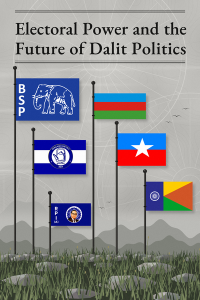
The BSP’s decline and the relative irrelevance of Dalit parties more broadly sit alongside the continuing activity of anti-caste organisations, and the parties that have gained ground are those doing movement-style work. Together these point to a distinction between electoral strength and the capacity to organise politically. Electoral results show whether a party can win seats and exercise power, but they do not capture the ability of a movement to mobilise communities or force institutions to answer for caste discrimination. The BSP’s rise rested on an organisation that mobilised Dalit voters and brought other Bahujan communities into a wider political coalition. Its decline shows what happens when electoral strategy outlasts the organisational base that once sustained it. Azad, Thirumavalavan, Prakash Ambedkar and Athawale have pursued different routes to representation, from independent mobilisation to alliances with larger parties. Their trajectories however show the fragile possibilities of converting electoral presence into independent political power.
V. T. Rajshekar argued that electoral victories could not sustain a Bahujan movement without independent institutions and political education rooted in the community. The campaigns around reservations and caste discrimination suggest that social movements may offer greater scope for political change than electoral parties currently do. Dalit and anti-caste communities continue today to organise collectively and challenge the institutions that sustain caste, even as the future relationship between these movements and electoral politics remains unresolved.