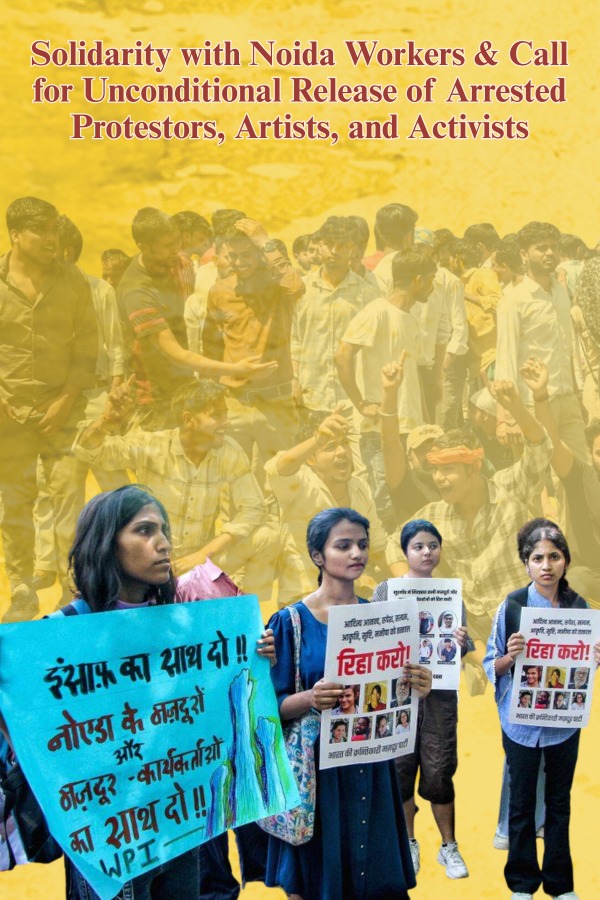
Uttar Pradesh’s minimum wages remained unrevised for more than a decade despite statutory requirements for periodic revision, while consumer prices rose sharply and labour protections were progressively weakened through the implementation of the Labour Codes and state-level deregulation. Against this backdrop of stagnant wages and insecure work, workers across Noida’s industrial belt began peaceful demonstrations in April 2026 after Haryana substantially increased its minimum wages, leaving workers performing similar jobs across the state border with significantly lower pay. The mobilisation spread rapidly across dozens of factories through informal worker networks, reflecting long-standing grievances over wages, excessive working hours, insecure contracts and poor working conditions.
The demonstrations were met with an extensive police crackdown. Hundreds of workers, trade unionists, student activists and labour organisers were detained or arrested, multiple FIRs were filed, and authorities characterised the protests as the work of conspiratorial and “external” elements. Civil liberties organisations, lawyers and fact-finding teams have since documented serious concerns regarding arrests, detention procedures and the criminal investigation, while two activists were booked under the National Security Act.
Following the protests, the Uttar Pradesh government announced an interim increase in minimum wages for Gautam Buddha Nagar and Ghaziabad along with other labour measures. While this addressed part of the workers’ immediate demand, the revised wages remained below those in neighbouring Haryana and did not resolve broader concerns over working conditions and labour rights. At the same time, the government continued to pursue criminal cases arising from the protests. Civil liberties groups, lawyers and the defence campaign have argued that many of the FIRs and charges are fabricated, citing inconsistencies in the investigation, contradictory arrest records and a lack of credible evidence. Multiple accused remain imprisoned, while legal challenges to the investigation continue before the courts.
We stand in solidarity with the workers, trade unionists, students, artists and activists who continue to face criminalisation for asserting labour rights. The demand for fair wages, dignified working conditions and the freedom to organise cannot be treated as a law-and-order problem. We call for the release of those unjustly detained, the withdrawal of fabricated and politically motivated cases, and the protection of workers’ democratic and trade union rights. For readers seeking a fuller account of the events, chronology, legal proceedings and ongoing campaign, please follow:
The Campaign for Release of Workers and Activists of Noida – The Carwan