Jason Arday, Merit and the Violence of Belonging

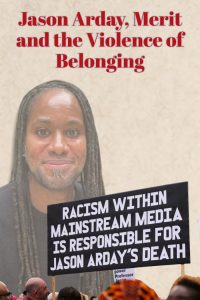
Jason Arday was a sociologist, a teacher, a writer, a son, a partner, a father, a brother and a man whose life had already contained extraordinary difficulties and achievements long before Cambridge made him a symbol. He was 41 when he was found dead at his home in south London on August 14, nine days after resigning from the University of Cambridge amid allegations concerning plagiarism, his academic record and aspects of the life story he had publicly told. The Metropolitan Police said his death was unexpected but not believed to be suspicious. An inquest is to determine the circumstances of his death.

His life was more than his Cambridge appointment, more than the allegations against him and certainly more than the controversy that consumed his final weeks. He had spoken about being diagnosed with autism and other developmental difficulties as a child, about remaining non-verbal until he was 11 and about his difficulties with reading and writing. He nevertheless went on to earn a PhD, teach across several British universities, write about race and education, and become Cambridge’s youngest Black professor in 2023.

The allegations against Arday were presented as a matter of academic misconduct without sufficient scrutiny of their origin and validity. What is disturbing about the Arday affair is the point at which scrutiny of an individual appeared to become a much larger argument about who deserves to occupy an elite institution.

NewsCord’s review counted 249 distinct articles about Arday across 15 British national outlets between July 24 and the evening of August 14. Of these, 188 appeared in the nine days after his resignation. That amounted to an average of 20.9 articles a day after he had already stepped down.

There was plainly a story to investigate. But the coverage did not remain confined to his academic work. His childhood, memoir, personal claims, sporting achievements and biography became subjects of repeated public examination. NewsCord’s account documents coverage that moved into ridicule, speculation and commentary about parts of his life that went far beyond the original academic allegations.

The most troubling context is that some of the controversy was explicitly connected to arguments about race and diversity. The academic who brought the plagiarism allegations to wider attention, Nathan Cofnas, has described himself as a “race realist” and has previously written about racial representation in elite professions in terms that explicitly invoke supposedly innate differences in ability. He has since said that his concern was with diversity, equity and inclusion rather than personal hostility towards Arday. Cofnas, now sacked from his institute, must nonetheless be held accountable for the chain of events he initiated. The positions and politics he espouses form part of the context in which Arday’s case was interpreted and circulated, and of a wider social order in which Black and other oppressed communities are made to experience institutions as spaces of conditional belonging.

What happened to Arday, then, cannot be understood only as a dispute over one academic’s work. The larger question is what happens when the presence of someone from a historically excluded community inside an elite institution is treated as something that must continually be justified.

For many of us in India, there is something painfully familiar in that question.

The specific histories are different. Arday was a Black British academic; caste is a different system from race, with its own history and mechanisms. But the experience of being treated as an exception whose presence requires explanation has recognisable parallels.

Think about the Dalit student who enters an elite university. The Dalit scholar who gets a faculty position. The first-generation student who enters medicine, the civil services or a prestigious professional institution. Their achievement is often not allowed to remain simply an achievement. A question enters the room before they do: Did they actually deserve this?

That question is rarely asked in isolation. It arrives carrying the weight of caste. Reservation makes that question explicit. “Merit” becomes the language through which caste privilege can present itself as a neutral achievement. We are seeing this today in India, where Delhi’s designated protest site has a sit-in by Reservation Hatao Andolan, a group of snowflake oppressor-caste members who cannot ask for structural change from the state and would rather espouse casteist statements of exclusion and degradation on camera while claiming victimhood.

The same logic that asks whether a Black professor really belongs at Cambridge can, in another context, ask whether a Dalit professor really belongs in a university at all. The language changes. The hierarchy does not.

This is why the mythology of merit matters. The mythology of merit depends on forgetting the conditions under which merit is produced. Before a person sits for an examination, submits a PhD application or interviews for an academic job, they have already travelled through a social world. Some people grow up with educated parents, private schooling, books, stable housing, English-language fluency, professional networks and the confidence that elite institutions are places where they naturally belong. Others encounter those institutions after crossing barriers that were never faced by their supposedly more “meritorious” peers.

Yet once the final credential is produced, all of that history disappears behind an apparently objective label: merit. Caste makes this contradiction impossible to ignore.

For generations, education and professional authority were overwhelmingly concentrated among particular castes. Property, literacy, institutional familiarity, social networks and cultural capital accumulated across families and communities. When the descendants of those histories arrive at elite universities, their inherited advantages are rarely described as an intervention into merit. They appear as merit itself. Reservation disrupts that story because it makes social exclusion visible.

That is why the rhetoric around merit can become so vicious. Merit is presented as a timeless measure of individual worth, when in practice institutions decide what counts as merit, how it will be measured and who gets the opportunity to demonstrate it.

The same baton is used to beat affirmative action in different contexts: DEI in the West and reservations in India. In both cases, policies intended to address historical exclusion are recast as threats to a supposedly neutral system that was never neutral to begin with.

Once this idea of merit is entertained, the presence of a Black professor or a Dalit professor can become suspicious before anything about their work is examined. Their success is treated as something requiring an explanation. Their mistakes become evidence of a larger failure. Their credentials become open to a level of scrutiny that their social position was already unlikely to protect them from.

This is what makes the racial invocation against Arday’s career so pernicious. The question moves from a basic inquiry, “Did this individual meet the standards?”, to “Why was someone like this here in the first place?”

The second question may present itself as a defence of objectivity, but it is not really interested in objectivity, real or imagined. It is about belonging. It is about who gets to occupy the public arena without having their presence continually explained, defended or justified.

And that is where Arday’s story speaks beyond itself. Because many people from historically oppressed communities recognise the particular pain of entering spaces that were not built with them in mind and then discovering that their right to be there remains permanently open to question.


Mangesh is a law student from Mumbai, Maharashtra.
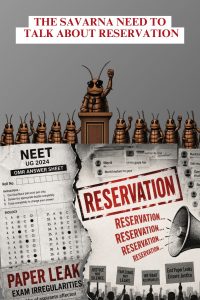
The Savarna Need to Talk About Reservation

Say what you will about the CJP protests against the NEET paper leak, everyone has already said that the immediate demands are not enough to change the education system. Education scholars are more likely to tell you about the 5-point charter submitted by the CJP to the Government of India. But one class of discourse generators is rattled by the protests themselves, or has been looking for an opportunity to vent its pre-existing frustrations or biases and has now found the perfect one . This is the oppressed castes’ general status and their tiresome, repeated, annoying rant against reservation.

This includes someone fabricating a fake post by actor Vijay Varma about his one non-reserved category friend suffering in some educational institution, which the pro-protest actor quickly said he had never posted. His acting in the anti-Mandal movement film Hurdang alongside Sunny Kaushal, however, may not have made his supposed stance difficult to believe had the post been genuine. Whether he posted it or not, and whether he believes the logic underneath that post, are different questions.

Mrunal Thakur, another actor, apparently posted a story on her Instagram account suggesting that the key moment that changed the game for everyone during these protests was NEET aspirant Harsh Dubey questioning the dominant narrative around the protests, arguing that the focus on the paper leak has overshadowed other longstanding issues in medical admissions. This was apparently a clip from a conversation with NDTV’s Shiv Aroor, where Dubey said questions around reservation policy and the difficulties faced by general category students also deserve public attention. Whether Mrunal Thakur will also come out and deny posting this is a matter of no one’s concern. Bollywood celebrities have shown their political illiteracy and general inhumanity more than once.

But this idea that neither the BJP nor the CJP wants to touch reservation, and that this is what led to the compromise, is one of those Savarna delusions burdened with so many argumentative flaws that a sane mind can hardly engage with it. To begin with, despite its classist and meritocratic articulation of the protests, the CJP does not appear to be opposed to reservation, partly reflected in its use of Ambedkarite symbolism, whether sincere or strategic. One also forgets that the BJP is a heterogeneous party with multiple caste groups and not simply Brahmins and other general category persons. There is no consensus on this question even within the Hindutva fold, something evident from the raita vs. trad debates that have long existed within their own ideological circles. To treat a single interview, one that merely regurgitates the most banal opinion circulating on the Savarna reactionary internet, as having played any pivotal role in shaping the protests is fantasy writing in its purest form.

But what is up with the casteist Savarnas? In a protest that brought together people from the non-protesting middle classes and celebrities, wherein status and privilege are also disproportionately held by oppressor castes, what has made the casteist Savarnas launch into their regular rant with great vigour? Are Savarnas simply waiting for any needle to move so they can carry their anti-reservation agenda? Are they simply incapable of shutting up for once?

Why, then, does every major public mobilisation touching education or even employment seem to invite an anti-reservation chorus from casteist Savarnas? The answer is not that reservation is secretly the central issue every time, like the Dubeys make it out to be. It is that reservation has become the preferred language through which sections of the Savarna public interpret almost every institutional crisis. Whenever a crisis emerges in education or public recruitment, reservation is summoned as the familiar explanation, even when it has little to do with the event itself. It is less a response to the facts before them than a political reflex.

This reflex performs an ideological function. It redirects public anger away from institutions and towards beneficiaries of affirmative action. A paper leak points towards failures of governance, regulation, corruption, examination agencies, and political accountability. None of these explanations preserve the moral authority of the existing Brahminical social order. Reservation, on the other hand, offers an already available narrative; and if Savarna public discourse has shown anything, it is that they love readily available labour, intellectual and otherwise. The next generation of casteists also lack imagination and will rely on the intellectual dis-labour of their Savarna forefathers.

These complaints are very vapid. They transform a structural failure into a grievance against redistributive and representational justice. Instead of asking why an examination system repeatedly fails millions of students, they ask who supposedly enjoys unfair advantages, even though the empirical facts reveal it is they who do. The institution escapes scrutiny because caste once again becomes framed as the problem only when it attempts to correct itself.

There is another reason why these moments are politically useful. Large protests produce so much uncertainty. They reopen public debate and create the possibility that questions long considered settled may be discussed again, especially now that social media has permitted everyone to have an opinion, for good and bad alike. For anti-reservation voices, this is an opportunity to attach their long-standing campaign to a movement that was never organised around their demands. They seek legitimacy through proximity of discourse. If enough people begin associating educational injustice with reservation rather than with state failure, the moment gets a new meaning.

This explains why Harsh Dubey’s interview came to acquire symbolic importance far beyond its actual place in the protests. It offered something many casteist Savarnas had been waiting for: an apparently articulate voice on national television through which they could restate arguments that have circulated for decades. Reservation disrupts the comforting belief that educational success reflects individual merit alone. Every conversation about admissions threatens to reopen the history of caste privilege that made merit appear natural in the first place. It is therefore unsurprising that even a movement against examination malpractice becomes, for some, another occasion to defend inherited advantages while presenting themselves as victims of an unjust system. The anti-reservation discourse surrounding the NEET protests tells us less about the movement than about the persistence of Savarna political common sense.


DalitThinkerToday is a Chartered Accountant by profession from Sangli, Maharashtra, who occasionally dabbles in thinking about politics when people in her oppressor-caste-majority office frustrate her. This is her pseudonym.

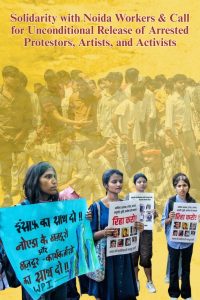
Solidarity with Noida Workers & Call for Unconditional Release of Arrested Protestors, Artists, and Activists

Uttar Pradesh’s minimum wages remained unrevised for more than a decade despite statutory requirements for periodic revision, while consumer prices rose sharply and labour protections were progressively weakened through the implementation of the Labour Codes and state-level deregulation. Against this backdrop of stagnant wages and insecure work, workers across Noida’s industrial belt began peaceful demonstrations in April 2026 after Haryana substantially increased its minimum wages, leaving workers performing similar jobs across the state border with significantly lower pay. The mobilisation spread rapidly across dozens of factories through informal worker networks, reflecting long-standing grievances over wages, excessive working hours, insecure contracts and poor working conditions.

The demonstrations were met with an extensive police crackdown. Hundreds of workers, trade unionists, student activists and labour organisers were detained or arrested, multiple FIRs were filed, and authorities characterised the protests as the work of conspiratorial and “external” elements. Civil liberties organisations, lawyers and fact-finding teams have since documented serious concerns regarding arrests, detention procedures and the criminal investigation, while two activists were booked under the National Security Act.

Following the protests, the Uttar Pradesh government announced an interim increase in minimum wages for Gautam Buddha Nagar and Ghaziabad along with other labour measures. While this addressed part of the workers’ immediate demand, the revised wages remained below those in neighbouring Haryana and did not resolve broader concerns over working conditions and labour rights. At the same time, the government continued to pursue criminal cases arising from the protests. Civil liberties groups, lawyers and the defence campaign have argued that many of the FIRs and charges are fabricated, citing inconsistencies in the investigation, contradictory arrest records and a lack of credible evidence. Multiple accused remain imprisoned, while legal challenges to the investigation continue before the courts.

We stand in solidarity with the workers, trade unionists, students, artists and activists who continue to face criminalisation for asserting labour rights. The demand for fair wages, dignified working conditions and the freedom to organise cannot be treated as a law-and-order problem. We call for the release of those unjustly detained, the withdrawal of fabricated and politically motivated cases, and the protection of workers’ democratic and trade union rights. For readers seeking a fuller account of the events, chronology, legal proceedings and ongoing campaign, please follow:

The Campaign for Release of Workers and Activists of Noida – The Carwan 

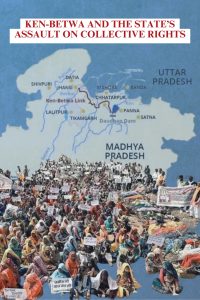
Ken-Betwa and the State’s Assault on Collective Rights

The protests against the Ken-Betwa Link Project in Madhya Pradesh emerged from long-standing concerns about the displacement of affected communities and the manner in which one of India’s largest river-linking schemes was being implemented. The Union and Madhya Pradesh governments have presented the Ken-Betwa Link Project as a nationally significant initiative to address chronic water scarcity in the drought-prone Bundelkhand region, arguing that it would strengthen irrigation while improving drinking water availability and power generation. Adivasis in the region have challenged this developmentalist narrative that is often built by ignoring the costs of implementation, which tramples their constitutional rights and livelihoods. The latest phase of the movement began on 3 July 2026 along the Barana River near Kupi village in Chhatarpur district and became one of the most visible mobilisations against the project. Protesters combined forms of civil disobedience with demands that rehabilitation be carried out according to the spirit of the law.

Led largely by Adivasi women and project-affected families, the agitation centred on the Ken-Betwa Link Project as well as the Majhgaon and Runjh irrigation projects. Protesters organised a series of symbolic demonstrations including jal satyagraha (standing in water as a form of protest), chita andolan (lying on funeral pyres) and a symbolic faansi satyagraha, presenting them as expressions of communities being pushed towards “social death” through displacement. Movement leader Amit Bhatnagar also undertook an indefinite hunger strike that lasted nearly two weeks until the protests were forcefully cleared. Protest leaders have maintained that authorities should implement the projects in accordance with existing laws governing land acquisition and environmental protection while respecting the constitutional rights of affected communities which prioritize rehabilitation. The administration has also failed to honour assurances reportedly made during discussions held in April 2026 before the protests came to this intense point. Bhatnagar has pointed to a ₹400-crore corruption scandal linked to the project, which shows massive irregularities in land acquisition and rehabilitation.

Displacement in this case has extended far beyond the loss of land. The affected families stand to lose access to forests, access to water resources, livelihood opportunities and more. Some residents have faced false criminal cases, illegal evictions, electricity disconnections and the demolition of schools as intimidation tactics and extra-legal punishment for participating in the protests. In this context, the protests called for transparent identification of all project-affected families and insisted that rehabilitation precede any displacement. The protests were also occurring within broader demands for an end to coercive administrative practices, especially when it comes to extractive displacement under the banner of development, conveniently marketed as pro-people and welfarist. Given the history of these practices, the movement is not simply a dispute over compensation but one in the long line of political struggles for democratic accountability and constitutional protections for Adivasi and rural communities.

Before dawn on 19 July 2026, a large police contingent cleared the protest site, citing public safety concerns because demonstrators were gathered beneath an under-construction bridge and along the river. While  the administration has rejected allegations of wrongdoing and maintained that all legal procedures were being followed, multiple videos show the heavy-handed use of violence in ending the protests. Authorities stated that protesters were transported back to their villages rather than arrested. Bhatnagar was taken to hospital after his health deteriorated during the prolonged fast. However, this is a clear sign of forcible suppression of the movement, with protestors alleging mass detentions and the use of force to prevent Bhatnagar from addressing the media.

The agitation reflects wider debates surrounding the Ken-Betwa Link Project. As India’s first river-linking project under the National Perspective Plan, it occupies a central place in the government’s broader river interlinking agenda, with an estimated cost of ₹44,605 crore. Environmental groups, hydrologists and rural and Adivasi communities who have been affected have questioned the project’s ecological viability. They dispute the assumption that the Ken basin has surplus water and warn of its impact on forests and the Panna Tiger Reserve. Extensive deforestation and inadequate rehabilitation weaken the project’s developmental claims, while many have already pointed to decentralised water conservation which offers less destructive alternatives that states are reluctant to explore.

The legal framework governing such projects already recognises that displacement extends beyond the acquisition of privately owned land. The Right to Fair Compensation and Transparency in Land Acquisition, Rehabilitation and Resettlement Act, 2013 (LARR Act) defines project-affected families and provides for rehabilitation and resettlement alongside compensation. Apart from the generic failure of implementation in the Ken-Batwa case, the statutory application has repeatedly been criticised for excluding people whose livelihoods depend on forests, rivers and other common resources or who lack formal land titles, leaving many of those most affected outside its protections. This accountability gap is underscored by the Ministry of Tribal Affairs’ press release, “Rehabilitation of Displaced Tribals” (31 July 2025), which stated that the Union government does not centrally maintain data on displaced or project-affected families, even as it continues to promote large infrastructure projects across the country.

But it is clear that the questions raised here cannot be answered simply by demanding due process in compensatory practices. For decades, scholars of displacement, including Walter Fernandes, have argued that the framework governing displacement requires a more expansive rethinking. Yet policy institutions have largely failed to address these concerns, while successive governments have continued to pursue different forms of displacement through both public and private infrastructure initiatives. Fernandes argues that compensation cannot be confined to the market value of acquired land because displacement disrupts livelihoods rather than simply transferring property. He contends that rehabilitation should recognise all project-affected persons, including those dependent on common resources without formal legal ownership, and enable them to rebuild their lives instead of treating compensation as a one-time financial payment.

Although legislation such as the LARR Act is frequently criticised by corporate interests as placing excessive constraints on land acquisition, the Ken-Betwa experience suggests a different problem. Since the introduction of the Act, human right activists have pointed to the limited procedural and substantive protections that the Act provides. But even the minimal formal recognition and rights seem to be rendered ineffective when the state itself becomes the principal agent of acquisition. As Sanjoy Chakravorty argues in his formulation of the “taking state”, the concentration of acquisition powers within the state enables it to overcome legal safeguards through administrative practice. The struggle over Ken-Betwa is therefore also a struggle over whether constitutional and statutory protections can meaningfully constrain state-led development when the communities bearing its costs are Adivasi and rural populations.

The July protests also represent more than a local struggle over rehabilitation. They also highlight a wider contest over how large infrastructure projects should proceed when they affect the rights of tribal communities and fragile ecosystems. Not only is the Indian state continuously engaged in authoritarian extractivism, but has effectively framed its biddings under the PR of welfare while continuously trampling the civil liberties and the right to dissent of people affected. The events unfolding at Ken-Betwa over the last few days reaffirm that struggles against displacement cannot be left to affected communities alone, but require broader democratic solidarity across movements.


Paresh Hate is a Bahujan queer researcher, writer, documenter and activist and the Lead Content Manager at Dalit Voice.

Nepal’s Apology and After

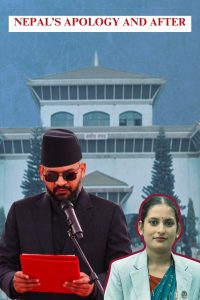
Nepal’s new government has done something no previous government was willing to do. In March 2026, it issued a formal apology to Dalits, acknowledging centuries of caste discrimination and exclusion. Soon after, Sita Badi became the first Dalit woman to hold a full cabinet position at the federal level, taking charge of the Ministry of Women, Children and Senior Citizens.

For a country where caste oppression has long been treated as a social problem rather than a political one, these developments carry weight. The Nepali state has publicly acknowledged that caste inequality was not simply a matter of social prejudice but a system sustained through institutions, laws and political power.

The apology, delivered in Parliament by Rabi Lamichhane, promised that no Nepali would again have to bow before caste hierarchy. Yet questions emerged almost immediately. The statement was expected to come from the President or Prime Minister as a formal act of the state. Instead, it came through the chairperson of the ruling party speaking on behalf of the government.

Dalit organisations have responded by focusing less on the language of recognition than on the machinery of reform. The Feminist Dalit Organisation (FEDO) has called for inclusive budgeting, stronger protections against violence, economic empowerment programmes, citizenship rights and greater participation in decision-making. It has also pushed for legislation to implement Article 40 of Nepal’s Constitution and for long-promised commitments on proportional representation. These demands are not new. Neither are most of the constitutional provisions involved.

The Nepali state did not discover caste discrimination in 2026. Dalit organisations, activists and movements have spent decades documenting exclusion, violence and underrepresentation. Constitutional guarantees already exist. National commissions already exist. Yet proportional representation remains incomplete, Article 40 remains only partially implemented, and Dalit organisations continue to press for reforms that have been discussed for years.

The government announced a 100-point reform agenda and promised key initiatives within 15 days. More than 55 days after the formation of the new Parliament, little progress had been made on many of those commitments.

Constitutional provisions can remain unimplemented for years even when legislatures are functioning. The deeper issue is political will. Successive governments have been willing to acknowledge caste discrimination, establish commissions and make commitments. They have been far less willing to spend political capital on reforms that would alter representation, budgeting priorities and institutional accountability.

Since the current parliamentary session began in May, lawmakers have spent weeks locked in disputes over Prime Minister Balendra Shah’s conduct, parliamentary procedure, dress codes, attendance and political remarks. Opposition parties have staged protests, boycotts and obstruction. Debates over the government’s policy programme and budget priorities have repeatedly been pushed aside. None of these disputes concern the constitutional reforms Dalit organisations continue to demand.

Nepal’s political class has found the language to acknowledge historical caste injustice while leaving many of the reforms demanded by Dalit organisations unresolved. Sita Badi’s appointment sits within the same political landscape. Her rise from the historically oppressed Badi community to the federal cabinet would have been difficult to imagine only a generation ago. For Dalit women in particular, her appointment breaks through a barrier that Nepal’s political establishment left standing for decades.

Civil society groups are now working with the National Dalit Commission to prepare a broader position paper on social justice, restoration and historical reconciliation. Nepal’s apology has opened a political opportunity. Dalit organisations have treated it as such. They have responded not with celebration alone but with demands, proposals and constitutional claims.


Paresh Hate is a Bahujan queer researcher, writer, documenter and activist and the Lead Content Manager at Dalit Voice.