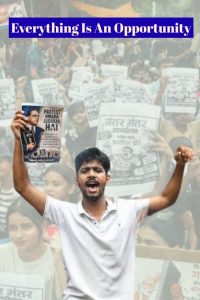
Everything is an Opportunity

The protests against the irregularities and paper leak in the NEET examination brought thousands of students, parents and supporters onto the streets. The scale of participation, including the visible presence of sections of the middle classes, public figures and artists, reflected a growing willingness to challenge institutions that many increasingly perceive as opaque and unaccountable. That widening participation deserves recognition. It signals that concerns over public education are no longer confined to those who have historically borne the burden of institutional failures.

Yet the state’s response once again demonstrated a familiar pattern. Lathi charges, water cannons, tear gas, detentions, surveillance and criminal cases against protesters indicate that even peaceful demonstrations continue to be treated through the language of policing rather than democratic engagement, no matter how much the protesters try to facilitate dialogue. The violence of the state is not merely reactive to dissent; it is constitutive of its authority and often pre-emptive in its operation. By acting before grievances can acquire wider political legitimacy, it seeks to cast suspicion upon and diminish the credibility of citizens’ claims. Such responses are not isolated excesses but part of a broader tendency in which coercive measures take precedence over any meaningful assessment of public grievances. This pattern is all too familiar for the Muslims, Dalits, workers, and other oppressed communities in the country now. It is no wonder that many of them continue to remain skeptical of this movement even as they lend their solidarity.

The protests have also unfolded within a now routinised political script. Peaceful public mobilisation quickly became an opportunity for the mainstream Godi media to manufacture misinformation, while the state treated the moment as another justification for expanded policing. The original concerns were steadily displaced in newsrooms by manufactured debates over alleged anti-nationalism and public disorder, even as protesters have taken to social media to repeatedly redirect attention to the issues that first brought them to the streets.

Recognising this reality, however, also requires asking difficult questions of protest movements themselves. Large numbers are not only a measure of organisational success; they are also a political responsibility. Every mass mobilisation creates a temporary public capable of imagining new forms of solidarity and new political possibilities. Leadership therefore involves more than maintaining order or ensuring that a demonstration appears respectable. It also involves shaping how participants understand the broader structures within which their immediate grievance exists. But the organisers from CJP have recently shown a remarkable abdication of this responsibility, even as they may be doing so with sincere efforts to protect the movement.

Over the last decade, many protests have come to treat the expression of dissent as an end in itself. In a political climate where public assembly is increasingly surveilled and criminalised, simply occupying the streets and making disagreement visible has acquired democratic significance. That impulse should not be dismissed. But if protests are to aspire to more than bearing witness, they must also confront the difficult question of what political consequences their strategies are intended to produce. The NEET protests, however, did not appear content with symbolic dissent alone. The CJP seems to have approached the movement through a strategic lens, making choices that they believed would improve its chances of achieving concrete outcomes. That is a welcome departure.

The question is whether that strategic calculation expands or contracts the political horizon of the movement. The current strategy of CJP and other organisers does not merely reduce immediate risk; it also diminishes what that movement is capable of becoming. The logic of this strategy leads us towards an ever-receding political horizon, where each concession made in the name of prudence leaves less space for political imagination than the one before. This is where the limitations of a politics centred primarily on respectability become apparent. In the effort to appear reasonable, the strategic moderation may ultimately concede more ground than it preserves. The state does not necessarily refrain from coercion because a movement carefully disciplines itself. Recent history offers little evidence for such confidence.

Many of the choices made reflect a strategic calculation about what constituted acceptable dissent. Expressions of solidarity with incarcerated activists such as Umar Khalid and other Muslims facing prolonged imprisonment were rejected. Attempts to build common cause with other democratic movements such as farmers coming to Delhi on 22 July were resisted, with suggestions that different protests remain physically and politically separate. Participants were instructed on which slogans were permissible, even as some of the approved slogans drew upon nationalist idioms that have, over the last decade, become closely associated with Hindutva politics. The movement also declined to articulate a broader political critique of fascism and majoritarianism or the present government’s treatment of democratic dissent. This was not simply an omission of rhetoric; it marked a refusal to locate the immediate crisis within the wider political conditions that shape how public institutions function and how protests against them are received. Its demands also remained underdeveloped at the structural level. The crisis invited a broader interrogation of the National Testing Agency as an institution and of the direction of educational reforms under the National Education Policy by this government. Instead, the movement largely remained confined to the immediate failures surrounding the paper leak. Many of these suggestions have been made by leftist members of the movement who have been foregrounding these demands for years.

The movement’s current demands combine institutional accountability and immediate relief. They have called for the resignation or dismissal of Union Education Minister Dharmendra Pradhan, the immediate release of Sonam Wangchuk without restrictions on his movement, compensation of ₹1 crore for the families of NEET aspirants who died by suicide following the paper leak, and the withdrawal of all FIRs and legal action against those who participated in the July 20 protest. These are necessary demands, and each deserves to be pursued. But they cannot be mistaken for a sufficient response to the structural crisis of India’s education system. If these demands are achieved without an equally substantive agenda for what follows, the political leverage created by the protests risks dissipating before it can be translated into structural reform.

Equally troubling dynamics from the protest also must be interrogated. The willingness to hand over protesters deemed disruptive or excessively angry to the police without publicly articulating clear criteria for doing so is a decision that demands careful scrutiny. Any movement must protect participants from harassment and deliberate sabotage. But when those distinctions remain opaque, the police are effectively invited to regulate the boundaries of acceptable dissent within the protest itself. Expanding police discretion over who belongs and who does not, in a context of police violence, carries significant political consequences.

Similarly, symbolic gestures such as serving refreshments or showing kindness towards police personnel may reflect genuine human concern, and recognising the difficult conditions under which many lower-ranking officers work is neither unreasonable nor incompatible with criticism. Yet these gestures cannot obscure the structural reality that the police operate as instruments of state power and are institutionally equipped with resources and authority unavailable to ordinary citizens. Empathy for individual officers should not come at the cost of depoliticising the institution they serve.

None of this diminishes the importance of the NEET protests or the courage of those who participated in them, including the organisers, who transformed what began as a meme page into one of the country’s most significant student mobilisations in the recent past. On the contrary, their significance lies precisely in the possibility they opened. The question is whether that possibility ends with registering public anger or extends towards building broader democratic solidarities capable of confronting the structures that repeatedly produce such crises. Every protest is liable to become an opportunity for the police to exercise violence, for Godi media to manufacture misinformation, and for the government to expand its coercive powers. These are calculations movements cannot control. What they can control is whether their own strategies continually retreat before them, or instead expand the political imagination of those who have come together in hope.
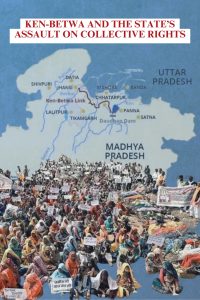
Ken-Betwa and the State’s Assault on Collective Rights

The protests against the Ken-Betwa Link Project in Madhya Pradesh emerged from long-standing concerns about the displacement of affected communities and the manner in which one of India’s largest river-linking schemes was being implemented. The Union and Madhya Pradesh governments have presented the Ken-Betwa Link Project as a nationally significant initiative to address chronic water scarcity in the drought-prone Bundelkhand region, arguing that it would strengthen irrigation while improving drinking water availability and power generation. Adivasis in the region have challenged this developmentalist narrative that is often built by ignoring the costs of implementation, which tramples their constitutional rights and livelihoods. The latest phase of the movement began on 3 July 2026 along the Barana River near Kupi village in Chhatarpur district and became one of the most visible mobilisations against the project. Protesters combined forms of civil disobedience with demands that rehabilitation be carried out according to the spirit of the law.

Led largely by Adivasi women and project-affected families, the agitation centred on the Ken-Betwa Link Project as well as the Majhgaon and Runjh irrigation projects. Protesters organised a series of symbolic demonstrations including jal satyagraha (standing in water as a form of protest), chita andolan (lying on funeral pyres) and a symbolic faansi satyagraha, presenting them as expressions of communities being pushed towards “social death” through displacement. Movement leader Amit Bhatnagar also undertook an indefinite hunger strike that lasted nearly two weeks until the protests were forcefully cleared. Protest leaders have maintained that authorities should implement the projects in accordance with existing laws governing land acquisition and environmental protection while respecting the constitutional rights of affected communities which prioritize rehabilitation. The administration has also failed to honour assurances reportedly made during discussions held in April 2026 before the protests came to this intense point. Bhatnagar has pointed to a ₹400-crore corruption scandal linked to the project, which shows massive irregularities in land acquisition and rehabilitation.

Displacement in this case has extended far beyond the loss of land. The affected families stand to lose access to forests, access to water resources, livelihood opportunities and more. Some residents have faced false criminal cases, illegal evictions, electricity disconnections and the demolition of schools as intimidation tactics and extra-legal punishment for participating in the protests. In this context, the protests called for transparent identification of all project-affected families and insisted that rehabilitation precede any displacement. The protests were also occurring within broader demands for an end to coercive administrative practices, especially when it comes to extractive displacement under the banner of development, conveniently marketed as pro-people and welfarist. Given the history of these practices, the movement is not simply a dispute over compensation but one in the long line of political struggles for democratic accountability and constitutional protections for Adivasi and rural communities.

Before dawn on 19 July 2026, a large police contingent cleared the protest site, citing public safety concerns because demonstrators were gathered beneath an under-construction bridge and along the river. While  the administration has rejected allegations of wrongdoing and maintained that all legal procedures were being followed, multiple videos show the heavy-handed use of violence in ending the protests. Authorities stated that protesters were transported back to their villages rather than arrested. Bhatnagar was taken to hospital after his health deteriorated during the prolonged fast. However, this is a clear sign of forcible suppression of the movement, with protestors alleging mass detentions and the use of force to prevent Bhatnagar from addressing the media.

The agitation reflects wider debates surrounding the Ken-Betwa Link Project. As India’s first river-linking project under the National Perspective Plan, it occupies a central place in the government’s broader river interlinking agenda, with an estimated cost of ₹44,605 crore. Environmental groups, hydrologists and rural and Adivasi communities who have been affected have questioned the project’s ecological viability. They dispute the assumption that the Ken basin has surplus water and warn of its impact on forests and the Panna Tiger Reserve. Extensive deforestation and inadequate rehabilitation weaken the project’s developmental claims, while many have already pointed to decentralised water conservation which offers less destructive alternatives that states are reluctant to explore.

The legal framework governing such projects already recognises that displacement extends beyond the acquisition of privately owned land. The Right to Fair Compensation and Transparency in Land Acquisition, Rehabilitation and Resettlement Act, 2013 (LARR Act) defines project-affected families and provides for rehabilitation and resettlement alongside compensation. Apart from the generic failure of implementation in the Ken-Batwa case, the statutory application has repeatedly been criticised for excluding people whose livelihoods depend on forests, rivers and other common resources or who lack formal land titles, leaving many of those most affected outside its protections. This accountability gap is underscored by the Ministry of Tribal Affairs’ press release, “Rehabilitation of Displaced Tribals” (31 July 2025), which stated that the Union government does not centrally maintain data on displaced or project-affected families, even as it continues to promote large infrastructure projects across the country.

But it is clear that the questions raised here cannot be answered simply by demanding due process in compensatory practices. For decades, scholars of displacement, including Walter Fernandes, have argued that the framework governing displacement requires a more expansive rethinking. Yet policy institutions have largely failed to address these concerns, while successive governments have continued to pursue different forms of displacement through both public and private infrastructure initiatives. Fernandes argues that compensation cannot be confined to the market value of acquired land because displacement disrupts livelihoods rather than simply transferring property. He contends that rehabilitation should recognise all project-affected persons, including those dependent on common resources without formal legal ownership, and enable them to rebuild their lives instead of treating compensation as a one-time financial payment.

Although legislation such as the LARR Act is frequently criticised by corporate interests as placing excessive constraints on land acquisition, the Ken-Betwa experience suggests a different problem. Since the introduction of the Act, human right activists have pointed to the limited procedural and substantive protections that the Act provides. But even the minimal formal recognition and rights seem to be rendered ineffective when the state itself becomes the principal agent of acquisition. As Sanjoy Chakravorty argues in his formulation of the “taking state”, the concentration of acquisition powers within the state enables it to overcome legal safeguards through administrative practice. The struggle over Ken-Betwa is therefore also a struggle over whether constitutional and statutory protections can meaningfully constrain state-led development when the communities bearing its costs are Adivasi and rural populations.

The July protests also represent more than a local struggle over rehabilitation. They also highlight a wider contest over how large infrastructure projects should proceed when they affect the rights of tribal communities and fragile ecosystems. Not only is the Indian state continuously engaged in authoritarian extractivism, but has effectively framed its biddings under the PR of welfare while continuously trampling the civil liberties and the right to dissent of people affected. The events unfolding at Ken-Betwa over the last few days reaffirm that struggles against displacement cannot be left to affected communities alone, but require broader democratic solidarity across movements.


Paresh Hate is a Bahujan queer researcher, writer, documenter and activist and the Lead Content Manager at Dalit Voice.

Thirty Atrocity Cases, One Larger Question: What India’s Caste Violence Data Still Doesn’t Capture

A complaint submitted to the National Commission for Scheduled Castats (NCSC) has brought together 30 reported cases of violence against Dalits from nine states, once again exposing the gap between constitutional safeguards and their enforcement on the ground.

Filed under Article 338(5) of the Constitution, the complaint by the Citizens for Justice and Peace (CJP) asks the Commission to investigate incidents reported between April and June 2025 in Uttar Pradesh, Bihar, Madhya Pradesh, Rajasthan, Gujarat, Andhra Pradesh, Himachal Pradesh, Karnataka and Maharashtra. The cases include rape, murder, assault, public humiliation, denial of access to temples and cremation grounds, and attacks on Dalit wedding processions. It also seeks action against public officials accused of failing to discharge their duties under the Scheduled Castes and Scheduled Tribes (Prevention of Atrocities) Act, 1989.

None of these forms of violence are unfamiliar. They have appeared repeatedly in atrocity reports, court records and fact-finding exercises for decades. What changes are the names of the victims and the districts in which the crimes occur.

The complaint cites cases such as the alleged rape of a deaf and mute Dalit girl in Rampur, the murder of a 10-year-old Dalit boy in Etah, and the assault of a Dalit groom in Agra who was allegedly forced off his horse because dominant-caste residents objected to the procession. Other incidents involve denial of cremation rights, restrictions on temple entry and caste-based abuse in public.

The incidents span states governed by different political parties. That is significant because it points to a problem that survives electoral change. The SC/ST (Prevention of Atrocities) Act has been in force for more than three decades, yet its implementation continues to depend on the willingness of local police, district administrations and prosecutors to invoke it properly. Delays in registering FIRs, omission of relevant provisions of the Act, weak investigations and failures to prosecute public officials who neglect their statutory duties remain recurring complaints in atrocity cases.

The need to strengthen implementation has also found expression outside courtrooms. At a recent community vigilance training programme organised by the Dalit Bahujan Shramik Union in Andhra Pradesh, government officials, lawyers and activists stressed that awareness of the SC/ST (Prevention of Atrocities) Act remains inadequate even as untouchability, social discrimination and caste violence continue. Advocate P. Chittibabu called for quicker filing of charge sheets so that cases under the Act do not languish in the courts, while participants highlighted the continuing vulnerability of Dalit women and children. The discussion reflected a familiar reality: India has a strong legal framework on paper, but access to justice continues to depend on how consistently that framework is implemented.

Official crime statistics capture only part of this picture. The complaint refers to National Crime Records Bureau data showing tens of thousands of pending investigations and more than 2.6 lakh pending trials involving atrocities against Scheduled Castes, with conviction rates remaining below 40 percent. Those figures indicate that access to justice remains slow even after a case enters the criminal justice system.

They do not, however, capture the full scale of caste violence. The SC/ST (Prevention of Atrocities) Act applies to members of Scheduled Castes recognised under the Constitution. Dalits who have converted to Christianity or Islam are excluded from the Scheduled Caste category under the Constitution (Scheduled Castes) Order, 1950, and therefore cannot invoke the Act. Where caste motivates violence against Dalit Christians or Dalit Muslims, such cases are generally prosecuted under ordinary criminal law. As a result, violence rooted in caste often disappears from official atrocity statistics despite the caste motive remaining central to the offence.

The question of implementation has acquired another dimension in recent years. Several incidents involving the custodial torture or death of Dalits have drawn attention to the difficulty of enforcing the PoA Act when the alleged perpetrators are police personnel themselves. In such cases, the institutions responsible for registering offences and conducting investigations are also the institutions facing allegations of abuse. The recent Tamil Nadu trial court judgment sentencing nine police personnel to death for the custodial torture and deaths of P. Jayaraj and J. Benicks during the COVID-19 lockdown is a rare instance of accountability. Yet such outcomes remain exceptional and do little to address the institutional conditions that allow custodial violence to persist.

At the same time, the Supreme Court has reiterated that the SC/ST (Prevention of Atrocities) Act cannot be invoked mechanically. In Keshaw Mahto @ Keshaw Kumar Mahto v. State of Bihar (2026), the Court held that merely abusing or threatening a person who belongs to a Scheduled Caste does not automatically attract Sections 3(1)(r) or 3(1)(s) of the Act. The prosecution must establish that the insult or intimidation was intentionally directed at humiliating the complainant because of their caste. The ruling, which builds on the Court’s earlier decision in Shajan Skaria v. State of Kerala, emphasises that caste identity alone cannot substitute for proof that the alleged conduct was motivated by caste.

Read alongside the complaint before the NCSC, the Keshaw Mahto ruling highlights a different challenge. While the Supreme Court has reiterated that the PoA Act cannot be invoked mechanically without establishing the statutory ingredients of a caste offence, rights groups continue to document delays in registering FIRs, omission of relevant provisions of the Act and weak investigations even in cases where caste is central to the violence. The issue, therefore, is not simply one of implementation, but of whether the law and its interpretation are adequately equipped to capture the varied and often indirect ways in which caste operates today. If caste discrimination increasingly manifests through readily provable intent, the question is whether the existing legal architecture is sufficient to respond to these evolving forms of caste power.

The complaint asks the NCSC to direct state governments to ensure prompt registration of FIRs, monitor investigations, initiate disciplinary proceedings against officials who neglect their duties, secure compensation and rehabilitation for survivors, and identify atrocity-prone areas requiring sustained monitoring.

Whether the Commission acts on these requests remains to be seen. Similar demands have accompanied previous compilations of caste atrocities, while concerns over delayed investigations, weak prosecutions and official inaction have continued.

The 30 incidents documented in the complaint are spread across different regions and involve different forms of violence. They also expose the limits of how caste violence is officially recorded and addressed. Until implementation of the SC/ST (Prevention of Atrocities) Act becomes more consistent—and until caste violence against Dalit Christians, Dalit Muslims and victims of custodial abuse is recognised within the wider conversation on caste justice—official numbers will continue to tell only part of the story.


Mangesh is a law student from Mumbai, Maharashtra.