The Right Not to Sing

Nationalist Demands in the New Law

The Prevention of Insults to National Honour (Amendment) Bill, 2026 was introduced by Amit Shah in the Rajya Sabha on 24 July 2026. Its Statement of Objects and Reasons recalls that Rajendra Prasad, as President of the Constituent Assembly, said on 24 January 1950 that Vande Mataram would be “honoured equally” with Jana Gana Mana. It notes that no legal provision existed to prevent interference with the singing of the National Song and proposes to address this by amending Section 3 of the 1971 Act, which already made intentionally preventing the singing of the National Anthem, or disturbing an assembly engaged in singing it, punishable with imprisonment of up to three years, a fine, or both, with a mandatory minimum of one year for a second and subsequent conviction. The amendment extends that same offence, and the same penalties, to the National Song. Article 51A(a) names the Constitution, the national flag and the national anthem as objects of citizens’ respect; it has never named the National Song.

The amendment arrived alongside a separate, longer-running push to change what gets sung. Vande Mataram has six stanzas; since 1937, only the first two have been used at national gatherings, a convention set by the Congress Working Committee. The Ministry of Home Affairs had already moved to reverse that convention on its own, issuing a protocol on 28 January 2026 requiring the full six-stanza version at government, ceremonial and cultural events, well before this amendment existed. That protocol was advisory and, as the courts would go on to hold twice over the following months, carried no penalty of its own. Only after those two challenges failed did the government tighten the position twice more: a July 9 MHA letter to all states specifying that only the official six-stanza version could be recited whenever the song was sung in mass singing, and then, on 24 July, the amendment itself. Where both the song and the anthem are performed at one event, Vande Mataram now goes first. Schools are directed to open assemblies with it, although many schools already practiced this of their own volition. It is to be played at state functions, civilian award ceremonies, flag-hoisting events, and the arrivals and departures of the President and Governors.


The Political Fight Over the Song
The push for the full six-stanza version followed a ten-hour special discussion in the Lok Sabha in December 2025 marking the song’s 150th anniversary, in which the Prime Minister accused the Congress of having “sowed the seeds of division” by trimming the song. In 1937, the Congress Working Committee, after consultation with Mohandas Gandhi, Jawaharlal Nehru, Rabindranath Tagore, Subhas Chandra Bose, Rajendra Prasad and Vallabhbhai Patel, decided that only the first two stanzas would be used at national gatherings because of objections to the religious imagery in the later verses. Tagore had written to Nehru that the first two stanzas had “acquired a separate individuality and an inspiring significance of its own,” while the later verses, read in context, “[are] liable to be interpreted in ways that might wound [Muslim] susceptibilities.” Congress rejected the Prime Minister’s charge, pointing to this 1937 decision and Tagore’s letter and accusing the government of manufacturing the controversy for present gain in the context of then upcoming elections, a charge Priyanka Gandhi Vadra made directly. The Congress Working Committee has since reaffirmed the two-stanza position for its own party programmes.

The dispute has now also moved into a question of federal authority after the Karnataka government ordered on 8 September that only the first two stanzas be sung at state government programmes, except when the President, Vice-President, Prime Minister or Governor is present. Within days, advocate Girish Bharadwaj filed a PIL challenging the state’s authority to prescribe a shorter version, arguing that the matter falls within Parliament’s residuary legislative powers and that the state order conflicts with the 2026 amendment to the Prevention of Insults to National Honour Act. The petition also challenged the procedure by which the Karnataka Cabinet took the decision, alleging that it was approved as an “Informal Discussion” without a Cabinet Note or Law Department advice. Governor Thaawarchand Gehlot then wrote to Chief Minister D.K. Shivakumar, invoking Articles 162, 256 and 257(1) and asking the government to reconsider its order on the ground that it conflicted with the Union’s statutory and executive framework. On 16 September, BJP MLA S.N. Channabasappa walked out of a government programme in Shivamogga after only the first two stanzas were sung.

The opposition, however, has also been weak in resisting the Centre’s position. In Kerala, the Congress-led UDF government initially circulated the Centre’s instruction that Vande Mataram be sung in full during the Har Ghar Tiranga campaign from 9 to 17 August. This put a Congress-led government in the position of appearing to implement the same six-stanza version promoted by the BJP-led Union government, despite Congress’s objections to treating the full version, with its references to Hindu deities, as a compulsory expression of national identity. The CPI(M) criticised the UDF’s position, with Leader of the Opposition Pinarayi Vijayan arguing that the song “in its entirety is not compatible with secularism” and that “there is nothing wrong with reciting the opening stanzas”, and accusing the UDF of surrendering to an RSS agenda. The UDF subsequently clarified that it would not follow the full version, and the state government ultimately omitted Vande Mataram from its official Independence Day function.

The song’s meaning has remained contested within the communities whose religious commitments are most directly implicated by it, a history the government’s “everybody knows what is national song” formulation simply passes over. The distinction made in 1937 remains central to the dispute: the Congress Working Committee accepted the first two stanzas for national gatherings while recognising objections to the later verses and their religious imagery. Muslim religious authorities have continued to make this distinction. Darul Uloom Deoband and Maulana Mahmood Madani have objected to the later verses on the grounds that their depiction of the motherland as divine conflicts with the Islamic doctrine of tawhid, while the All India Sunni Ulema Board ruled in 2006 that Muslims could sing the first two stanzas.

The dispute, however, has not been confined to Muslim objections. During the 2006 centenary controversy, the Shiromani Gurdwara Parbandhak Committee initially instructed its schools not to sing Vande Mataram, with its president arguing that it promoted a particular religion and did not fulfil the aspirations of minorities, before subsequently backing away from that position. In 2026, the Andhra Pradesh Christian Leaders Forum objected to the newly mandated full version, specifically citing its references to Durga and their implications for Christian beliefs. The question is therefore not simply whether Vande Mataram is the national song, but what religious content the state is asking people to affirm when it mandates the complete text. The Home Ministry’s circular treats that underlying question as though it had never been contested. Where it does allude to the religious objection, it reduces it to a question of Muslim reluctance, allowing a disagreement over religious belief to be recast as a question of patriotism.


The Text Behind the Mandate
The distinction between the first two stanzas and the later verses can be traced to how the song was written. Bankim Chandra Chattopadhyay had written the first two stanzas in the 1870s, describing a land of rivers, fruit and gentle winds. He added four more when he incorporated the song into his 1882 novel Anandamath, and those later stanzas carry the divine imagery: the third stanza calls the motherland “protector of millions and destroyer of enemies,” the fourth names her Durga, Lakshmi and Saraswati outright, while the fifth and sixth complete the poem as a vow of devotion.

Anandamath provides the setting in which those later stanzas acquire their political and religious meaning. Bankim Chandra Chattopadhyay is one of the key figures of proto-Hindutva politics in British India, and the novel is set during the Sannyasi Rebellion. Its protagonist, Mahendra, a zamindar separated from his family amid famine and unrest, falls in with the Santans, a band of ascetic soldiers who have taken up arms to liberate the motherland from Muslim rule, with the British entering the story only later. One of Satyananda’s disciples wants to “pull down the city of the renegades” and “throw it into the river.” Bhavananda, inducting Mahendra into the cause, tells him “unless we drive these tipsy long-beards away, a Hindu can no longer hope to save his religion,” and answers the question of method with “we will beat them.” He then leads Mahendra to the order’s temple, where, standing before the idols of Durga and Kali, he tries to fill him with religious fervor for the fight ahead. Elsewhere in the novel, the Santans send emissaries into villages to gather bands of Hindus, then raid Muslim settlements, which are burned “to ashes.” Characters imagine the day a mosque will be razed to build a temple to Radha-Madhava in its place. The four later stanzas of Vande Mataram were written for, and inside, this story. This is the context of the text now mandated by law.


The Limits of the Law’s Imagination
That January 28 protocol was challenged twice. In February, Muhammed Sayeed Noori approached the Supreme Court, arguing that requiring the complete version raised questions of religious freedom and conscience. On 25 March, the Court declined to entertain the petition, holding that the protocol was advisory and carried no penalty for those who chose not to sing, while leaving open the possibility of intervention if the advisory hardened into actual discrimination or coercion. A parallel challenge in the Karnataka High Court, filed by Bengaluru-based advocate Somashekhar Rajavamshi, objected specifically to the inclusion of stanzas three through six and their references to Durga, Saraswati and Lakshmi; the High Court dismissed it on 9 April on the same ground, that the protocol did not make singing the full version mandatory.

The 2026 amendment changes that position. The January protocol could prescribe the full version’s use; it could not, on its own, criminalise a refusal to sing it. The amendment extends the National Song to the Section 3 offence applicable to the National Anthem since 1971: intentionally preventing its singing, or disturbing an assembly engaged in singing it.

On 22 September 2026, the Supreme Court heard a petition by T. M. Krishna, with senior advocate S. Muralidhar appearing for him. The petition challenges the 2026 amendment insofar as it extends the existing criminal provision to the National Song. It also challenges the Home Ministry’s directions requiring the complete six-stanza version at official functions. The petition argues that the amended provision and the directions violate Articles 14 (equality before the law), 15(1) (prohibition of discrimination on specified grounds), 19(1)(a) (freedom of speech and expression), 21 (protection of life and personal liberty) and 25(1) (freedom of conscience and the right to profess, practise and propagate religion).

The Court refused to decide whether the National Song should consist of two stanzas or six, indicating that this was for the democratically elected state to determine rather than for the Court to prescribe. Justice Bagchi also questioned the suggestion that religious references in all six stanzas are, by themselves, incompatible with the Constitution’s secular character, pointing to the reference to God in the US national anthem. That another country’s anthem contains a religious line does not make it a benchmark for what India’s Constitution should tolerate; it only shows that one other state has also let religious language sit inside a national symbol. Whether a lingering religious motif of that kind is compatible with secularism is exactly the question in front of the Court, and pointing to a second, unexamined instance of the same thing does not answer it. The Centre has two weeks to respond, and the Court has not yet ruled on the constitutional validity of the amendment or the six-stanza directions.

At the hearing, however, the Court drew a distinction between the State’s choice of a national symbol and the use of criminal law in relation to participation in it. Nothing in the amendment says that simply refusing to sing Vande Mataram is itself an offence; the crime, as under the original Section 3, is preventing others from singing or disturbing an assembly engaged in it. The question before the Court is therefore whether the protection recognised in Bijoe Emmanuel, which concerned refusal to sing the National Anthem under that same original section, also protects a person who refuses to sing the National Song on grounds of conscience or religion while leaving others free to do so.

That leaves an odd gap. If the amendment truly does not touch a refusal that neither prevents others from singing nor disturbs an assembly, the state loses nothing by saying so outright, and Krishna’s petition should fall outside the law’s reach without a fight. The Centre resisted even the issuing of notice, and Solicitor General Mehta pressed the Court not to entertain the petition at all. That resistance points to a state interest that Section 3’s text does not itself supply: the discretion to withhold, for as long as possible, any confirmation that non-participation is safe.

Bijoe Emmanuel v. State of Kerala, which the Court said still governs the field and has never been challenged, is the case that established that refusal to sing the National Anthem, where the person neither prevents others from singing nor disturbs the assembly, does not constitute an offence under Section 3. In 1986, the Court considered three schoolchildren in Kerala who belonged to the Jehovah’s Witnesses faith. They believed that singing the National Anthem was incompatible with their religious convictions, although they had no objection to the words or sentiments of Jana Gana Mana. During their school’s morning assembly, they stood silently while the anthem was sung. After the issue was raised, they were expelled from school, despite an inquiry finding that they were law-abiding and had shown no disrespect. The Supreme Court held that their expulsion violated their fundamental rights. It also held that there was no law obliging anyone to sing the National Anthem and that their standing silently while it was sung did not constitute an offence under Section 3 because it neither prevented the singing nor disturbed the assembly.

The Court in Bijoe Emmanuel answered for the facts it had: the children stood, in silence, while others sang, and that was respect enough. Whether sitting, or some other form of non-participation, would count the same way was never argued before it, and the judgment does not say. The Court’s later National Anthem jurisprudence went further than Bijoe Emmanuel by imposing a general requirement to stand, but went no further in deciding whether an able-bodied person who chose not to comply had thereby committed an act of disrespect. In Shyam Narayan Chouksey v. Union of India, the Court initially ordered, in 2016, that the National Anthem be played before every feature film and that everyone present stand. It subsequently recognised exceptions for people unable to stand and for occasions when the anthem appeared within a film, newsreel or documentary. In 2018, it made the playing of the anthem before films optional and handed the wider question of its regulation to the government. What remained unresolved was whether an able-bodied person who deliberately remained seated when the National Anthem was played had thereby shown disrespect.

Article 51A(a) requires citizens to respect the Constitution, the national flag and the national anthem. That language concerns respect for specified national symbols, while Section 3 concerns conduct that interferes with their public performance. The Constitution speaks of an attitude of respect; Section 3 defines specific acts that the law prohibits. Bijoe Emmanuel is the only case here that actually examined a specific act of non-participation and ruled on whether it counted as respectful: the children stood silently while others sang. Chouksey, by contrast, imposed a general rule about what everyone present in a cinema hall had to do when the anthem was played, and later withdrew the requirement that the anthem be played there at all. The distinction between respectful and disrespectful non-participation has therefore never actually been adjudicated on its own terms. That leaves the discretion to decide sitting with whoever is enforcing the law in the moment, not with any settled rule a citizen could rely on in advance. And even supposing that gap could be closed, and the state produced a clean definition of respectful non-participation tomorrow, a further question is why a person should have to demonstrate respect for a national symbol through participation of any kind, rather than simply being left alone by the law altogether.

Article 51A(a) itself answers none of this. The Fundamental Duties, inserted into the Constitution by the 42nd Amendment in 1976, are not enforceable in court. No citizen has ever been prosecuted for an abstract failure to respect the Constitution, the flag or the anthem. Section 3 punishes specific conduct: preventing a performance, disturbing an assembly, even though the boundaries of that conduct can still be interpreted and policed according to the discretion of whoever is enforcing the law. Article 51A(a) supplies the word “respect” and nothing else. It does not say what respect consists of, and it does not say respect must be shown rather than merely left unviolated. The state has built a criminal statute that reaches only interference, and rested it on a duty clause that was written to describe an attitude, not to compel an act.


The Right Not to Sing
The present controversy asks a larger question about the limits of state power over national rituals. A person may have a religious objection to the text, reject the use of a national symbol altogether, or simply choose not to participate. If that refusal does not prevent anyone else from singing, what is the state entitled to demand from the person who refuses? Even as the space for conscientious objection shrinks in the shadow of ultranationalism, we must continue to ask: why should the state require that refusal to take a prescribed form of respect, and why can it not leave room for people to decline participation altogether?
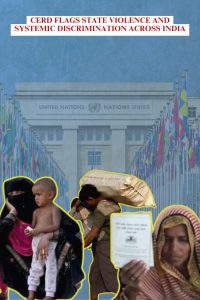
CERD Flags State Violence and Systemic Discrimination Across India

The UN Committee on the Elimination of Racial Discrimination (CERD) has raised serious concerns over the treatment of some of India’s most marginalised communities, including Dalits, Adivasi and tribal peoples, Rohingya, Bengali-speaking Muslims, migrants and asylum-seekers. Its findings follow the first review of India by the Committee since 2007 and examine the country’s combined 20th and 21st periodic reports under the International Convention on the Elimination of All Forms of Racial Discrimination.

The findings were issued after CERD’s 118th session, which also examined Finland, Honduras and Kuwait. This was part of the Committee’s regular review of states that have signed the Convention. CERD’s concluding observations are not court judgments and do not have the force of law. They assess how governments are implementing their obligations under the Convention and identify areas where the Committee finds serious problems.

In India’s case, CERD raised concerns spanning caste, ethnicity, religion, citizenship and policing. One of its gravest concerns was the alleged conduct of law-enforcement agencies towards Indigenous and Tribal Peoples, Scheduled Tribes, Scheduled Castes, particularly Dalits, ethnic and ethno-religious groups and non-citizens. CERD recorded reports of excessive force, racially motivated violence, extrajudicial killings, arbitrary and prolonged detention, torture, ill-treatment and sexual violence. It called for prompt, thorough and impartial investigations, with accountability where violations are established.

The reference to Dalits and Scheduled Castes also brings an older disagreement into the review. The Indian government maintains that caste should not be treated as equivalent to race or “descent” for the purposes of CERD. Its submissions nevertheless contain information on Scheduled Castes and Scheduled Tribes and measures intended to address their disadvantages. CERD’s treatment of caste within its examination of descent and discrimination places caste exclusion within the scope of the Committee’s scrutiny, even as the Indian state rejects that equivalence.

CERD also drew particular attention to Rohingya, Bengali-speaking Muslims, migrants and asylum-seekers. It noted an increase in law-enforcement operations involving these groups, particularly after a 2017 Home Affairs order and the April 2025 Pahalgam attack. Reports of police stops and identity checks based on racial profiling allegedly resulted in arbitrary arrests and detention, torture and other mistreatment. The Committee also raised concerns about deportations and forcible returns involving people who may require international protection.

During the review, CERD Country Rapporteur Stamatia Stavrinaki referred to independent monitoring that recorded more than 1,300 anti-Muslim hate-speech incidents in 2025, including recurring rhetoric attributed to senior officials. India’s delegation responded that legislation enacted in 2023 criminalises acts amounting to hate speech and hate crimes, with additional protections applying when offences target Scheduled Castes and Scheduled Tribes. It also pointed to freedom of religion as a constitutional guarantee.

But CERD’s observations focused on what these protections mean in practice. Alongside the government’s account of its legal safeguards, the Committee recorded concerns about discrimination, hate speech, violence and the conduct of law-enforcement agencies. It called on India to address hate crimes against Rohingya, Bengali-speaking Muslims, migrants and asylum-seekers, refrain from collective expulsions and ensure access to international protection. This includes respecting non-refoulement, the principle that people should not be returned to a place where they face a serious risk of persecution or other grave harm.

The findings also address citizenship and documentation. CERD noted the absence of adequate disaggregated data on Indigenous and Tribal Peoples, ethnic and ethno-religious groups, migrants, refugees, asylum-seekers and stateless people. It highlighted the categorisation of Bengali-speaking Muslims as “non-original inhabitants” and reports that they face more stringent scrutiny during National Register of Citizens verification. The Committee also noted that much of India’s available data on Scheduled Castes, Scheduled Tribes and refugees still derives from the 2011 Census, while acknowledging the delayed 2026 Census and its proposed collection of caste data through self-identification.

The treatment of Bengali-speaking Muslims in the NRC process raises a broader question about how citizenship is administered. CERD’s concern is not simply that documentation is required, but that particular ethnic and religious groups are reportedly subjected to different levels of scrutiny. In a political environment where Muslims are repeatedly cast as outsiders or demographic threats, administrative categories such as “non-original inhabitants” can acquire consequences beyond paperwork. The NRC thus becomes part of a wider system in which belonging is subjected to heightened state verification.

The concerns around Rohingya also sit within a longer history of UN scrutiny. A 2025 communication by UN Special Procedures carried allegations that deportation operations against Muslims, including Rohingya, intensified after the Pahalgam attack, involving raids, arrests, ill-treatment and forcible returns. Those allegations came through a separate UN process and were not findings by CERD or a judicial determination.

India is not a party to the 1951 Refugee Convention or its 1967 Protocol and has no comprehensive national refugee law. UNHCR therefore carries out protection-related functions for refugees and asylum-seekers in the country. This absence has become more significant alongside changes to India’s citizenship and immigration regime.

The Citizenship (Amendment) Act, 2019 was defended by BJP ministers as addressing the unfinished business or “wrongs” of Partition. Yet the CAA was not a refugee law. It created a religion-based route to accelerated citizenship for specified non-Muslim communities from Pakistan, Bangladesh and Afghanistan. It did not establish a general system of refugee protection based on persecution or the risk of serious harm.

And in 2025, Parliament enacted the Immigration and Foreigners Act, replacing four earlier laws governing the entry and treatment of foreign nationals. The new law consolidated the state’s immigration powers without creating a corresponding refugee protection framework. CERD’s call for protection against collective expulsions and respect for non-refoulement therefore comes alongside a strengthened legal machinery for controlling and removing foreign nationals, while India still lacks a dedicated process for determining who requires refugee protection. For Rohingya and other asylum-seekers, that leaves a basic question: what domestic procedure requires the danger they may face after removal to be considered before the state deports them?

India’s delegation, led by Solicitor General Tushar Mehta, defended the country’s legal framework and its claims of pluralism and equality. The government reiterated its position that caste should not be equated with race or “descent” under the Convention and pointed to legislation addressing hate speech and protections for Scheduled Castes and Scheduled Tribes.

CERD’s findings place those claims alongside reports of how state institutions operate on the ground. The Committee’s concerns cover law-enforcement violence against Dalits and Adivasi and tribal communities, anti-Muslim hate speech, racial profiling of Bengali-speaking Muslims and Rohingya, and the treatment of people whose citizenship or immigration status is under scrutiny.

For Dalit and Adivasi communities, and for Muslims and other minorities whose belonging is increasingly subjected to state scrutiny, the findings also expose how Hindu nationalism operates through state power. Caste discrimination, communal targeting, citizenship enforcement and policing are often treated as separate questions, even as they converge in the lives of communities whose relationship with the state is shaped by unequal power. CERD’s observations bring these questions into the same examination of discrimination and direct attention towards the institutions through which unequal treatment is carried out.

Good Minorities and Oppressed Persons in Ceremonial Roles

Archival Note

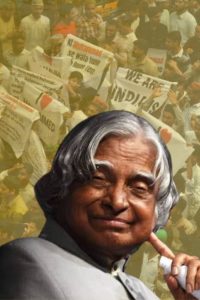
Published in 2006 during A. P. J. Abdul Kalam’s presidency in Vol. 25, Issue No. 24 (16/12/2006), this article is less a profile of Kalam than a reflection on the politics of minority representation. V.T. Rajshekhar asks why some members of historically oppressed groups come to be celebrated by dominant political establishments while others remain excluded or viewed with suspicion. These ideas remain urgent over the last decade with a Dalit and an Adivasi president from the Hindu nationalist party occupying the post.

The article is reproduced here in full. Read today, it can also be situated within a wider discussion about the distinction often drawn between the “good” and the “bad” Muslim—a distinction that is used globally as a liberal strategy to tame minority political power.

The complete, unabridged article is available in the Dalit Voice archives: https://dalitvoice.net/why-upper-castes-are-all-praise-for-abdul-kalam-as-a-good-man/


Why Upper Castes Are All Praise For Abdul Kalam As “A Good Man”? 

President Abdul Kalam, the dark-looking, vegetarian Tamil bachelor who is never invited by any Muslim organisation anywhere in India, is called a “good man” by our Brahminical rulers. Maybe he is called good because he has been good to them.

We were all praise for Kalam when he was a scientist in the Defence Department. We then called him “India’s only scientist”. All other upper-caste “scientists” had no achievement to their credit. Collectively, they did a lot of harm to the poor Kalam. Despite all the pinpricks, Kalam went up by his sheer “merit and efficiency”, which no other Brahmin scientist possessed.


MEDIOCRITY GLORIFIED

We have not made any comment on him after he became the President of India. Because, no. 1, we had never heard him speaking face to face. No. 2, out of respect for a Muslim.

But we have read a lot of his speeches, which made no sense. We asked many people their opinion. They gave the same opinion.

Mediocrity is always glorified in this vast intellectual desert called India.

For the first time, we heard him at the Tehelka “Summit of the Powerless”, which he inaugurated in Delhi on Nov. 20, 2006. As usual, the speech made no sense to us or any comrades with us.


HELPED FIGHT PAKISTAN?

His days as a scientist (he was no doubt brilliant) were fully exploited by the upper castes to manufacture rockets, in which he was an expert. Do rockets feed India’s hungry millions? If not, why was he praised and paraded by the fellow scientists, all from the upper castes? Because rockets helped threaten the enemy. Who is India’s enemy? Of course, Pakistan, which is a Muslim country. Did Muslim Kalam help fight Muslims? Was he praised for this?

In other words, the hungry millions did not get any relief from Kalam’s scientific experiments. He catered to the interests of the Brahminical rulers, who considered Pakistan (read Muslim) as their enemy.

In his speech at the Tehelka function, he praised the cock-and-bull story called the Ramayana (Read Dr. Ambedkar’s book Riddle of Rama & Krishna. DSA, 1995) and the Tamil Brahmin religious leader Ramanujacharya. These are music to Brahminical ears.


WHY ALL HIS GRAND “PLANS” IGNORED?

Kalam, as the President, had visited several places and delivered scores of speeches presenting his grand “plans to reduce poverty in 10 years”. The upper castes cheered him but did not implement a single “plan”.

Why did his “plans” always fall on deaf ears? Because these were all economic in content, while the over 85% of India suffered from a disease that was essentially social and cultural in content. That is why Kalam was simply ignored. His most publicised plan was the “PURA Project”. Did anybody implement his project? We have no information.

Brahmins praised him but silently laughed at him. They are not bloody fools to select him as President unless they have made sure that he would serve their interests.

Prime Minister Vajpayee, heading the sworn anti-Muslim party of BJP, wanted an obedient, harmless Muslim as head of state to decorate the Rashtrapati Bhavan.


PRAISE FOR GANDHI KILLERS

How big a simpleton he is could be made out from his profuse praise for a top RSS terrorist leader, Nanaji Deshmukh. He said he had visited Nanaji’s project in MP and was much impressed by the socio-cultural changes it brought about.

How could the RSS be interested in socio-cultural revolution? Maybe Nanaji’s multi-million-rupee experiment converting the MP tribals into good “Hindus”, meaning slaves, impressed him. RSS is doing such socio-cultural experiments in all tribal belts.

Nanaji is senior to Vaidik Vajpayee. He resigned as Union Cabinet Minister to go into the MP forest to continue his “socio-cultural experiment” of enslaving the tribals. How selfless and dedicated he must be. RSS has hundreds of such leaders and workers.

Kalam has been praised for such work. That means even such a brilliant scientist can be taken for a ride by the Brahminical people.

As he was going out after his speech, we caught hold of his hand and questioned his praise of a Hindu terrorist leader.

His answer was: “What if he is an RSS man? He is doing good work.” We said: “RSS killed Gandhi, whom you praised many times in your speech.” He simply walked away without answering.

Brahminical India gets the President it deserves and the Prime Minister it deserves.

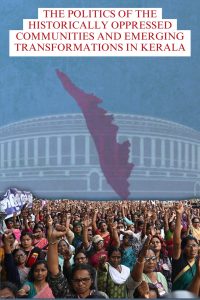
The Politics of the Historically Oppressed Communities and Emerging Transformations in Kerala

Introduction

The recent election campaigns and electoral outcomes in Kerala reveal an important shift in the political economy of the state. Historically oppressed communities, particularly Dalits, Adivasis, Queer people, coastal communities and plantation labour populations, are increasingly reshaping democratic discourse through political responses to unequal development, land alienation, labour precarity, ecological vulnerability and exclusion from institutional power. Kerala’s development model has long been celebrated for its welfare system, literacy and public health achievements. Yet beneath this progressive image, structural inequalities around caste, land ownership, labour relations and representation persisted. The recent elections indicate that the historically oppressed communities are no longer willing to remain silent participants within larger ideological coalitions and are instead asserting independent political agency. A key feature of this shift is the emergence of intersectional solidarity linking caste, labour, ecology, gender, climate vulnerability and democratic representation. The growing assertion of Dalit and Adivasi leadership is therefore not merely symbolic identity politics, but also rooted in struggles over land, labour, rehabilitation, environmental governance and access to state power.


Decline of the Left in Kerala and the Crisis of the “Casteless” Narrative

One of the most significant political developments in Kerala is the visible decline of the CPM and the broader Left among sections of historically oppressed communities. The Left historically built legitimacy through class politics, labour struggles, land reforms and welfare governance. However, many Dalit and Adivasi intellectuals increasingly argue that Left politics failed to adequately confront the persistence of caste within Kerala society. The long-standing “casteless Kerala” narrative often invisibilized continuing inequalities in land ownership, institutional representation, educational access and social dignity. The political posturing around “castelessness,” including within universal welfare and “zero poverty” narratives, was increasingly criticized for masking structural caste inequalities rather than confronting them. This critique intensified further with the Left government’s endorsement of Economically Weaker Sections (EWS) reservation in Kerala. Many Dalit and Adivasi activists viewed this as an ideological shift that diluted the structural basis of caste-based reservation by reframing affirmative action through economic criteria.

Within Dalit intellectual circles, this was interpreted as evidence that the Left was increasingly accommodating upper-caste anxieties and middle-class aspirations rather than deepening anti-caste politics. The implications were both political and ideological. Historically oppressed communities increasingly expect political frameworks that directly address caste, land inequality, ecological injustice and democratic representation instead of subsuming them entirely within class-based narratives. The decline of older ideological certainties has also accelerated the emergence of intersectional solidarities among communities confronting different forms of structural exclusion.


Open Political Assertion by Dalit and Adivasi Leadership

A defining feature of the current political moment is that Dalit and Adivasi leadership in Kerala has increasingly begun to openly assert political positions in the public sphere. Discussions around leaders such as Sunny M. Kapicadu, C. K. Janu, and Manikuttan as potential or symbolic candidates in Kerala elections reflected an important democratic shift. The significance of these discussions lay not only in electoral arithmetic, but also in the broader recognition that historically oppressed communities now expect direct political participation and negotiated representation. Similarly, public declarations of support for the UDF by intellectuals and activists representing 52 organisations and networks, including the press conferences of Geethanandan and Ambujakshan, reflected a new political culture. This demonstrated that the leaders representing the historically oppressed communities were increasingly willing to negotiate alliances publicly.

This marks a departure from older political expectations, where historically oppressed communities were often expected to remain within broader secular or class-based coalitions without independently articulating political positions. Increasingly, intersectional solidarity is becoming the basis for new political alliances and democratic negotiations in Kerala.


Intellectual Assertion and Intersectional Solidarity

The recent transformations in Kerala cannot be understood only through elections. The state has also witnessed the rise of a strong generation of Dalit and Adivasi intellectuals, writers, filmmakers, journalists and public scholars who have reshaped democratic discourse. Intellectuals such as Sunny M. Kapicadu have consistently challenged caste invisibilization within Kerala’s progressive discourse while raising questions of constitutional morality, burial rights, land inequality and dignity. C. K. Janu’s long-standing struggles around Adivasi land rights and displacement continue to shape debates on indigenous justice.

Public intellectuals and scholars, including Dinu Veyil, Dhanya Raman, Rekha Raj, Vinil Paul, Syamkumar, Malavika Binny and many others, have contributed through academic research, anti-caste writing, feminist critique and public engagement. Mainstream media interventions by Rejimon Kuttappan, literary contributions by Dalit and Adivasi poets and writers, including Vedan and cinematic interventions by Dr. Biju, Mrudula Devi, Vinayakan and Leela Santhosh and many more, show how questions of caste, labour, ecological vulnerability and democratic exclusion are increasingly entering Kerala’s public sphere through multiple platforms. One important political framework emerging from these interventions is intersectional solidarity.

More than a slogan, intersectional solidarity is increasingly becoming a political formation through which historically oppressed communities are building collective democratic assertion across caste, labour, gender, ecological and livelihood struggles. Dalit, Adivasi, coastal, feminist, labour and climate-vulnerable communities are increasingly recognizing shared experiences of exclusion while also acknowledging the specificity of caste oppression. Grassroots women leaders such as Gomathi Akka, representing plantation labour women from Idukki; Maglin Philomina, from the fishing community in Thiruvananthapuram; and Ammini K, Adivasi women leader from Wayanad reflect this transformation. Their experiences reveal the intersection of caste, labour exploitation, gender inequality, climate vulnerability and livelihood insecurity. Similarly, the 266-day protest by ASHA workers in Kerala reflected growing anger over low wages and the contradictions within the state’s celebrated public health model, helping build solidarities that extended beyond conventional political and social camps.

The emergence of intersectional solidarity has also been shaped by institutional struggles and public resistance against caste oppression within Kerala’s educational and cultural spaces. Protests and mobilizations around caste discrimination at the K. R. Narayanan National Institute of Visual Science and Arts, caste exclusion within campuses and universities, atrocities against historically oppressed communities and allegations of extrajudicial aggression have contributed to a broader political consciousness among youth and social movements. Historically oppressed communities increasingly responded through protests, demonstrations, public campaigns and collective resistance. These struggles helped make caste violence, institutional discrimination and state accountability central concerns within Kerala’s democratic discourse.


Elections, Representation and the Future of Kerala Politics

The recent elections also revealed a deeper crisis within Kerala’s traditional bipolar political structure. The BJP’s growing vote share, reportedly reaching around 15.18% in certain contexts, reflects not only ideological polarization but also the fragmentation of older welfare-based political coalitions. Economic insecurity, youth unemployment, migration anxieties, agrarian distress and dissatisfaction with established political structures have created conditions for alternative political mobilizations. Historically oppressed communities are no longer electorally peripheral; they are becoming strategically central to Kerala’s political future.

These shifts have also complicated the UDF’s traditional social base, historically associated with sections of upper-caste and Christian communities. As the BJP attempts to expand its influence within these constituencies, the UDF is increasingly being positioned as a broader anti-BJP coalition at the state level, particularly because of the continued presence of the Muslim League within the alliance. For many supporters, this regional electoral arithmetic is also tied to a larger national calculation that strengthening the Congress-led opposition within state legislatures remains necessary to counter the BJP nationally.

At the same time, questions of representation have become increasingly important in the context of the formation of the UDF ministry. The inclusion of three Dalit MLAs as ministers is viewed by many as politically significant because it reflects growing pressure from historically oppressed communities for meaningful participation in governance and institutional power. It also suggests that mainstream political formations increasingly recognize the electoral and political importance of Dalit assertion within Kerala’s changing democratic landscape. However, the continued absence of Adivasi representation within the ministry remains deeply disappointing. In a state where Adivasi communities continue to face land insecurity, displacement, ecological vulnerability and inadequate rehabilitation, the lack of ministerial representation reinforces the long-standing invisibilization of indigenous communities within institutional power.

This contradiction reveals a deeper political economy reality within Kerala society. As historically oppressed communities increasingly build intersectional solidarities and engage more directly with questions of governance, development, representation and resource distribution, dominant social and political interests increasingly perceive this emerging unity as a challenge to existing power structures. The growing assertion of Dalit, Adivasi, coastal, plantation labour and other historically oppressed communities is therefore not merely an electoral development. It is increasingly shaped through solidarities across communities that were historically treated as separate social and political constituencies. This reflects a deeper democratization of political participation, where historically excluded communities are demanding a role in shaping policy, development priorities and governance itself. The central political question facing Kerala today is whether democratic institutions are capable of moving beyond symbolic inclusion toward structural participation and justice.


Conclusion

The recent electoral shifts in Kerala represent more than temporary political dissatisfaction. They reflect a deeper restructuring of democratic consciousness within the state’s political economy. Historically oppressed communities are engaging with politics through questions of land, labour, ecology, dignity, climate justice, rehabilitation and democratic participation, rather than functioning as permanent vote banks for any political formation. The growing visibility of Dalit and Adivasi intellectuals, grassroots leaders, journalists, filmmakers and activists reflects how historically oppressed communities are producing their own political narratives instead of depending on representation through dominant structures.

The future of Kerala politics may depend on how political parties respond to demands emerging from historically oppressed communities. The consolidation of intersectional solidarity among these communities may become one of the defining political developments shaping Kerala’s democratic future. What is unfolding in Kerala is therefore not simply a shift in voting behaviour. It represents the emergence of a new democratic phase in which historically oppressed communities are actively reshaping the political economy of the state.


Jinu Sam Jacob belongs to the Dalit community and is a social development practitioner with 18 years of experience working on human rights, climate justice, governance, urban poverty within and outside India. He has worked with organizations including Plan International, Save the Children, CRY and IIHS. Currently, he is based out of Bengaluru and working as Consultant for development Organisations, CSRs and Philanthropists. He is co-ordinating Alliance of Climate Frontline Communities and engaging in international advocacy with UNFCCC. He is also an advisor for the South Asian Sanitary Labour Network.

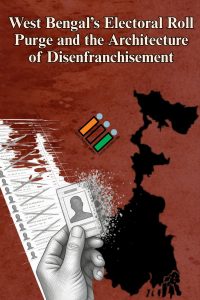
West Bengal’s Electoral Roll Purge and the Architecture of Disenfranchisement

In the run-up to polling, West Bengal isn’t just approaching an election. It is also seeing a redrawing of who gets to participate. Voting is set for April 23 and April 29, yet for millions the right to vote has already been taken away through administrative action. The Special Intensive Revision (SIR) of electoral rolls has operated in much the same way as its precursor in Bihar and its antecedent, the National Register of Citizens in Assam: as a tool of exclusion shaped by bureaucratic force, opaque technology, and nationalist ideological direction.

Between 9 and 9.1 million names, close to 12 percent of the electorate, have been removed ahead of the 2026 Assembly elections. Over 6 million were categorised as absent, shifted, deceased, or duplicate. The deeper problem sits with the remaining 2.7 million people whose status is still unresolved. Many of them submitted documents, established links to earlier rolls including the 2002 list, and yet found their voting rights in suspension. The election is proceeding even as their claims remain undecided.

The exercise has been presented as an attempt to produce a “pure electoral roll.” In practice, it signals a move away from inclusion towards filtration. An AI-assisted system has been used to identify what are described as “logical discrepancies” in voter data: minor spelling differences in names, age gaps within families, or several individuals linked to a single parent. In a context where documentation is often uneven and shaped by linguistic and clerical variation, these benchmarks turn ordinary inconsistencies into reasons for exclusion.

The pattern becomes clearer in the numbers. Muslims, who make up about 27 percent of West Bengal’s population, account for roughly 34 percent of those removed, around 3.11 million people. Districts such as Murshidabad and Malda have seen particularly high levels of deletion. Dalit Hindu communities, especially those with histories of migration like the Matua community, have also been heavily affected in districts such as North 24-Parganas and Nadia. The impact is spread across groups, but it consistently bears down on those who are already vulnerable, dependent on documents, and politically marginal.

In border districts adjoining Bangladesh, where narratives of migration and infiltration have long circulated, deletions are especially high. North 24-Parganas alone has lost more than 1.26 million voters. In parts of Kolkata, close to 30 percent of voters in certain constituencies have been removed. Some polling booths have seen more than half their electorate disappear from the rolls. Entire neighbourhoods have effectively been thinned out in the days before voting.

The process has moved quickly, concentrated in the immediate lead-up to the election. While appeal mechanisms exist on paper, they are limited in practice. Nineteen appellate tribunals were established to hear challenges, but access has been restricted, hearings limited, and even legal representation reportedly curtailed. Deadlines for inclusion in supplementary rolls leave little room for proper adjudication. The rolls were frozen on April 9, excluding those whose cases are still pending.

What emerges is a system in which rights are not formally denied but held in suspension. Voters are asked to appeal, yet the process does not conclude in time to restore their participation. Disenfranchisement takes shape through delay and procedure rather than through an explicit refusal.

The Election Commission has carried out the revision using methods that remain difficult to scrutinise. The algorithm used to identify discrepancies has not been fully explained, and the criteria themselves differ from earlier exercises at this scale. A process once associated with expanding the franchise now casts large numbers of voters as suspect. In both its design and its execution, the approach sits closer to a broader political direction than to an independent constitutional role.

On the ground, the disruption is uneven and immediate. Within the same household, some names remain while others are missing, often without explanation. Individuals with long-established records, including presence in earlier electoral rolls, have been excluded due to clerical inconsistencies that frequently originate in state documentation itself. Differences in dates of birth, variations in spelling, or changes over time are enough to trigger doubt. The burden of proof rests entirely on the individual, even when the discrepancy is administrative.

This is how bureaucratic violence works. It does not rely on overt force. Instead, it imposes procedural demands that many cannot meet within the time and access available to them. It requires documents, verification, and compliance under compressed timelines. The outcome may appear technical, but its consequences are clearly political.

West Bengal remains a central electoral focus for the Bharatiya Janata Party, which has sought to expand its presence in the state. Campaign language around “infiltrators” overlaps with the categories produced through the SIR process. Administrative labels such as “doubtful” voters sit alongside political claims about illegal migration, often directed at Muslims. In this alignment, the revision of electoral rolls becomes part of a wider effort to reshape the electorate before voting takes place.

What is being reshaped is not only a voter list. It is the basis on which political participation is granted. The right to vote is becoming conditional, dependent on continuous verification and open to withdrawal through processes that lack transparency and accountability. The creation of large categories of “doubtful” voters embeds that uncertainty.

This is not an abstract question of representation. It reflects a further narrowing of an already constrained democratic space. When millions are excluded from the electoral process through procedural means, the issue extends beyond electoral outcomes. It concerns who is recognised as part of the political community, and who can be removed from it without consequence.


Paresh Hate is a Bahujan queer researcher, writer, documenter and activist and the Lead Content Manager at Dalit Voice.

No Liberation Alone: The Call for Dalit-Muslim Solidarity

Over the last few years, the relationship between Dalit and Muslim identities has opened in ways that are both politically urgent and intellectually generative. Debates have multiplied: from the constitutional demand to extend Scheduled Caste status to Dalit Muslims and Dalit Christians—beginning with Ghazi Saaduddin v State of Maharashtra—to concerns over a National Population Register being introduced through the Census, even as the long delayed caste census has finally become feasible. From the disquiet around Bihar’s Special Intensive Revision of Electoral Rolls to the earlier specter of the National Register of Citizens, and from the renewed articulation of the Pasmanda Muslim movement to emerging solidarities across universities, each of these moments underscores how social justice politics in India must evolve to survive and flourish.

Across public universities, student alliances between Ambedkarite and Muslim organizations are emerging as fragile but significant experiments in political imagination. The 2019 Maharashtra Lok Sabha elections, where the Vanchit Bahujan Aghadi and the All India Majlis-e-Ittehadul Muslimeen briefly converged, were another testing ground for this idea of solidarity, even as the electoral results revealed both arithmetic limits and organizational shortcomings. Many dismissed these experiments as naive or opportunistic, while others argued that any genuine alliance could only emerge between Dalits and Pasmandas, not Dalits and Muslims as a whole. Yet such thinking misreads both the enemy and the terrain.

By narrowing the horizon of unity to internal gradations of caste within Muslim communities, it sidesteps the central problem of our time: Hindutva. Caste is treated as the only enduring structure of power, while the violent consolidation of Hindu nationalism, which weaponizes both religion and caste, is ignored. Yes, caste operates among Muslims, as it does among every community shaped by the subcontinent’s history. Yet for Hindutva, the Muslim remains the primary target, with Christians not far behind. Anti Muslim hatred is the binding glue of Hindu nationalism, while caste hierarchy is the adhesive that keeps its social base intact. The two reinforce each other.

The post-Mandal moment unsettled the upper-caste hegemony of Hindutva, both as response and effect. Its cadres are drawn from various castes and regions, yet their ideological unity depends on the fiction of a singular Hindu identity. That fiction is sustained by coercing lower-caste Hindus into complicity against Muslims and Christians. It is caste consolidation that forms the sustainability of ethno-religious nationalism, turning the oppressed into foot soldiers of their own subordination.

The everyday experience of violence, surveillance, and humiliation provides a point of convergence between Dalit and Muslim lives. Police encounters, custodial deaths, demolition drives, and denial of housing follow similar social logics. These are not random or isolated acts but techniques of governance designed to mark certain populations as permanently suspect. The language may differ—“illegal encroacher,” “anti-national,” “criminal tribe,”, “anti-Hindu”—but the state’s gaze is the same. Recognizing this continuity is not about comparing suffering but about mapping power and understanding how it operates across identity lines.

There is also a long history of deliberate attempts to divide these solidarities. Colonial administrators categorized and ranked communities, while postcolonial elites preserved graded inequality. Every ruling order has depended on preventing horizontal alliances among the oppressed. Today, the right continues this strategy, using identity politics as a tool of social management. The challenge for social justice politics is to reclaim identity as a site of collective resistance rather than as a source of division, and to do so in ways that link Dalits and Muslims without flattening the distinctiveness of their experiences.

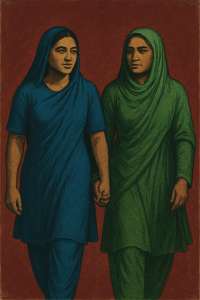
The fractures and mistrust between Dalit and Muslim communities have long been produced by the same structures that govern them. Electoral arithmetic, local competition for scarce resources, and social stigma have been used to keep these groups apart. Yet beneath these divisions lies a shared memory of exclusion and resistance that predates the current moment. Recognizing the legacy of figures like Savitri and Fatima, we must see Dalits and Muslims as fellow targets of the same social order. To rebuild this recognition today means confronting not only oppressive power but also the prejudices left behind in our own communities.

In recent years, cultural expressions have begun to reimagine this shared condition. Neeraj Ghaywan’s Homebound, based on Basharat Peer’s “A Friendship, a Pandemic and a Death Beside the Highway” for The New York Times, offers a striking instance. Set against the backdrop of the COVID-19 lockdown and the migrant crisis, the film traces a friendship between a Dalit man and a Muslim man navigating abandonment and precarity together. Their bond gestures toward a broader political question: what does it mean to build friendship as solidarity in a world determined to divide? To read their companionship politically is to see the possibility of a new ethics of alliance, one that emerges not from ideology alone but from shared vulnerability and mutual care, suggesting how friendship itself can become a form of resistance.

But Dalit–Muslim solidarity cannot remain an occasional alliance or rhetorical gesture. It must become a political project rooted in a shared understanding of power. The question before us is not whether caste exists among Muslims—it does—but whether we can build a politics that breaks both caste and communal domination. That is the only ground on which equality can stand.

V.T. Rajshekhar understood this long before it became a common slogan. Dalit Voice was not only a magazine but a platform insisting on Dalit–Muslim unity as the foundation of any real challenge to Brahminical and Hindu majoritarian power. He refused to treat these communities as separate constituencies; he saw them as parts of a single historical struggle against graded inequality and unfreedom. Reviving his project today means returning to that clarity of purpose, not by repeating his words but by extending his political vision into the realities of our time—where digital surveillance, economic exclusion, and organized hate have replaced older instruments of control. To build on his legacy is to keep the idea of Dalit–Muslim solidarity alive as both strategy and ethics, a politics that seeks not coexistence but collective liberation.

Writing this for the revival of Dalit Voice matters because V.T. Rajshekhar’s work spoke directly to this entanglement, and I— like many others—am a product of this political vision. His idea of “persecuted nationalities” named not only the victims of the Brahminical Hindu order but all those who can challenge it: Dalits, Adivasis, Muslims, Christians, women, the working poor. That vision remains unfinished. Its strength lies in seeing persecution not as fragmented suffering but as a shared political condition. To build from that recognition is to move from sympathy to solidarity, from outrage to organization.


Mohammad Aamir Khan is a student of history and anthropology.

Why Muslim Life is the Cheapest? 

As Indira Gandhi was getting red carpet welcome in Arab countries assuring them that our Muslims are treated so well and urging them to invest their petrodollars in India, we hear heart-rending reports of massacre of Muslim in Bihar Sharif and communal riots in Lucknow and Agra.  

According to newspaper reports about 300 people are killed in Bihar Sharif, although the official figure of the dead is put at 50 at the time of writing this. While in the entire three  month long caste war of Gujarat, the total dead is officially put at about 50, in mere three days of rioting in Bihar Sharif, the official figure of the dead reached 50 or so. In Moradabad, in a day about 1,000 Muslims are reported to have been killed. Does it mean the Muslim life is the cheapest in India? How can such ghastly thing happen in this “Land of Ahimsa” ? That too when Indira Gandhi is busy wooing the Muslim countries and selling out “secularism”.  

Bihar Sharif has a population of 1-60 lakhs of which Muslims constitute about 50%  .

According to the Patna based Special Correspondent of the “Hindu”, a newspaper whose name itself indicates its attitude towards Muslims, minorities were the worst sufferers. The Bihar Govt. was utterly callous and it got alerted only when Indira Gandhi rushed to Bihar Sharif. From newspaper reports, we can make out that the Bihar police and the administration were not moved by such large scale killing of Muslims.

If the ‘Hindu’ itself had to admit that the Muslims were butchered like anything, what could be the magnitude of the massacre?  

PRESS REPORTS  

To understand the gravity of the situation, we would like to quote few samples of the press reports from the so-called “national press”, which is hardly sympathetic to the plight of minorities. And all the reports that we quote here below are from the Hindu journalists.  

HINDU: (May 12) “The real story of communal flare-up in Nalanda can be told only after sanity returns to the strife-torn countryside and passions cool down.  

Meanwhile, suffice it to say that what happened in villages around Bihar Sharif, the district headquarters of violence-prone Nalanda during the first four days of the flare-up, is shocking beyond words.  

It would be a misnomer to describe the communal violence in Nalanda as a riot or clashes. It was a one-sided affair with minority community at the receiving end. Except in Gulani village under Deepnagar police station, marauders, a motley mob of communalists and rapists met with little resistance  

THE STATESMAN: Staff correspondent reporting from Bihar Sharif itself (May 7) says how mercilessly Muslims were massacred He also gives the names of those butchered. 

WHO PROVOKED?  

In Smt. Handisha’s family, a six-year-old baby was also hacked to death. One Lt. Col. Sahaya’s son was dragged out of the bus and murdered. Just because he was sporting a beard, he was mistaken to be a Muslim. The correspondent describes the area as the “desert of hatred and barbarity.  

TIMES OF INDIA: (May 3) Staff correspondent Janak Singh refers to the attack on a funeral procession. He says “several local residents put the blame on R.S.S. elements active in the town”. He also refers to the attack on Muslims engaged in Friday prayers. At least eight people were killed in this.

INDIAN EXPRESS: (May 5) Its staff correspondent points out one Mohammed Murtaza, a bidi worker, saying “I have lost 7 members of my family”. Mihir Mukerjee of the Statesman reporting (May 9) from Chorsua says “riots on such a largescale had never been witnessed in the area since 1946”. 

P. K. Krupakaran, the Indian Express staff correspondent at Patna, (May 14) in a review of the Bihar Sharif incidents, says how Hindu communal elements were responsible for provoking the violence. He says that full three months before the riots there was a clash between the two communities. The cause, some Hindus had planted idols on the Muslim dargahs and graveyards. No doubt the land belonged to the Govt. but the Muslims had been using these lands for years. Why did the Hindus indulge in this provocation?

What type of “secularism” we are practicing? The April 30 clash, which is the beginning of bloody riots, Krupakaran says war between the Yadavas and the Muslims. It was not a clash between the high caste Hindus and the Muslims. Backward class (OBCs) are as poor, if not poorer than the Muslims. Their poverty is mainly due to oppression sanctioned by the Hindu religion. And yet the OBC leaders and our Left movement have not tried to educate them on this vital aspect. 

R.S.S. HAND

How long the poor people of India go on killing each other? Chief Minister Jagannath Mishra has brought to light yet another important point. He said Hindu-Muslim clashes in villages was something unknown in Bihar after 1947. But this time the Hindu communalists took violence to villages as well.

The Hindu-Dalit (caste) riots used to be a rural phenomenon. But the Hindu-Muslim (communal) riots an urban phenomenon. Just as the communal riots are spreading to villages, caste riots are spreading to cities. The Gujarat caste war was inaugurated at Ahmedabad.  

In caste war and communal riots, we are breaking no grounds. What a tremendous progress we have made-thanks to secularism, ahimsa and socialism!!! Indira Gandhi, Jagjivan Ram, Devaraj Urs and others have already visited Bihar Sharif and their findings as to how Muslims were butchered have appeared in the press. But till the time of writing this neither the CPM nor the CPI has sent any team to this place. Nor did they bother about the killings of untouchables in Gujarat.  

That is why the persecuted minorities of India – untouchables, tribals, Muslims and Christians – are hardly evincing any interest in the Left movement. But it must be noted that these four sections together constitute over 50% of the Indian population.  

Jagannath Mishra never bothered about the Bihar Sharif carnage until he was forced to go there with Indira Gandhi. But he was quick enough to hold a press conference at Patna on May 3 to put the entire blame on the RSS for the Bihar Sharif incident. The CPI general secretary Rajeshwari Rao also held the RSS responsible.  

As days pass, we can hear more and more people accusing the RSS for the Bihar Sharif riots. Each political party will try to fish in the troubled waters, but will do nothing to go into the basic issues that spark off Hindu-Muslim clashes.  

It is easy to put the blame on the RSS and be done with it. Such accusations making RSS as the whipping boy, no doubt immensely please the persecuted minorities. Those political parties criticizing the RSS will get Muslim votes.  

SECULARISM  

But Hindu communalism is not the monopoly of the RSS alone. One need not be only in the RSS to be a communalist.  

We have any number of communalists in different parties, press, judiciary, business and professions.  

Persecuted minorities like the Muslims, Christians and untouchables all over India have been the victims of the Hindu communalism. We talk about “secularism” and go on persecuting Muslims and Christians. Indian brand of “secularism” . 

We found ample evidence of this during our two visits to Gujarat where the Dalits were the victims of the Hindu communalism. In Moradabad, Biharsharif and Aligarh, it was the turn of the Muslims. Tribals and Christians are also victims of Hindu communalism.  

In Ahmedabad, the very same Hindu communal elements did their best to turn the Hindu-Dalit caste war into a Hindu-Muslim blood bath. But owing to the effective steps taken by the alert Muslims of Ahmedabad and the Gujarat Dalit Panthers, such a holocaust was averted. We were immensely pleased to see the new-found friendship between these persecuted minorities at Ahmedabad. The Panthers’ official journals are printed in a press owned by a Muslim as Hindus refused to do this job.  

ROOT OF THE PROBLEM  

Muslims told us at Ahmedabad that these very Hindu communal elements let lose a section of the Dalits against Muslims in the 1969 communal carnage, in which unofficial but authoritative estimates put death toll at over 1,000 .

Therefore, it is easy to put the blame on RSS and close the chapter. But the roots of communalism in India are much deeper. Muslims, Christians, untouchables and tribals were being persecuted in India even before the RSS was born. Therefore, it is high-time the persecuted minorities go deeper into the roots of communalism and try to destroy it.  

They cannot depend upon political parties to do this job. Because political parties, including the CPM and CPI, are not interested in social change. But what the persecuted minorities in India want is social change and through that economic change. Will the awakened sections among the persecuted minorities realise this danger, and work for social change? 

Gujarat Dalits Win Caste War

Some people including Dalits were surprised on reading our statement in the press, hailing the Gujarat Dalits for winning the caste war. The Gujarat Dalit Panthers, to whom the leadership of the Dalits passed since the Cong. I leadership disappeared into thin air, have agreed with our assessment and accepted our congratulations. They have also proudly admitted that they have won the battle. 

Yet another proof of victory is that the high caste Hindus, who are leading the anti-reservation agitation, are quarreling among themselves. During our stay in Ahmedabad we have seen press statements by anti-reservationists blaming each other for the “defeat”. That means the high castes have themselves admitted that they have lost the battle.  

This is how we arrived at the conclusion that Gujarat Dalits have won the caste war. Besides, there are any number of press reports also arriving at the very same conclusion.  

MUSLIMS STAND BY DALITS  

After making these observations we reproduce our statement made after a second-round study-tour of Gujarat in the 3rd and last week of April, 1981: –  

On behalf of the Dalits and other progressive forces of Karnataka in particular and South in general, we congratulate the Dalits of Gujarat for having won the ‘caste war’ – the biggest in the history of India. 

We had visited Gujarat in the first week of February and glad to note that all our predictions made then have since come true. The society in Gujarat got neatly divided into caste Hindus versus Dalits. Muslims and Christians solidly stood by the Dalits.  

During the second visit, we had occasion to visit a number of Dalit and Muslim areas, addressed a series of meetings, had discussions with them and also with journalists, professors, lawyers, judges, doctors, textile labuor union and Gandhians.  

The threefold purpose of our visit was-  

  1. to congratulate Ramesh Chandra Parmar, President, Dalit Panthers, Gujarat, and his able band of lieutenants for winning the caste war and providing the Dalits with the most effective and dedicated leadership at the most critical juncture in the history of Gujarat. The Congress (I) and other party leadership including M.L.A.s and M.P.s belonging to scheduled caste has betrayed its caste interests.
  2. to invite 5 leaders of Gujarat Dalit Panthers to Bangalore and then to Madras for a public reception to be accorded to them by Dravida Kazgham and entire Dalits of South. The invitation has been accepted. 
  3. to complete our book on the Gujarat caste-war which will have a foreword by Dr. Mulk Raj Anand, India’s most famous writer. The title of the book is “The Red Book of Hindu Terror”.

AMBEDKAR & GANDHI 

In the light of what we have seen and discussed; we make the following observations:  

  1. The Hindu communal forces after having lost the caste war are today licking the wounds. The R.S.S. and its political reincarnation, the B.J P. which led this anti-Dalit war in the guise of anti-reservation agitation, stands divided and also demoralised. We have evidence that the very same forces tried to set fire to the house of a medico leader. A high caste leader was beaten up by the R.S.S. boys. 
  2. The Dalits who had neither the money, the police, the press nor any social status could win this historic battle because truth and justice were on their side. The medicos lost with all their six Ps, namely Police, Press, Patels, Purse, Political parties and Prabhodh Rawal (Home and Education Minister) because they thought pride and prejudice are superior to truth and justice. 
  3. We also consider this as a battle between Gandhi and Ambedkar. This battle began way back in 1932 with the defeat of Dr. Ambedkar and ending with the infamous “Poona Pact”. In Gandhi’s own land, Gandhi got defeated. So, it’s a historic victory with great implications to be recorded by social scientists and historians. We call upon Dalits to remember Ambedkar’s warning that Gandhi should be treated as the enemy No.1 of the untouchables. 
  4. As we have noted during our previous visit, the R. S. S. and other Hindu communal elements did try their best to turn the anti-Dalit war into a Hindu – Muslim riot. But best of their efforts failed because all the oppressed and persecuted minorities stood like one man. We congratulate the Muslims and Christians for standing by the Dalits. A number of Muslims attended our meetings. 
  5. However, we regret to note that the OBCs listed by the Baxi Commission have not come out openly in support of Dalits. Not only that, in some places like Detroj, Uttarsanda, Pij and some parts of Ahmedabad, (Shahpur) some backward Class Communities like Kshatriyas, Rabaris, and Vaghar also attacked Dalits. 
  6. Chief Minister Solanki’s community of Kshatriyas represent a record 40% of the state population. If reservation goes, the Kshatriya community will be also affected. But Solanki, who became Chief Minister by the strength of his community forgot their interest during this critical period. Therefore, Solanki has to be charged with the betrayal of the interest of his community.
    EXPEL “GUJARAT SAMACHAR”
  7. This leads us to the most important point: The reservations to Scheduled Castes and Scheduled Tribes are provided under the Constitution. Whereas there is no reservation to OBCs. The Government of India report on backward classes (Mandal Commission Report) is now before parliament. The high-caste Hindus have succeeded in engineering an anti-reservation agitation all over the country by taking advantage of Gujarat caste war. The conspiracy behind this is to sabotage the Mandal Commission Report. That means, the Gujarat caste war is not aimed only at Dalits, but to finish the OBCs. Unfortunately, the vast segment of OBCs comprising over 40% of Indian Population has not seen through this game of divide and rule. This is the greatest lesson of Gujarat caste-war. 
  8. We are also sorry to note that S/Ts in Gujarat comprising 14% of the population have also not come out in full support of SCs. 
  9. As a journalist and writer, we are ashamed to note the role played by the press, particularly the Gujarati language press. Not only Dalits and others have complained to us about this but some pressmen themselves have come out with this report quoting Instances. We refer to Arun Sadhu’s report (Gujarat Journalistic Outrage – “Statesman” 18-3-1981)

Report in “Sunday’, Mainstream etc. point out that the upper caste journalists of Gujarat sided with the anti-reservationists to protect their caste interest. Even Arvind Buch, the boss of the powerful Mill Workers’ Union, (Majur Mahajan) and himself a Brahmin, told me that the Gujarati Press was mainly responsible for fanning violence on Dalits.  

It must be noted that it is this very same press which criticized Indira Gandhi for imposing press censorship and making much about ‘gagging the press”. We are happy that the Dalits of Gujarat have exposed the communal character of the Gujarati Press in all its nakedness. The Editors Guild, which has sent a team to Gujarat to probe the excesses of the Press, must expel such editors found guilty.  

We recommend the expulsion of the editor of “Gujarat Samachar”, the largest circulated Gujarati daily, for being mainly responsible for fanning violence.

AMBEDKAR UNIVERSITY  

In the light of these observations, we make the following demands.  

  1. The high caste Hindus have lost the war, they have to now surrender. The Government must reintroduce inter-changeability and carry forward system. None of their demands should be accepted and status quo maintained.  
  2. We reiterate our earlier demand that the Solanki Government must immediately start a separate medical college exclusively for S/C, S/T to be developed into a separate full-fledged University named after Dr. B. R. Ambedkar. This is a must. And we call upon the Dalits to fight for that.  
  3. The entire medical profession, having been prostituted by the high castes, it is high time the Government nationalise the medical profession. This poor country cannot afford to finance the studies of rich high-caste students who flee to America or elsewhere to serve the western world.  
  4. The drug industry, which is also in the hands of the high-castes and aiding and abetting this profession, must be also nationalised simultaneously.

CONCLUSION  

We are not afraid of the caste war. Since “caste” itself is a “class” in India, we consider caste war as the beginning of a class war. If the high castes have the courage, let them abolish the reservations. But are they ready to face the consequences? 

Muslims and Christians’ Global Conspiracy to Subvert India-RSS Version of Conversions

Bangalore:

We are flooded with letters, reports, articles, statements and speeches on the Meenakshipuram mass conversion of untouchables to Islam. It is no longer a flood but a deluge. The epidemic is spreading to Karnataka, Andhra and U.P. Earthquake, as we declared in our previous issue. The Hindu communalists have raised it to the level of Armageddon. The untouchables have tasted the benefits of conversion and more and more of them appear to be rushing to embrace Islam which did produce miraculous results.

B.J. P. president Vajpayee visited Rahmat Nagar and later told the press at Madras on July 17 the RSS version of the conversion. The Deccan Herald report (18-7) says the conversions were “master-minded by certain notorious smugglers who would like to cover up their involvement with counterfeit currency cases. These unscrupulous elements have succeeded in roping in innocent Harijans who have been made to carry fake currency on the assurance that they will not be harassed by the police once they became Muslims”. Vajpayee raised questions of involvement of a foreign agency in printing fake notes, establishment of a technical training school which received Rs. 1.5 crore foreign aid and involvement of an Indian who became a Muslim in a gulf country but is now busy converting untouchables by using foreign money. But Vajpayee was careful not to mention names of the persons doing this conversion or the company that gave the machine to make currency notes or the Arab country from where the petrodollars are pouring. Why did he not give the names? Is he afraid or does he not have the information? The RSS has supplied him the information. But he did not like to repeat the RSS charge because he wants to become the Prime Minister. And he knows that nobody can become PM without the support of Dalits and Muslims. And in these conversions, unfortunately, the very two communities are involved. RSS wants to groom him for the Prime Minister but at the same time it cannot get out of its “caste character” which makes it hate these two persecuted minorities. This was Vajpayee’s dilemma when he visited Rahamat Nagar.

What is the RSS? In the July 18 issue of the ‘Organiser‘, under the headline “inside story of Meenakshipuram”, it says “Muslim priests and leaders are working to convert 1 lakh Harians living in 500 villages spread over 3 districts of Tamil Nadu”, The whole thing is described as a “Global conspiracy to subvert India”. It recollects the Times of India (21/3/81) front-page headlines in this connection. The annual report of the “South India Islam Society had said that 8,000 Harijans had been converted to Islam”. The facts, Organiser says, are: The first conversions took place in Korayur, Ramnad district, in Feb. 1980. The person responsible for these conversions is a Ramnad District Health Officer, Dr. Manoharan who became Dr Munnawar Khan and Dr. Jayaseelan, another local Harijan doctor At Meenakshipuram, the police unearthed a big counterfeiting activity in an estate. The counterfeiting was being done according to the police, by some Christian padris with the aim of a printing machine donated by Douglas Charity of America. This has been established by the confessions of the accused persons to the police. A Christian family residing in Tenkasi Taluk, is also running an orphanage aided by the Douglas Charity. The primary purpose of this orphanage is conversion of Harijans to Christianity. This orphanage abets several Harijans to create caste tensions between Harijans and nonpartisans in several villages, so as to create an atmosphere of alienation from the Hindu society, which is necessary for conversions. The family running the orphanage is also said to have made available the machinery for counterfeiting. According to the police, printing and distribution of counterfeit currency has been going on for several years. The modus operandi is that the printing is done by the Christians and the distribution outlets are the trade channels of Muslims. The Harijans are employed to carry the counterfeit currency. The Organiser says “one Thangaraj, a notorious local goonda, changed from Christianity to Islam and became Yusuf to save himself after eloping with a Thevar girl. This Thangaraj had link with the fake note racket. The two Thevar youths who discovered this connection were murdered. Police investigation revealed the fake note racket The police were harsh on SCs and the Muslims assured them that police would not dare touch them if they embraced Islam”.  

This is the RSS version of the whole story which Vajpayee repeated at Madras. The Organiser refers to the Tanjore district conversion led by Ambikapathi father-in-law of Thasi M. Karunanidhi, a DMK MP from Nagapattanam. He converted 20 other Dalits. A famous street is renamed Madina street. The Organiser gives the following details of conversion in Tamil Nadu: total is 1,369. The conversions have nothing to do with social reasons. “They have much to do with the feeling that there is money and power in being a Muslim”. The Organiser later propounds 12 bogus schemes to avert conversions and save “Harijans”. However, some Dalit friends have thrown a challenge: If the Arabs can pay Rs. 500 per convert, the RSS, the Shankaracharyas and the Birlas, who together can command crores of rupees, can offer Rs. 1,000 per head and reconvert them, but as Brahmins. They said they are ready.  

RSS leaders who became so nervous by these conversions have virtually started pissing in their pants. The national executive of the RSS met in Delhi for two days from July 11, Babasaheb Deoras presiding. The full text of the resolution passed at the meeting was published on the front page of the Organiser. We have carefully gone through the resolution and would like to tell our Dalit friends not to be deceived by these crocodile tears of this high caste fascist organisation. Except saying that caste distinction must be buried and the “pernicious practice of untouchability must be ended”, there is nothing concrete. We have had enough of these humbugs from the days of Gandhi. 

Panchama-Baiting in Tamil Nadu  

I wish to refer to the phenomenon of adoption of Islam by the Panchamas in Tamil Nadu which has been going on for more than 10 years, but made a government issue now by the anti-democratic and anti-secular elements of the Hindu Rashtra school. 

Varnashrama Dharma is a well-known tenet of Hinduism. Under this tenet, the panchamas are untouchables. To term the panchamas as Hindus is not correct. They are only unbonded, untouchable slaves of the Hindu.  

As such it is not surprising, with the slow penetration of modern education among the panchama castes and with the consciousness of their human dignity by the youths, some of them become rationalists or materialists. But the vast majority who are religious minded have been adopting Buddhism, Christianity or Islam. The process has been going on for hundreds of years.  

The Hindu clergy and the R.S.S. element are blowing up this phenomenon as part of a Muslim proselytization programme. The animosity existing between Hindus and Muslims in Tamil Nadu is exemplary. The Jamat-e-Islam in Tamil Nadu is very keen about not giving room for communal discord to develop in this part of India. So they are too reluctant to provide assistance for initiating the new-comers into their fold unless responsible Hindus consider it not as a calamity to their way of life but as liberation of the panchama from centuries of caste oppression.  

In such circumstances, I would request democrats to use their influence with the responsible Hindus, R.S.S., the govt. and religious leaders etc. to convince them about the need to desist from rousing communal passions on the issue and to create an atmosphere conducive to the free exercise of their human rights by the panchamas without government interference. The freedom of the Muslims to enfold into their brotherhood the ones who aspire to it without government interference and harassment by Hindu communalists is an an essential demand of secularism.  

This is not the first time in history that people reject the social tyranny of a particular religion and adopt a more rational and humanistic religion. But unfortunately, every Hindu – from the Prime Minister down to the police constable – is propping up the tyranny of Hindu social system on the victims of this tyranny, trouncing all principles to a secular polity. The Indira Congress has started Panchama baiting and Muslim-baiting. Here it has become imperative for democrats to intervene and work in defence of secularism as well as human rights to the Panchamas. We are planning to call a meeting of Panchamas and Muslims at Madurai to thrash out this matter which is so vital for democracy and secularism. Such a meeting should be held at the national level also.