
The Right Not to Sing

Nationalist Demands in the New Law

The Prevention of Insults to National Honour (Amendment) Bill, 2026 was introduced by Amit Shah in the Rajya Sabha on 24 July 2026. Its Statement of Objects and Reasons recalls that Rajendra Prasad, as President of the Constituent Assembly, said on 24 January 1950 that Vande Mataram would be “honoured equally” with Jana Gana Mana. It notes that no legal provision existed to prevent interference with the singing of the National Song and proposes to address this by amending Section 3 of the 1971 Act, which already made intentionally preventing the singing of the National Anthem, or disturbing an assembly engaged in singing it, punishable with imprisonment of up to three years, a fine, or both, with a mandatory minimum of one year for a second and subsequent conviction. The amendment extends that same offence, and the same penalties, to the National Song. Article 51A(a) names the Constitution, the national flag and the national anthem as objects of citizens’ respect; it has never named the National Song.

The amendment arrived alongside a separate, longer-running push to change what gets sung. Vande Mataram has six stanzas; since 1937, only the first two have been used at national gatherings, a convention set by the Congress Working Committee. The Ministry of Home Affairs had already moved to reverse that convention on its own, issuing a protocol on 28 January 2026 requiring the full six-stanza version at government, ceremonial and cultural events, well before this amendment existed. That protocol was advisory and, as the courts would go on to hold twice over the following months, carried no penalty of its own. Only after those two challenges failed did the government tighten the position twice more: a July 9 MHA letter to all states specifying that only the official six-stanza version could be recited whenever the song was sung in mass singing, and then, on 24 July, the amendment itself. Where both the song and the anthem are performed at one event, Vande Mataram now goes first. Schools are directed to open assemblies with it, although many schools already practiced this of their own volition. It is to be played at state functions, civilian award ceremonies, flag-hoisting events, and the arrivals and departures of the President and Governors.


The Political Fight Over the Song
The push for the full six-stanza version followed a ten-hour special discussion in the Lok Sabha in December 2025 marking the song’s 150th anniversary, in which the Prime Minister accused the Congress of having “sowed the seeds of division” by trimming the song. In 1937, the Congress Working Committee, after consultation with Mohandas Gandhi, Jawaharlal Nehru, Rabindranath Tagore, Subhas Chandra Bose, Rajendra Prasad and Vallabhbhai Patel, decided that only the first two stanzas would be used at national gatherings because of objections to the religious imagery in the later verses. Tagore had written to Nehru that the first two stanzas had “acquired a separate individuality and an inspiring significance of its own,” while the later verses, read in context, “[are] liable to be interpreted in ways that might wound [Muslim] susceptibilities.” Congress rejected the Prime Minister’s charge, pointing to this 1937 decision and Tagore’s letter and accusing the government of manufacturing the controversy for present gain in the context of then upcoming elections, a charge Priyanka Gandhi Vadra made directly. The Congress Working Committee has since reaffirmed the two-stanza position for its own party programmes.

The dispute has now also moved into a question of federal authority after the Karnataka government ordered on 8 September that only the first two stanzas be sung at state government programmes, except when the President, Vice-President, Prime Minister or Governor is present. Within days, advocate Girish Bharadwaj filed a PIL challenging the state’s authority to prescribe a shorter version, arguing that the matter falls within Parliament’s residuary legislative powers and that the state order conflicts with the 2026 amendment to the Prevention of Insults to National Honour Act. The petition also challenged the procedure by which the Karnataka Cabinet took the decision, alleging that it was approved as an “Informal Discussion” without a Cabinet Note or Law Department advice. Governor Thaawarchand Gehlot then wrote to Chief Minister D.K. Shivakumar, invoking Articles 162, 256 and 257(1) and asking the government to reconsider its order on the ground that it conflicted with the Union’s statutory and executive framework. On 16 September, BJP MLA S.N. Channabasappa walked out of a government programme in Shivamogga after only the first two stanzas were sung.

The opposition, however, has also been weak in resisting the Centre’s position. In Kerala, the Congress-led UDF government initially circulated the Centre’s instruction that Vande Mataram be sung in full during the Har Ghar Tiranga campaign from 9 to 17 August. This put a Congress-led government in the position of appearing to implement the same six-stanza version promoted by the BJP-led Union government, despite Congress’s objections to treating the full version, with its references to Hindu deities, as a compulsory expression of national identity. The CPI(M) criticised the UDF’s position, with Leader of the Opposition Pinarayi Vijayan arguing that the song “in its entirety is not compatible with secularism” and that “there is nothing wrong with reciting the opening stanzas”, and accusing the UDF of surrendering to an RSS agenda. The UDF subsequently clarified that it would not follow the full version, and the state government ultimately omitted Vande Mataram from its official Independence Day function.

The song’s meaning has remained contested within the communities whose religious commitments are most directly implicated by it, a history the government’s “everybody knows what is national song” formulation simply passes over. The distinction made in 1937 remains central to the dispute: the Congress Working Committee accepted the first two stanzas for national gatherings while recognising objections to the later verses and their religious imagery. Muslim religious authorities have continued to make this distinction. Darul Uloom Deoband and Maulana Mahmood Madani have objected to the later verses on the grounds that their depiction of the motherland as divine conflicts with the Islamic doctrine of tawhid, while the All India Sunni Ulema Board ruled in 2006 that Muslims could sing the first two stanzas.

The dispute, however, has not been confined to Muslim objections. During the 2006 centenary controversy, the Shiromani Gurdwara Parbandhak Committee initially instructed its schools not to sing Vande Mataram, with its president arguing that it promoted a particular religion and did not fulfil the aspirations of minorities, before subsequently backing away from that position. In 2026, the Andhra Pradesh Christian Leaders Forum objected to the newly mandated full version, specifically citing its references to Durga and their implications for Christian beliefs. The question is therefore not simply whether Vande Mataram is the national song, but what religious content the state is asking people to affirm when it mandates the complete text. The Home Ministry’s circular treats that underlying question as though it had never been contested. Where it does allude to the religious objection, it reduces it to a question of Muslim reluctance, allowing a disagreement over religious belief to be recast as a question of patriotism.


The Text Behind the Mandate
The distinction between the first two stanzas and the later verses can be traced to how the song was written. Bankim Chandra Chattopadhyay had written the first two stanzas in the 1870s, describing a land of rivers, fruit and gentle winds. He added four more when he incorporated the song into his 1882 novel Anandamath, and those later stanzas carry the divine imagery: the third stanza calls the motherland “protector of millions and destroyer of enemies,” the fourth names her Durga, Lakshmi and Saraswati outright, while the fifth and sixth complete the poem as a vow of devotion.

Anandamath provides the setting in which those later stanzas acquire their political and religious meaning. Bankim Chandra Chattopadhyay is one of the key figures of proto-Hindutva politics in British India, and the novel is set during the Sannyasi Rebellion. Its protagonist, Mahendra, a zamindar separated from his family amid famine and unrest, falls in with the Santans, a band of ascetic soldiers who have taken up arms to liberate the motherland from Muslim rule, with the British entering the story only later. One of Satyananda’s disciples wants to “pull down the city of the renegades” and “throw it into the river.” Bhavananda, inducting Mahendra into the cause, tells him “unless we drive these tipsy long-beards away, a Hindu can no longer hope to save his religion,” and answers the question of method with “we will beat them.” He then leads Mahendra to the order’s temple, where, standing before the idols of Durga and Kali, he tries to fill him with religious fervor for the fight ahead. Elsewhere in the novel, the Santans send emissaries into villages to gather bands of Hindus, then raid Muslim settlements, which are burned “to ashes.” Characters imagine the day a mosque will be razed to build a temple to Radha-Madhava in its place. The four later stanzas of Vande Mataram were written for, and inside, this story. This is the context of the text now mandated by law.


The Limits of the Law’s Imagination
That January 28 protocol was challenged twice. In February, Muhammed Sayeed Noori approached the Supreme Court, arguing that requiring the complete version raised questions of religious freedom and conscience. On 25 March, the Court declined to entertain the petition, holding that the protocol was advisory and carried no penalty for those who chose not to sing, while leaving open the possibility of intervention if the advisory hardened into actual discrimination or coercion. A parallel challenge in the Karnataka High Court, filed by Bengaluru-based advocate Somashekhar Rajavamshi, objected specifically to the inclusion of stanzas three through six and their references to Durga, Saraswati and Lakshmi; the High Court dismissed it on 9 April on the same ground, that the protocol did not make singing the full version mandatory.

The 2026 amendment changes that position. The January protocol could prescribe the full version’s use; it could not, on its own, criminalise a refusal to sing it. The amendment extends the National Song to the Section 3 offence applicable to the National Anthem since 1971: intentionally preventing its singing, or disturbing an assembly engaged in singing it.

On 22 September 2026, the Supreme Court heard a petition by T. M. Krishna, with senior advocate S. Muralidhar appearing for him. The petition challenges the 2026 amendment insofar as it extends the existing criminal provision to the National Song. It also challenges the Home Ministry’s directions requiring the complete six-stanza version at official functions. The petition argues that the amended provision and the directions violate Articles 14 (equality before the law), 15(1) (prohibition of discrimination on specified grounds), 19(1)(a) (freedom of speech and expression), 21 (protection of life and personal liberty) and 25(1) (freedom of conscience and the right to profess, practise and propagate religion).

The Court refused to decide whether the National Song should consist of two stanzas or six, indicating that this was for the democratically elected state to determine rather than for the Court to prescribe. Justice Bagchi also questioned the suggestion that religious references in all six stanzas are, by themselves, incompatible with the Constitution’s secular character, pointing to the reference to God in the US national anthem. That another country’s anthem contains a religious line does not make it a benchmark for what India’s Constitution should tolerate; it only shows that one other state has also let religious language sit inside a national symbol. Whether a lingering religious motif of that kind is compatible with secularism is exactly the question in front of the Court, and pointing to a second, unexamined instance of the same thing does not answer it. The Centre has two weeks to respond, and the Court has not yet ruled on the constitutional validity of the amendment or the six-stanza directions.

At the hearing, however, the Court drew a distinction between the State’s choice of a national symbol and the use of criminal law in relation to participation in it. Nothing in the amendment says that simply refusing to sing Vande Mataram is itself an offence; the crime, as under the original Section 3, is preventing others from singing or disturbing an assembly engaged in it. The question before the Court is therefore whether the protection recognised in Bijoe Emmanuel, which concerned refusal to sing the National Anthem under that same original section, also protects a person who refuses to sing the National Song on grounds of conscience or religion while leaving others free to do so.

That leaves an odd gap. If the amendment truly does not touch a refusal that neither prevents others from singing nor disturbs an assembly, the state loses nothing by saying so outright, and Krishna’s petition should fall outside the law’s reach without a fight. The Centre resisted even the issuing of notice, and Solicitor General Mehta pressed the Court not to entertain the petition at all. That resistance points to a state interest that Section 3’s text does not itself supply: the discretion to withhold, for as long as possible, any confirmation that non-participation is safe.

Bijoe Emmanuel v. State of Kerala, which the Court said still governs the field and has never been challenged, is the case that established that refusal to sing the National Anthem, where the person neither prevents others from singing nor disturbs the assembly, does not constitute an offence under Section 3. In 1986, the Court considered three schoolchildren in Kerala who belonged to the Jehovah’s Witnesses faith. They believed that singing the National Anthem was incompatible with their religious convictions, although they had no objection to the words or sentiments of Jana Gana Mana. During their school’s morning assembly, they stood silently while the anthem was sung. After the issue was raised, they were expelled from school, despite an inquiry finding that they were law-abiding and had shown no disrespect. The Supreme Court held that their expulsion violated their fundamental rights. It also held that there was no law obliging anyone to sing the National Anthem and that their standing silently while it was sung did not constitute an offence under Section 3 because it neither prevented the singing nor disturbed the assembly.

The Court in Bijoe Emmanuel answered for the facts it had: the children stood, in silence, while others sang, and that was respect enough. Whether sitting, or some other form of non-participation, would count the same way was never argued before it, and the judgment does not say. The Court’s later National Anthem jurisprudence went further than Bijoe Emmanuel by imposing a general requirement to stand, but went no further in deciding whether an able-bodied person who chose not to comply had thereby committed an act of disrespect. In Shyam Narayan Chouksey v. Union of India, the Court initially ordered, in 2016, that the National Anthem be played before every feature film and that everyone present stand. It subsequently recognised exceptions for people unable to stand and for occasions when the anthem appeared within a film, newsreel or documentary. In 2018, it made the playing of the anthem before films optional and handed the wider question of its regulation to the government. What remained unresolved was whether an able-bodied person who deliberately remained seated when the National Anthem was played had thereby shown disrespect.

Article 51A(a) requires citizens to respect the Constitution, the national flag and the national anthem. That language concerns respect for specified national symbols, while Section 3 concerns conduct that interferes with their public performance. The Constitution speaks of an attitude of respect; Section 3 defines specific acts that the law prohibits. Bijoe Emmanuel is the only case here that actually examined a specific act of non-participation and ruled on whether it counted as respectful: the children stood silently while others sang. Chouksey, by contrast, imposed a general rule about what everyone present in a cinema hall had to do when the anthem was played, and later withdrew the requirement that the anthem be played there at all. The distinction between respectful and disrespectful non-participation has therefore never actually been adjudicated on its own terms. That leaves the discretion to decide sitting with whoever is enforcing the law in the moment, not with any settled rule a citizen could rely on in advance. And even supposing that gap could be closed, and the state produced a clean definition of respectful non-participation tomorrow, a further question is why a person should have to demonstrate respect for a national symbol through participation of any kind, rather than simply being left alone by the law altogether.

Article 51A(a) itself answers none of this. The Fundamental Duties, inserted into the Constitution by the 42nd Amendment in 1976, are not enforceable in court. No citizen has ever been prosecuted for an abstract failure to respect the Constitution, the flag or the anthem. Section 3 punishes specific conduct: preventing a performance, disturbing an assembly, even though the boundaries of that conduct can still be interpreted and policed according to the discretion of whoever is enforcing the law. Article 51A(a) supplies the word “respect” and nothing else. It does not say what respect consists of, and it does not say respect must be shown rather than merely left unviolated. The state has built a criminal statute that reaches only interference, and rested it on a duty clause that was written to describe an attitude, not to compel an act.


The Right Not to Sing
The present controversy asks a larger question about the limits of state power over national rituals. A person may have a religious objection to the text, reject the use of a national symbol altogether, or simply choose not to participate. If that refusal does not prevent anyone else from singing, what is the state entitled to demand from the person who refuses? Even as the space for conscientious objection shrinks in the shadow of ultranationalism, we must continue to ask: why should the state require that refusal to take a prescribed form of respect, and why can it not leave room for people to decline participation altogether?
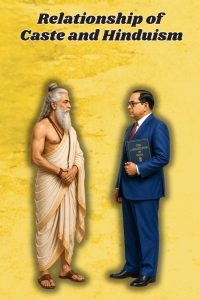
Relationship of Caste and Hinduism

Archival Note

Published in Dalit Voice (Vol. 29, Issue No. 03, 01/02/2010), this essay by V. T. Rajshekar examines Hinduism through the question of caste. He traces caste divisions to the Purusha Sukta and the Bhagavad Gita, then turns to the Manusmriti and its treatment of Brahmins, Sudras and women.

Rajshekar connects these religious texts to the oppression of Dalits and cites accounts of violence against Untouchables alongside condemnations of caste from writers and public figures. His argument leads to a direct question: if caste is part of the religious order Rajshekar identifies as Hinduism, can Hinduism exist without caste?

The essay closes by putting that question to the Hindu believer featured in the film that prompted Rajshekar’s article. How can Hindu faith be reconciled with the caste system? And if caste is rejected, what does that mean for the religious traditions that Rajshekar argues have sustained it?

Read the full piece here


British Anthropologist Details Barbarity of Hinduism

“Revelations: How do you know god exists”, is a film by Anthony Thomas (Channel 4). I saw this film on Aug. 16, 2009. I was particularly interested in what the Hindus had to say. I lived in India for 15 years and found their belief system very confusing. The Hindus as well as the others interviewed failed to show us how he knew god exists.

PART-1

The caste system & origins of Hinduism:

Hinduism is based on myth. Seven rishis overheard “wisdom” being spoken by the gods. This wisdom they passed on to mankind as the four Vedas:

  1. Rig Veda
  2. Yajur Veda
  3. Sama Veda
  4. Atharva Veda

The Rig Veda is our principal concern. It is a composition of 1,028 poems. But more of this later.

HINDU & GREEK GODS

33 crore gods:

According to Lord Winstone (April 17, 2006), the Hindus have about 330,000,000 gods. Shiva, one of the main gods, has 1,008 epithets. Most deities have consorts: Shiva’s wife is Parvati, Vishnu’s wife is Lakshmi and Brahma’s wife is Sarasvati. Mention must be made of two other important gods: Durga and Kali. Sitala is the goddess of smallpox. And the Hindu deity Devagana, it is believed, lives in the anus. And so on.

The Greeks also believed in gods and goddesses. The Greek philosophers found that the gods and goddesses resembled mortals too much and the “myths were nothing but human notions”.

Xenophanes who lived about the year 570 BC was the exponent of this view. There followed developments from a mythological mode to one based on experience and reason. The aim of Greek philosophy was to find natural rather than supernatural explanations for natural processes. The Greek gods and goddesses were then relegated to the realms of fiction.

But the Hindus, on the other hand, continue to believe in their gods and goddesses to this day. The Hindu belief that human beings are born unequal is based on a Vedic hymn called Purusha Sukta found in the fourth veda, the Rig Veda.

According to the Purusha Sukta, the social divisions into which all human beings fall are:

(1) Brahmins, the highest caste, (2) Kshatriyas, the warrior caste, (3) Vaisyas, the merchant caste and (4) Sudras, the working caste.

GOD CREATED CASTE SYSTEM

Outside this demarcation based on strict hereditary lines are the outcastes or Untouchables, who do not belong to any caste at all. They are called Dalits today. It was further confirmed by God Krishna in the Bhagavad Gita (4.13):

The fourfold caste was created by me by the different distribution of guna and karma.

It was finally codified by someone called Manu, the greatest lawgiver.

Who was this Manu?

Manu was born directly of the god Brahma and was hermaphrodite. The human race began from Manu and his family. (Romila Thaper: A History of India, p. 28).

HINDU LAWS OF MANU

Gidoomal and Thomson on p. 17 of their book, A Way of Life, say:

Manu represents the beginning. A semi-divine mythical creature; he is the first man, the first king of India, the first to light the sacrificial fire and the first and the greatest lawgiver.

Every Hindu man and woman is expected to follow the laws of Manu which came to be called Varnashrama Dharma or Manusmriti. They were written down about 200 BC. Hindus follow the laws of Manu to the letter even to this day. And what are some of the laws set by Manu for Hindus to follow?

Here are some taken at random:

(1) The Brahmins are the highest caste. They are the gods among humans.

(2) The drum, the illiterate, the low caste, animals and women must be beaten to make them fit.

(3) A woman must never be independent.

(4) The Brahmin is holy and has a claim to veneration even if he commits shameful deeds.

(5) A Brahmin is born as the highest on earth, the lord of all created things. Whatever exists in the world is the property of the Brahmin on account of the excellence of his origin. The Brahmin is indeed entitled to it all.

(6) The lord has prescribed only one occupation for Sudras (the lowest caste). They must perform service without malice to the other three castes.

(7) Those who educate Sudras will go to hell. A Sudra is unfit to receive education. The upper varnas or castes should not impart education or give advice to a Sudra. Violators will go to hell, called Asamvritta.

(8) If a Sudra (low caste) listens to a recitation of the Vedas (Hindu holy books), his ears shall be filled with tin or lac. If he recites Vedic texts, his tongue shall be cut. Only the Brahmins are entitled to receive the teachings imparted in the Vedas.

ATROCITIES AGAINST DALITS

It is difficult to credit the misanthropic effusions as law to this man who, it is said, was the son of Brahma, the supreme god. No wonder Indian women in 2000 AD

“publicly burned copies of the Manusmriti declaring that the text was misogynistic” (Introducing Hinduism, Lall & Von Lodon, p. 30).

Then there are millions and millions of people in India who have no caste at all. They are without caste because of sins committed by them in a previous incarnation. They are called outcastes or Untouchables. Today they are referred to as Dalits.

The effect of Manu on the outcastes has been devastating. From the time they are born till they die they suffer discrimination and humiliation at every turn of their lives.

GOD ORDERED HINDUS TO KILL DALITS

They have no redress. Here are a few examples of atrocities chosen at random which are committed against the Untouchables:

(1) 1969: India: A Million Mutinies Now by V. S. Naipaul (Viking): “In 1969, 40 Untouchables (Harijans) were burnt alive in a hut.”

(2) April 14, 1992: Commemorating the birthday of Dr. Ambedkar: “20 houses belonging to Untouchables were burnt at Kadalur village (80 km from Madras).” Reported by Henry Thiagaraj in The Wounded Society.

(3) June 18, 2000: The London Observer. “A picture showing a village of low castes (Untouchables) being massacred by high caste thugs in Bihar, India.”

(4) March 30, 2003: The Guardian: “A young lower caste woman was set on fire and burned to death yesterday by the upper caste father of the man she accused of raping her.”

(5) Dec. 16, 2005: Dalit Voice (magazine, p. 9). Gohana (Haryana) incident in Aug. 2005 when 60 Untouchable houses were burnt with police looking on.

(6) 2006: Indian National Bureau of Crime report. 27,007 crimes had been committed against Dalits. Many go unreported (See box):

In 1999, William Dalrymple, reviewing Robert Deliege’s book, The Untouchables of India, says in the London Sunday Times:

“Hindus actually believe god has authorised atrocities to be committed against these Untouchables.”

UNIVERSALLY CONDEMNED

Never in any part of this wide, wide world, whether savage or civilised, is systematic murder of human beings given such divine approval, except in India. Dalrymple goes on to say in the same review:

“In many high caste-dominated villages no Untouchable is allowed to ride a bicycle, sit down or even wear shoes in the presence of a high caste Hindu… Reported incidents of serious violence against Untouchables run at about 9,000 cases annually and this is the tip of the iceberg”.

The caste system of which untouchability is the indispensable part is integral to Hinduism.

‘….those whose conduct has been evil will quickly attain evil birth, the birth of a dog, the birth of a hog, or the birth of a Chandala (Untouchable).

Chandogya, translated by Dr. S. Radhakrishnan and quoted by Pratima Bowes in her The Hindu Religious Tradition (p. 57).

The caste system and especially untouchability is universally condemned.

(1) Dr. Karan Singh, a leading Hindu thinker, in his Essays on Hinduism, quoted by Gidoomal & Thomson (p. 9), described the ill-treatment of Untouchables “over the centuries as a standing disgrace”.

(2) Pratima Bowes, The Hindu Religious Tradition (p. 17): The opinion (is) often expressed that the caste system is the centre of the Hindu religion and that the breakdown of this system means the end of this religion.

(3) Caspar Melville, editor of the New Humanist, Nov. 2005 (p. 19), is “against the caste system, the subordination of women and the invested power of the Brahmin”.

(4) Buddha to Manmohan Singh: The caste system has been condemned by writers and reformers from Buddha, Akbar, Mahatma Phule, Periyar, Gora, Tilak, Guru Nanak, Mahavira, Tukaram, Ram Mohan Roy, the Bhakti movement of Southern India to Manmohan Singh, the Prime Minister of India, and countless others.

(5) Jawaharlal Nehru in Glimpses of World History (p. 112) says: “The caste system had the seeds of decay in it. It was based on perpetuating inequality and injustice and any such attempt was bound to fail in the end. No sound and stable society can be built upon the basis of inequality and injustice or on the exploitation of one class or group by another.”

BLEAK FUTURE OF HINDUISM

I give you three sources:

(1) Loon and Lall: Introducing Hinduism (p. 127):

As knowledge of India grows around the world: Bollywood, Indian fashions, Indian classical music, tandoori cooking and India’s famed gurus Hinduism will come under increasing scrutiny.

On p. 161, they go on to say:

Secular Indians and many others with a humanist vision think of the future of India as bleak.

(2) Ram Gidoomal & Robin Thomson in A Way of Life, (p. 150) say:

Whoever is in power, the tensions over caste and class will continue.

(3) Nirad Chaudry in his Preface to Hinduism (p. XI) says:

I have lost faith in the tenets of Hinduism, indeed in all established religions long ago.

CONCLUSION

Hinduism without the caste system is like Hamlet without the Prince.

I would like to ask the Hindu believer in the film wrapped in saffron robes and daubed in symbols of Hindu piety how he could reconcile his Hindu faith without the caste system.

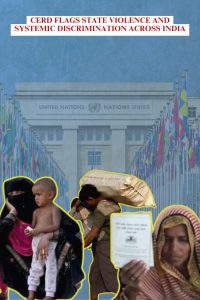
CERD Flags State Violence and Systemic Discrimination Across India

The UN Committee on the Elimination of Racial Discrimination (CERD) has raised serious concerns over the treatment of some of India’s most marginalised communities, including Dalits, Adivasi and tribal peoples, Rohingya, Bengali-speaking Muslims, migrants and asylum-seekers. Its findings follow the first review of India by the Committee since 2007 and examine the country’s combined 20th and 21st periodic reports under the International Convention on the Elimination of All Forms of Racial Discrimination.

The findings were issued after CERD’s 118th session, which also examined Finland, Honduras and Kuwait. This was part of the Committee’s regular review of states that have signed the Convention. CERD’s concluding observations are not court judgments and do not have the force of law. They assess how governments are implementing their obligations under the Convention and identify areas where the Committee finds serious problems.

In India’s case, CERD raised concerns spanning caste, ethnicity, religion, citizenship and policing. One of its gravest concerns was the alleged conduct of law-enforcement agencies towards Indigenous and Tribal Peoples, Scheduled Tribes, Scheduled Castes, particularly Dalits, ethnic and ethno-religious groups and non-citizens. CERD recorded reports of excessive force, racially motivated violence, extrajudicial killings, arbitrary and prolonged detention, torture, ill-treatment and sexual violence. It called for prompt, thorough and impartial investigations, with accountability where violations are established.

The reference to Dalits and Scheduled Castes also brings an older disagreement into the review. The Indian government maintains that caste should not be treated as equivalent to race or “descent” for the purposes of CERD. Its submissions nevertheless contain information on Scheduled Castes and Scheduled Tribes and measures intended to address their disadvantages. CERD’s treatment of caste within its examination of descent and discrimination places caste exclusion within the scope of the Committee’s scrutiny, even as the Indian state rejects that equivalence.

CERD also drew particular attention to Rohingya, Bengali-speaking Muslims, migrants and asylum-seekers. It noted an increase in law-enforcement operations involving these groups, particularly after a 2017 Home Affairs order and the April 2025 Pahalgam attack. Reports of police stops and identity checks based on racial profiling allegedly resulted in arbitrary arrests and detention, torture and other mistreatment. The Committee also raised concerns about deportations and forcible returns involving people who may require international protection.

During the review, CERD Country Rapporteur Stamatia Stavrinaki referred to independent monitoring that recorded more than 1,300 anti-Muslim hate-speech incidents in 2025, including recurring rhetoric attributed to senior officials. India’s delegation responded that legislation enacted in 2023 criminalises acts amounting to hate speech and hate crimes, with additional protections applying when offences target Scheduled Castes and Scheduled Tribes. It also pointed to freedom of religion as a constitutional guarantee.

But CERD’s observations focused on what these protections mean in practice. Alongside the government’s account of its legal safeguards, the Committee recorded concerns about discrimination, hate speech, violence and the conduct of law-enforcement agencies. It called on India to address hate crimes against Rohingya, Bengali-speaking Muslims, migrants and asylum-seekers, refrain from collective expulsions and ensure access to international protection. This includes respecting non-refoulement, the principle that people should not be returned to a place where they face a serious risk of persecution or other grave harm.

The findings also address citizenship and documentation. CERD noted the absence of adequate disaggregated data on Indigenous and Tribal Peoples, ethnic and ethno-religious groups, migrants, refugees, asylum-seekers and stateless people. It highlighted the categorisation of Bengali-speaking Muslims as “non-original inhabitants” and reports that they face more stringent scrutiny during National Register of Citizens verification. The Committee also noted that much of India’s available data on Scheduled Castes, Scheduled Tribes and refugees still derives from the 2011 Census, while acknowledging the delayed 2026 Census and its proposed collection of caste data through self-identification.

The treatment of Bengali-speaking Muslims in the NRC process raises a broader question about how citizenship is administered. CERD’s concern is not simply that documentation is required, but that particular ethnic and religious groups are reportedly subjected to different levels of scrutiny. In a political environment where Muslims are repeatedly cast as outsiders or demographic threats, administrative categories such as “non-original inhabitants” can acquire consequences beyond paperwork. The NRC thus becomes part of a wider system in which belonging is subjected to heightened state verification.

The concerns around Rohingya also sit within a longer history of UN scrutiny. A 2025 communication by UN Special Procedures carried allegations that deportation operations against Muslims, including Rohingya, intensified after the Pahalgam attack, involving raids, arrests, ill-treatment and forcible returns. Those allegations came through a separate UN process and were not findings by CERD or a judicial determination.

India is not a party to the 1951 Refugee Convention or its 1967 Protocol and has no comprehensive national refugee law. UNHCR therefore carries out protection-related functions for refugees and asylum-seekers in the country. This absence has become more significant alongside changes to India’s citizenship and immigration regime.

The Citizenship (Amendment) Act, 2019 was defended by BJP ministers as addressing the unfinished business or “wrongs” of Partition. Yet the CAA was not a refugee law. It created a religion-based route to accelerated citizenship for specified non-Muslim communities from Pakistan, Bangladesh and Afghanistan. It did not establish a general system of refugee protection based on persecution or the risk of serious harm.

And in 2025, Parliament enacted the Immigration and Foreigners Act, replacing four earlier laws governing the entry and treatment of foreign nationals. The new law consolidated the state’s immigration powers without creating a corresponding refugee protection framework. CERD’s call for protection against collective expulsions and respect for non-refoulement therefore comes alongside a strengthened legal machinery for controlling and removing foreign nationals, while India still lacks a dedicated process for determining who requires refugee protection. For Rohingya and other asylum-seekers, that leaves a basic question: what domestic procedure requires the danger they may face after removal to be considered before the state deports them?

India’s delegation, led by Solicitor General Tushar Mehta, defended the country’s legal framework and its claims of pluralism and equality. The government reiterated its position that caste should not be equated with race or “descent” under the Convention and pointed to legislation addressing hate speech and protections for Scheduled Castes and Scheduled Tribes.

CERD’s findings place those claims alongside reports of how state institutions operate on the ground. The Committee’s concerns cover law-enforcement violence against Dalits and Adivasi and tribal communities, anti-Muslim hate speech, racial profiling of Bengali-speaking Muslims and Rohingya, and the treatment of people whose citizenship or immigration status is under scrutiny.

For Dalit and Adivasi communities, and for Muslims and other minorities whose belonging is increasingly subjected to state scrutiny, the findings also expose how Hindu nationalism operates through state power. Caste discrimination, communal targeting, citizenship enforcement and policing are often treated as separate questions, even as they converge in the lives of communities whose relationship with the state is shaped by unequal power. CERD’s observations bring these questions into the same examination of discrimination and direct attention towards the institutions through which unequal treatment is carried out.

Why Muslim Life is the Cheapest? 

As Indira Gandhi was getting red carpet welcome in Arab countries assuring them that our Muslims are treated so well and urging them to invest their petrodollars in India, we hear heart-rending reports of massacre of Muslim in Bihar Sharif and communal riots in Lucknow and Agra.  

According to newspaper reports about 300 people are killed in Bihar Sharif, although the official figure of the dead is put at 50 at the time of writing this. While in the entire three  month long caste war of Gujarat, the total dead is officially put at about 50, in mere three days of rioting in Bihar Sharif, the official figure of the dead reached 50 or so. In Moradabad, in a day about 1,000 Muslims are reported to have been killed. Does it mean the Muslim life is the cheapest in India? How can such ghastly thing happen in this “Land of Ahimsa” ? That too when Indira Gandhi is busy wooing the Muslim countries and selling out “secularism”.  

Bihar Sharif has a population of 1-60 lakhs of which Muslims constitute about 50%  .

According to the Patna based Special Correspondent of the “Hindu”, a newspaper whose name itself indicates its attitude towards Muslims, minorities were the worst sufferers. The Bihar Govt. was utterly callous and it got alerted only when Indira Gandhi rushed to Bihar Sharif. From newspaper reports, we can make out that the Bihar police and the administration were not moved by such large scale killing of Muslims.

If the ‘Hindu’ itself had to admit that the Muslims were butchered like anything, what could be the magnitude of the massacre?  

PRESS REPORTS  

To understand the gravity of the situation, we would like to quote few samples of the press reports from the so-called “national press”, which is hardly sympathetic to the plight of minorities. And all the reports that we quote here below are from the Hindu journalists.  

HINDU: (May 12) “The real story of communal flare-up in Nalanda can be told only after sanity returns to the strife-torn countryside and passions cool down.  

Meanwhile, suffice it to say that what happened in villages around Bihar Sharif, the district headquarters of violence-prone Nalanda during the first four days of the flare-up, is shocking beyond words.  

It would be a misnomer to describe the communal violence in Nalanda as a riot or clashes. It was a one-sided affair with minority community at the receiving end. Except in Gulani village under Deepnagar police station, marauders, a motley mob of communalists and rapists met with little resistance  

THE STATESMAN: Staff correspondent reporting from Bihar Sharif itself (May 7) says how mercilessly Muslims were massacred He also gives the names of those butchered. 

WHO PROVOKED?  

In Smt. Handisha’s family, a six-year-old baby was also hacked to death. One Lt. Col. Sahaya’s son was dragged out of the bus and murdered. Just because he was sporting a beard, he was mistaken to be a Muslim. The correspondent describes the area as the “desert of hatred and barbarity.  

TIMES OF INDIA: (May 3) Staff correspondent Janak Singh refers to the attack on a funeral procession. He says “several local residents put the blame on R.S.S. elements active in the town”. He also refers to the attack on Muslims engaged in Friday prayers. At least eight people were killed in this.

INDIAN EXPRESS: (May 5) Its staff correspondent points out one Mohammed Murtaza, a bidi worker, saying “I have lost 7 members of my family”. Mihir Mukerjee of the Statesman reporting (May 9) from Chorsua says “riots on such a largescale had never been witnessed in the area since 1946”. 

P. K. Krupakaran, the Indian Express staff correspondent at Patna, (May 14) in a review of the Bihar Sharif incidents, says how Hindu communal elements were responsible for provoking the violence. He says that full three months before the riots there was a clash between the two communities. The cause, some Hindus had planted idols on the Muslim dargahs and graveyards. No doubt the land belonged to the Govt. but the Muslims had been using these lands for years. Why did the Hindus indulge in this provocation?

What type of “secularism” we are practicing? The April 30 clash, which is the beginning of bloody riots, Krupakaran says war between the Yadavas and the Muslims. It was not a clash between the high caste Hindus and the Muslims. Backward class (OBCs) are as poor, if not poorer than the Muslims. Their poverty is mainly due to oppression sanctioned by the Hindu religion. And yet the OBC leaders and our Left movement have not tried to educate them on this vital aspect. 

R.S.S. HAND

How long the poor people of India go on killing each other? Chief Minister Jagannath Mishra has brought to light yet another important point. He said Hindu-Muslim clashes in villages was something unknown in Bihar after 1947. But this time the Hindu communalists took violence to villages as well.

The Hindu-Dalit (caste) riots used to be a rural phenomenon. But the Hindu-Muslim (communal) riots an urban phenomenon. Just as the communal riots are spreading to villages, caste riots are spreading to cities. The Gujarat caste war was inaugurated at Ahmedabad.  

In caste war and communal riots, we are breaking no grounds. What a tremendous progress we have made-thanks to secularism, ahimsa and socialism!!! Indira Gandhi, Jagjivan Ram, Devaraj Urs and others have already visited Bihar Sharif and their findings as to how Muslims were butchered have appeared in the press. But till the time of writing this neither the CPM nor the CPI has sent any team to this place. Nor did they bother about the killings of untouchables in Gujarat.  

That is why the persecuted minorities of India – untouchables, tribals, Muslims and Christians – are hardly evincing any interest in the Left movement. But it must be noted that these four sections together constitute over 50% of the Indian population.  

Jagannath Mishra never bothered about the Bihar Sharif carnage until he was forced to go there with Indira Gandhi. But he was quick enough to hold a press conference at Patna on May 3 to put the entire blame on the RSS for the Bihar Sharif incident. The CPI general secretary Rajeshwari Rao also held the RSS responsible.  

As days pass, we can hear more and more people accusing the RSS for the Bihar Sharif riots. Each political party will try to fish in the troubled waters, but will do nothing to go into the basic issues that spark off Hindu-Muslim clashes.  

It is easy to put the blame on the RSS and be done with it. Such accusations making RSS as the whipping boy, no doubt immensely please the persecuted minorities. Those political parties criticizing the RSS will get Muslim votes.  

SECULARISM  

But Hindu communalism is not the monopoly of the RSS alone. One need not be only in the RSS to be a communalist.  

We have any number of communalists in different parties, press, judiciary, business and professions.  

Persecuted minorities like the Muslims, Christians and untouchables all over India have been the victims of the Hindu communalism. We talk about “secularism” and go on persecuting Muslims and Christians. Indian brand of “secularism” . 

We found ample evidence of this during our two visits to Gujarat where the Dalits were the victims of the Hindu communalism. In Moradabad, Biharsharif and Aligarh, it was the turn of the Muslims. Tribals and Christians are also victims of Hindu communalism.  

In Ahmedabad, the very same Hindu communal elements did their best to turn the Hindu-Dalit caste war into a Hindu-Muslim blood bath. But owing to the effective steps taken by the alert Muslims of Ahmedabad and the Gujarat Dalit Panthers, such a holocaust was averted. We were immensely pleased to see the new-found friendship between these persecuted minorities at Ahmedabad. The Panthers’ official journals are printed in a press owned by a Muslim as Hindus refused to do this job.  

ROOT OF THE PROBLEM  

Muslims told us at Ahmedabad that these very Hindu communal elements let lose a section of the Dalits against Muslims in the 1969 communal carnage, in which unofficial but authoritative estimates put death toll at over 1,000 .

Therefore, it is easy to put the blame on RSS and close the chapter. But the roots of communalism in India are much deeper. Muslims, Christians, untouchables and tribals were being persecuted in India even before the RSS was born. Therefore, it is high-time the persecuted minorities go deeper into the roots of communalism and try to destroy it.  

They cannot depend upon political parties to do this job. Because political parties, including the CPM and CPI, are not interested in social change. But what the persecuted minorities in India want is social change and through that economic change. Will the awakened sections among the persecuted minorities realise this danger, and work for social change?