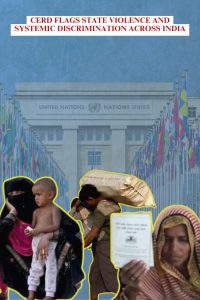
CERD Flags State Violence and Systemic Discrimination Across India

The UN Committee on the Elimination of Racial Discrimination (CERD) has raised serious concerns over the treatment of some of India’s most marginalised communities, including Dalits, Adivasi and tribal peoples, Rohingya, Bengali-speaking Muslims, migrants and asylum-seekers. Its findings follow the first review of India by the Committee since 2007 and examine the country’s combined 20th and 21st periodic reports under the International Convention on the Elimination of All Forms of Racial Discrimination.

The findings were issued after CERD’s 118th session, which also examined Finland, Honduras and Kuwait. This was part of the Committee’s regular review of states that have signed the Convention. CERD’s concluding observations are not court judgments and do not have the force of law. They assess how governments are implementing their obligations under the Convention and identify areas where the Committee finds serious problems.

In India’s case, CERD raised concerns spanning caste, ethnicity, religion, citizenship and policing. One of its gravest concerns was the alleged conduct of law-enforcement agencies towards Indigenous and Tribal Peoples, Scheduled Tribes, Scheduled Castes, particularly Dalits, ethnic and ethno-religious groups and non-citizens. CERD recorded reports of excessive force, racially motivated violence, extrajudicial killings, arbitrary and prolonged detention, torture, ill-treatment and sexual violence. It called for prompt, thorough and impartial investigations, with accountability where violations are established.

The reference to Dalits and Scheduled Castes also brings an older disagreement into the review. The Indian government maintains that caste should not be treated as equivalent to race or “descent” for the purposes of CERD. Its submissions nevertheless contain information on Scheduled Castes and Scheduled Tribes and measures intended to address their disadvantages. CERD’s treatment of caste within its examination of descent and discrimination places caste exclusion within the scope of the Committee’s scrutiny, even as the Indian state rejects that equivalence.

CERD also drew particular attention to Rohingya, Bengali-speaking Muslims, migrants and asylum-seekers. It noted an increase in law-enforcement operations involving these groups, particularly after a 2017 Home Affairs order and the April 2025 Pahalgam attack. Reports of police stops and identity checks based on racial profiling allegedly resulted in arbitrary arrests and detention, torture and other mistreatment. The Committee also raised concerns about deportations and forcible returns involving people who may require international protection.

During the review, CERD Country Rapporteur Stamatia Stavrinaki referred to independent monitoring that recorded more than 1,300 anti-Muslim hate-speech incidents in 2025, including recurring rhetoric attributed to senior officials. India’s delegation responded that legislation enacted in 2023 criminalises acts amounting to hate speech and hate crimes, with additional protections applying when offences target Scheduled Castes and Scheduled Tribes. It also pointed to freedom of religion as a constitutional guarantee.

But CERD’s observations focused on what these protections mean in practice. Alongside the government’s account of its legal safeguards, the Committee recorded concerns about discrimination, hate speech, violence and the conduct of law-enforcement agencies. It called on India to address hate crimes against Rohingya, Bengali-speaking Muslims, migrants and asylum-seekers, refrain from collective expulsions and ensure access to international protection. This includes respecting non-refoulement, the principle that people should not be returned to a place where they face a serious risk of persecution or other grave harm.

The findings also address citizenship and documentation. CERD noted the absence of adequate disaggregated data on Indigenous and Tribal Peoples, ethnic and ethno-religious groups, migrants, refugees, asylum-seekers and stateless people. It highlighted the categorisation of Bengali-speaking Muslims as “non-original inhabitants” and reports that they face more stringent scrutiny during National Register of Citizens verification. The Committee also noted that much of India’s available data on Scheduled Castes, Scheduled Tribes and refugees still derives from the 2011 Census, while acknowledging the delayed 2026 Census and its proposed collection of caste data through self-identification.

The treatment of Bengali-speaking Muslims in the NRC process raises a broader question about how citizenship is administered. CERD’s concern is not simply that documentation is required, but that particular ethnic and religious groups are reportedly subjected to different levels of scrutiny. In a political environment where Muslims are repeatedly cast as outsiders or demographic threats, administrative categories such as “non-original inhabitants” can acquire consequences beyond paperwork. The NRC thus becomes part of a wider system in which belonging is subjected to heightened state verification.

The concerns around Rohingya also sit within a longer history of UN scrutiny. A 2025 communication by UN Special Procedures carried allegations that deportation operations against Muslims, including Rohingya, intensified after the Pahalgam attack, involving raids, arrests, ill-treatment and forcible returns. Those allegations came through a separate UN process and were not findings by CERD or a judicial determination.

India is not a party to the 1951 Refugee Convention or its 1967 Protocol and has no comprehensive national refugee law. UNHCR therefore carries out protection-related functions for refugees and asylum-seekers in the country. This absence has become more significant alongside changes to India’s citizenship and immigration regime.

The Citizenship (Amendment) Act, 2019 was defended by BJP ministers as addressing the unfinished business or “wrongs” of Partition. Yet the CAA was not a refugee law. It created a religion-based route to accelerated citizenship for specified non-Muslim communities from Pakistan, Bangladesh and Afghanistan. It did not establish a general system of refugee protection based on persecution or the risk of serious harm.

And in 2025, Parliament enacted the Immigration and Foreigners Act, replacing four earlier laws governing the entry and treatment of foreign nationals. The new law consolidated the state’s immigration powers without creating a corresponding refugee protection framework. CERD’s call for protection against collective expulsions and respect for non-refoulement therefore comes alongside a strengthened legal machinery for controlling and removing foreign nationals, while India still lacks a dedicated process for determining who requires refugee protection. For Rohingya and other asylum-seekers, that leaves a basic question: what domestic procedure requires the danger they may face after removal to be considered before the state deports them?

India’s delegation, led by Solicitor General Tushar Mehta, defended the country’s legal framework and its claims of pluralism and equality. The government reiterated its position that caste should not be equated with race or “descent” under the Convention and pointed to legislation addressing hate speech and protections for Scheduled Castes and Scheduled Tribes.

CERD’s findings place those claims alongside reports of how state institutions operate on the ground. The Committee’s concerns cover law-enforcement violence against Dalits and Adivasi and tribal communities, anti-Muslim hate speech, racial profiling of Bengali-speaking Muslims and Rohingya, and the treatment of people whose citizenship or immigration status is under scrutiny.

For Dalit and Adivasi communities, and for Muslims and other minorities whose belonging is increasingly subjected to state scrutiny, the findings also expose how Hindu nationalism operates through state power. Caste discrimination, communal targeting, citizenship enforcement and policing are often treated as separate questions, even as they converge in the lives of communities whose relationship with the state is shaped by unequal power. CERD’s observations bring these questions into the same examination of discrimination and direct attention towards the institutions through which unequal treatment is carried out.
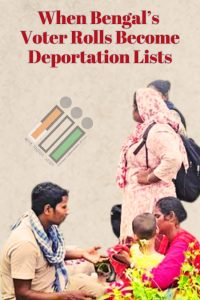
When Bengal’s Voter Rolls Become Deportation Lists

A report by Human Rights Watch has accused Indian authorities of forcibly expelling ethnic Bengali residents—predominantly Muslims—from West Bengal into Bangladesh without due process, leaving families stranded for days between the border forces of the two countries. According to the report, the Border Security Force (BSF) has, since early June, repeatedly attempted to push groups of people across the border, only for Bangladesh’s Border Guard (BGB) to refuse entry because no process of nationality verification had taken place. Families, including children and pregnant women, were reportedly left in the “zero line” between the two countries before some were eventually taken back by Indian authorities.

Several of those identified in the report were not recent entrants into India. They reportedly possessed Aadhaar cards, had lived in the country for decades and had participated in previous elections. Their detention followed the deletion of their names from West Bengal’s revised electoral rolls after the controversial voter-list revision that preceded the Bharatiya Janata Party’s victory in the state elections. In several reported cases, exclusion from the electoral rolls appears to have become the basis for detention and attempted deportation.

Over the last decade, citizenship has increasingly been determined through documentation rather than constitutional status alone. West Bengal is not the beginning of this story. The National Register of Citizens (NRC) exercise in Assam excluded nearly two million people from the final register, leaving thousands in prolonged legal uncertainty. Detention centres, foreigners’ tribunals and endless documentary verification, alongside the ethno-nationalist zeal with which these practices have been defended, have transformed citizenship from an assumed legal status into something that must be repeatedly established before the state. This is not to suggest that the pre-NRC order was free of structural violence, but the contemporary mutations mark a significant escalation in how citizenship itself is administered and contested. The current developments suggest that this administrative logic is no longer confined to Assam but is increasingly shaping citizenship practices elsewhere in India.

The political language surrounding these exercises follows a template that the Bharatiya Janata Party has steadily developed since the 1990s, drawing on older nationalist anxieties around borders. In West Bengal, where a shared Bengali identity historically complicated such narratives, that vocabulary has nevertheless gained political ground. Chief Minister Suvendu Adhikari has openly defended a policy of “detect, delete and deport”, claiming that thousands of alleged Bangladeshi “infiltrators” have already been sent back, even as both the legality of these actions and the official figures cited remain open to serious question.

The Human Rights Watch report also raises questions about the apparent bypassing of established repatriation procedures between India and Bangladesh. Dhaka has repeatedly maintained that it will not accept individuals pushed across the border outside agreed processes of nationality verification. The consequence has been families stranded for days between two states, each refusing immediate responsibility for people whose legal status remains contested.

These events expose a larger weakness in India’s legal framework governing migration and displacement. India remains outside the 1951 Refugee Convention and its 1967 Protocol and has no comprehensive refugee or asylum law. The principle of non-refoulement—the obligation not to return a person to a territory where they face persecution or other serious harm—therefore does not exist as a comprehensive statutory guarantee. Indian courts have, in some cases, extended Article 21 protections to non-citizens. Even so, refugee protection continues to depend largely on executive policy and judicial interpretation rather than a coherent legislative framework.

The people described in the Human Rights Watch report are not necessarily refugees in the legal sense. Many are individuals whose nationality itself is disputed. Ideally, constitutional safeguards and judicial oversight would protect such vulnerable populations. Instead, the higher judiciary has, over the years, increasingly retreated from that role in matters of citizenship, at times reinforcing rather than restraining the state’s exclusionary powers. Yet the absence of a clear legal framework leaves similar questions to executive discretion: who is heard, who is detained, who is deported and what procedural safeguards apply before those decisions are made.

The law says little about undocumented migrants whose labour sustains agriculture, construction, brick kilns, domestic work, manufacturing and much of the informal economy. Their work is absorbed into the economy while their precarious legal status leaves them vulnerable to wage theft, coercion, detention and deportation. Their labour is needed; their rights remain contingent.

The implications also extend to caste. Documentary citizenship has never operated on a socially level field. Landlessness, forced migration, displacement, informal labour and unequal access to education and state institutions have meant that documentary histories are themselves unevenly distributed. Communities historically pushed to the margins—including Dalits, Adivasis, denotified and nomadic tribes, migrant workers and many borderland populations—are often least equipped to satisfy expanding bureaucratic demands for proof. Administrative neutrality can therefore reproduce deeply unequal social outcomes without ever invoking caste explicitly.

That is why the current moment should not be viewed simply as a border issue or a dispute over illegal immigration. The expulsions are the endpoint of a much longer administrative process through which citizenship itself becomes uncertain. The border merely reveals a process that begins much earlier—in electoral rolls, identity databases, police verification, citizenship registers and executive discretion.

The expulsions at the India-Bangladesh border are not an isolated border episode. They reveal how questions of citizenship are increasingly being settled through administrative action before they are settled in law. Once belonging itself becomes contingent on documents that can be revised, withdrawn or disputed, the Constitution ceases to function as a guarantee and instead becomes something that citizens must repeatedly prove themselves entitled to.


Paresh Hate is a Bahujan queer researcher, writer, documenter and activist and the Lead Content Manager at Dalit Voice.

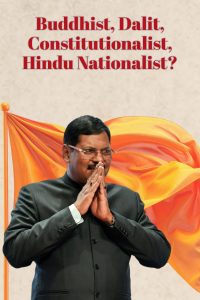
Buddhist, Dalit, Constitutionalist, Hindu Nationalist?

The first Buddhist—and only the second Dalit—to serve as Chief Justice of India, B. R. Gavai held office from 14 May to 23 November 2025. On 20 April 2026, he was seen inside Bageshwar Dham. He offered prayers before Balaji, then sat down with Dhirendra Krishna Shastri. A photograph of the deity was presented to him. The meeting ran for roughly half an hour, touching—at least on the surface—on spirituality, social work, and the Gurukulam project. It was not his first visit.

But neither the setting nor the company was neutral.

In early November 2025, the same figure he met had led a travelling mobilisation across Delhi, Uttar Pradesh, and Haryana. It was introduced as a padyatra for unity: a call to end caste divisions, a call for Hindu consolidation. It also demanded that India be declared a Hindu Rashtra. Over hundreds of stops, the rhetoric sharpened. “Love jihad.” “Land jihad.” Warnings of demographic collapse. Calls for economic boycott, for expulsion. Violence, reframed as vigilance. This was not Dhirendra Shastri’s first stint at genocidal bigotry and hate speech. He is popular across the internet for precisely this.

The distance between a constitutional court and such mobilisation is supposed to be absolute. Not only in law, but in conduct. When that distance contracts into a ritual visit—followed by an easy, cordial exchange—the issue is no longer personal belief. It is alignment, made visible.

The speeches delivered during that padyatra did not stay within the realm of faith. Minorities were named as demographic threats. There were suggestions that property would be taken over. Warnings that unless Hindus united, violence would spread “in every gali.” Questions about why “these people” become terrorists. Partition invoked to justify future consolidation. The idea that dissenters should leave the country was normalised. Economic segregation was not just implied; it was openly urged. Citizenship itself was recast in religious terms.

This is where context begins to matter. Because the visit does not stand alone. During his tenure, the former Chief Justice spoke of a “swadeshi” jurisprudence—one that consciously stepped away from foreign precedent. Around the same time, the Prime Minister called for India to shed its colonial mindset. Right-wing decolonization is in fashion these days, applied to laws across the board and the former Chief Justice did not want to be clearly left behind.

For many Ambedkarite and anti-caste activists, none of this comes as a surprise. The criticism did not begin with this visit; it has a longer lineage. Figures like R. S. Gavai, the former Chief Justice’s father, have often been criticised for moving away from grassroots mobilisation, for aligning too closely with dominant political formations, and for reducing anti-caste politics to symbolic presence within state structures. The outcome, critics argue, is not transformation but accommodation. Similar apprehensions resurfaced when his son assumed the office of Chief Justice.

The six-month tenure of Gavai itself offers a broader frame. Established conventions were set aside. The power of the roster was used not merely to assign cases but, at times, to shape outcomes. Precedents were revisited—sometimes sidestepped—through procedural manoeuvre. The boundary between administrative authority and judicial intervention grew less distinct. What emerged was a concentration of power in the office of the Chief Justice, with fewer visible constraints. Again and again, institutional limits appeared negotiable, with outcomes that often aligned with what the central executive stood to gain.

The consequences were uneven but telling. Constitutional challenges to executive action lingered, sometimes until they lost relevance altogether. At the same time, other matters moved with striking urgency. The pattern is familiar: delay in one direction, speed in another. The effect is anything but neutral. It stabilises certain outcomes while postponing others. Alongside this, opacity deepened. The collegium drifted further from public scrutiny, decisions were issued without recorded reasons, and even internal dissent rarely surfaced.

There were also moments when the Court’s interventions more directly expanded executive advantage. The creation of a pathway through Presidential Reference effectively offered the central executive a second chance to revisit decisions it found unfavourable. It was not framed as a privilege. In practice, it functioned as one.

Taken together, these are not isolated developments. They trace a pattern of judiciary’s growing subservience to a Hindu nationalist government. Seen against that background, the visit to Bageshwar Dham acquires a different meaning. It stops looking like a personal act. It begins to read as part of a larger alignment between institutional conduct and an expanding ideological environment. It does not matter that Gavai no longer holds the office. Like many ex-CJIs, he too will continue to dazzle in the limelight for a while, especially due to the hanging out in the corridors of this government.

The meeting itself was small. Thirty minutes. A ritual, a conversation, a photograph. But politics doesn’t always depend on scale. It also moves through signals. And this one was unmistakable.


Paresh Hate is a Bahujan queer researcher, writer, documenter and activist and the Lead Content Manager at Dalit Voice.

A Deep-rooted Post-Independence Conspiracy to Keep Oppressed Castes Oppressed: Anti-Conversion Laws Across Indian States

On 13 March 2026, the Freedom of Religion Bill was tabled in the Maharashtra State Assembly — the eleventh state that may have such legislation since independence. Ten similar laws in the states of Odisha, Madhya Pradesh, Gujarat, Chhattisgarh, Himachal Pradesh, Jharkhand, Uttarakhand, Uttar Pradesh, Karnataka, and Haryana have already been enacted; one in Tamil Nadu has been repealed. Two others in Arunachal Pradesh and Rajasthan were never enacted despite formulation. Home Minister Amit Shah has made an election promise that the law would be enacted in the State of Punjab as well. The stated purpose is a familiar trope: preventing conversions obtained through force, fraud, or inducement. The language is legal and respectable. The real targets are Dalits and other oppressed castes.

These laws have nothing to do with coercive religious practice. They are instruments designed to prevent the emancipation of oppressed castes from dominant castes’ hegemony — and to ensure that the dominant caste establishment’s social, economic, and civilizational hegemony, which that order has sustained for two millennia, remains intact.

Caste is not merely a social phenomenon. It is a religious system of control, encoded in the Manusmriti as a spiritual, social, and economic order and sanctified by Brahminical Hinduism for two millennia. It has structured every material dimension of life: occupation, property, education, marriage, and public space. Spiritual inequality was the foundational condition from which all socio-economic deprivation followed. The Dalit-Bahujan communities did not merely occupy the bottom of a social hierarchy — they were theologically assigned to it. Any faith that rejected that assignment was, therefore, not merely a spiritual alternative. It was a structural threat to those who benefited from the arrangement.

That is the context in which every anti-conversion law, which includes conversion to any faith, must be read.

The legislative history begins not in 1967, when Odisha enacted India’s first anti-conversion law, but in 1950, when the Presidential Order quietly excluded converts to minority faiths from the reservation protections established under Article 341 of the Constitution. The Constitution (Scheduled Castes) Order, 1950, originally limited SC status to those professing Hinduism, and later extended it to Sikhism and Buddhism. Converts to Christianity and Islam, which form the bulk of non-Buddhist converts, lose SC status under this order, as affirmed by recent Supreme Court interpretation citing the 1950 Presidential Order in a case pertaining to Andhra Pradesh, even as a petition concerning reservation benefits for Dalit Muslims and Christians has been pending before a three-member bench of the Supreme Court since January 2011.

In 1950, this was not debated. It was not declared. It was done quietly, and widely attributed to K. M. Munshi, a Constituent Assembly member with known Manuwadi leanings, who openly opposed extending reservations to those who left the Hindu fold. The purpose was malignant.

The most consequential test of that logic came six years later. On 14 October 1956, B. R. Ambedkar — the man who had written the Constitution those same dominant caste legislators are now subverting — converted to Buddhism along with approximately half a million of his followers in Nagpur. Ambedkar had spent decades arguing that caste could not be reformed from within Hinduism because it was not an aberration within Brahminical theology but its direct product. Conversion was not apostasy. It was the exercise of the precise freedom the Constitution guaranteed. The 1950 Presidential Order had already moved to penalise that choice economically. Had these state anti-conversion laws existed in 1956, Ambedkar’s event at Nagpur — the largest mass act of religious self-determination in modern Indian history — would have required prior government approval under the very constitutional order he had designed. The extension of SC status to Navayana Buddhism only happened in 1990 under the V. P. Singh government. That is not an irony, it is the point. These laws are aimed, in their structure and intent, at preventing socio-economic outcomes exactly like what Ambedkar fought for in that spiritual and social context.

Christianity’s presence in India is not a colonial imposition. St. Thomas arrived on the Malabar Coast in the first century AD. Catholicism spread along India’s western coast after the Portuguese conquest of Goa in 1510, and later inland, focusing on the emancipation of oppressed castes, even as they had their own interests in doing so. During colonial rule, Protestant missionaries added to the work Catholics were doing — running schools and hospitals where none existed and agitating against oppressive caste practices, among them the requirement in parts of South India that Dalit women leave their breasts uncovered as a mark of caste subordination. The tangible improvements these missions delivered to Dalits are documented. The Savarna response to those improvements has also been documented, including in the form of every anti-conversion law that followed.

The rhetorical device used to delegitimise this history is the accusation of “ricebag Christians” — the claim that conversions were purchased with food rather than chosen in conscience. When people are starving, providing food alongside a theology that affirms their equality before God is not inducement. It is the practical application of that theology that responds to social reality.

In 1956, the Madhya Pradesh government appointed a committee under Hindu nationalist former judge M. B. Niyogi to examine missionary activities in the state. The Committee was formed in response to the Bharatiya Jana Sangh’s “Anti-Foreign Missionary Week” protest. Set up by a Congress government, it recommended legally prohibiting conversions that were not fully voluntary, but the proposal was not implemented at the time, as it would have been difficult to enforce without violating constitutional religious freedoms. The Niyogi Report was not an inquiry. It was a brief for the prosecution, prepared in advance of charges not yet formally filed. It catalogued missionary schools, hospitals, orphanages, and social service institutions — and then attributed to all of it a calculated programme of conversion through inducement. It did not disprove the emancipatory value of these institutions to oppressed castes. It simply recast that value as evidence of conspiracy. The Niyogi Report provided the ideological and legislative scaffolding for the Odisha anti-conversion law of 1967, and its logic has been reproduced in every state law enacted since.

The constitutional foundation for these laws was established by the Supreme Court’s 1977 ruling in Rev. Stanislaus v. State of Madhya Pradesh, which held that the right to “propagate” religion under Article 25 does not include a right to convert another person. This distinction, applied carefully, is reasonable. Applied as it has been in practice, it is not. The right to convert another person was never what the church claimed.

By constructing its judgment around the prevention of an act that was not in dispute, the Court gave legislative cover to restrict the proclamation of faith itself — and since the state now determined what constitutes illegitimate persuasion, any message compelling enough to move oppressed caste persons toward a different understanding of their own worth can be prosecuted as inducement. The Allahabad High Court has recently reaffirmed the right to propagate and proclaim one’s faith, which amounts to an implicit rebuke of how the Stanislaus judgment has been operationalised.

With the BJP’s rise to national power in 1999 and its consolidation under Narendra Modi in 2014 — whose political formation within the Sangh Parivar is defined by the goal of a Hindu Rashtra, which implicitly requires the maintenance of the caste hierarchy that Brahminical Hinduism produced — seven additional states enacted anti-conversion laws. Each successive iteration grew more elaborate in its administrative requirements.

The most recent versions require prior government approval, inserting a state official between a citizen and a decision of personal conscience in direct tension with Article 21 of the Constitution. An oppressed caste person who wishes to leave the faith that theologically sanctions their subordination must now obtain permission from an apparatus largely controlled by the communities that have historically benefited from that subordination.

The Tamil Nadu precedent is sometimes cited to argue that anti-conversion legislation crosses party lines. In 2002, the AIADMK government enacted a similar law. This requires little explanation: the AIADMK was then a coalition partner in the BJP-led NDA government and enacted the law to sustain that alliance. Tamil Nadu has one of India’s oldest and most rooted Christian populations. The law was repealed in 2004 when the UPA came to power, under pressure from Christian communities — confirming that it had no independent political logic in the state and was adopted purely as a coalition obligation. Nonetheless, this signals the state’s willingness to compromise constitutional freedoms for political expediency.

When the complete sequence is examined together — the 1950 Presidential Order, the Niyogi Report, the Stanislaus judgment, and the cascade of state laws — the pattern is coherent and consistent. The RSS, Jana Sangh, Janata Party, and BJP share an unbroken ideological lineage rooted in a Brahminical Hindu nationalist vision, combining a project of social dominance over internal subaltern communities with a resistance to religious influences perceived as external threats.

Over seventy percent of India’s population — the Scheduled Castes, Scheduled Tribes, and Other Backward Classes combined — belong to communities that Christian social and educational institutions most consistently serve. It is precisely the emancipation of these communities — economic, educational, and spiritual — that strikes at the material interests of the Savarna establishment that has historically thrived on their exploitation. The Mandal Commission’s implementation dismantled the Savarna monopoly over state employment and political power. The Church in India, through civil society institutions, has been eroding their civilisational dominance for far longer. Anti-conversion laws are the establishment’s response to both.

The Church is not above scrutiny in this account. Caste has penetrated Christian institutions in India in ways that contradict the theology that made those institutions work for oppressed caste communities in the first place — separate cemeteries, separate seating, upper-caste dominance of church hierarchies still continue in diminishing measures, with Dalit theology now in vogue in seminaries, gradually dissipating these anomalies. That contradiction is real and must be named.

Yet this does not change the fact that the laws are designed not to reform Christian institutions from within, but to prevent oppressed caste communities from accessing them at all. The internal failures of the Church are a problem the Church must answer for. The anti-conversion laws are a problem the state must answer for. Conflating the two serves only those who drafted the legislation.

There is a reason no central anti-conversion law has been passed at the national level: it would face a full constitutional bench and would not survive the judicial test. The state laws function as instruments of attrition — they harass clerics and communities, deter others from exercising their rights, create a climate of legal uncertainty, and signal to oppressed castes that the price of emancipation will be as high as the state can make it. Their authors are not constitutionally naive. They know better than to invite a definitive national ruling.

The multiplication of these laws since 1999 is evidence that they are not impeding Christian emancipation efforts. If oppressed castes had stopped choosing emancipation, new laws would be unnecessary. If earlier laws had effectively blocked the exit, elaboration would be redundant. The inclusion of administrative approval requirements in the most recent iterations — including the Maharashtra Bill now passed in both the Houses and awaiting Governor Jishnu Dev Varma’s assent — confirms that those prosecuting this project are aware it is failing socially and are escalating in response. Escalation in the face of failure is not a sign of strength. It is a sign that the outcome they feared is continuing regardless.

A nation that directs its legislative energy toward preventing the emancipation of the majority of its population — the Scheduled Castes, Scheduled Tribes, and Other Backward Classes who together constitute over seventy percent of India’s people — in order to protect the privileges of numerically smaller Savarnas at the top cannot expect that arrangement to produce equitable development. The evidence is already visible in the widening gap between India’s claims to being the world’s fifth-largest economy and the material conditions of the oppressed castes whose labour has always underwritten that economy.

The courts will, hopefully, eventually confirm what the constitutional record already shows: these laws were not enacted with confidence in their constitutionality. They were enacted with confidence in political impunity to impede the emancipation of oppressed caste communities. That foundation is far more fragile than it appears.

The emancipation of oppressed castes is not a process that can be permanently arrested by administrative procedure. Ambedkar understood this. The six hundred thousand people who walked with him in Nagpur in 1956 understood it. The millions who have followed in the decades since understand it. History does not offer a single example of a project designed to lock human beings into inherited degradation that finally succeeded. The architects of this one will find no exception to that record.


Oliver D’Souza is a former journalist and an author.