
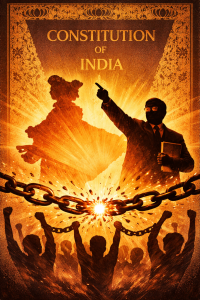
On 26 January 2026, the Indian republic marks its seventy-seventh year. The arithmetic is neat; the history is not. For Dalit-Bahujans, and all those made disposable by caste, faith, gender, sexuality, and labor, Republic Day has long arrived with a knot in the stomach. It asks us to celebrate a promise that has been delivered unevenly, deferred habitually, and in moments like the present, openly betrayed.
The constitutional protections that exist did not arrive as gifts. They were carved out against a deeply hostile social order. Babasaheb Ambedkar understood this with singular clarity. He knew that a constitution could not annihilate caste, but he insisted that institutional safeguards were necessary to slow its violence, to widen the space for political contestation, and to make survival possible. The decades of Dalit-Bahujan political, cultural, and intellectual assertion that followed have done more to democratize this country than any ceremonial invocation of liberal democratic virtues. If the republic has endured for those it otherwise sought to exclude, it is because of this pressure from below. Not because the state became ethical overnight, but because it was compelled to respond.
To celebrate Republic Day uncritically at this juncture, amid the consolidation of ultranationalism, deepening hierarchies across axes of oppression, and a narrowing tolerance for dissent, would therefore be a profound irony. The language of constitutionalism circulates widely, but increasingly as performance. “Constitutional morality” is invoked with reverence, even as the social conditions that give substance to its values are steadily eroded.
The postcolonial Indian state has perfected a very particular politics of recognition. Unlike many liberal democracies, it has acknowledged historic injustice in ways that have been formally democratizing. Yet this recognition has always been carefully managed, its scope narrowly policed, its consequences contained. When those most affected demand more, land, safety, representation, or even the right to speak, they are reminded to be patient, procedural, and grateful.
This tension is not accidental. Constitutionalism in India has never operated evenly across the terrain it claims. In parts of the country governed through emergency, militarization, and administrative exception, it has often functioned as a mediator rather than a constraint on state violence. Rights there are experienced as permissions rather than guarantees. Legality bends easily to necessity. What is tested in these regions rarely remains contained. For those already positioned at the bottom of social hierarchies, this produces a familiar condition. We are all too familiar with the oppression of those in power. The present moment has only sharpened these long-standing contradictions.
None of this diminishes Babasaheb’s legacy. It demands renewed fidelity to it. Ambedkar warned that political democracy without social democracy would remain fragile and hollow. He insisted that liberty, equality, and fraternity were not ornamental ideals but material conditions that had to be continuously produced through struggle. To invoke his name on the occasion of Republic Day while draining those principles of substance is to hollow out the tradition itself.
The horizon that continues to animate Dalit-Bahujan political imagination lies elsewhere. It lies in the promise of Begumpura, a society without fear, without hierarchy, without the everyday violence of graded worth. Begumpura is not a distant utopia. It is a measure against which the present is judged and found wanting. It refuses the narrowness of a politics that asks the oppressed to accept managed inequality and symbolic inclusion. It insists that freedom cannot be segmented, rationed, or indefinitely deferred.
On this Republic Day, the task before us is not celebration but reckoning. Seventy-seven years after its founding, the question is not whether Dalit-Bahujans belong to the republic. We have built it, sustained it, and borne its costs. The question is whether the republic is willing to be transformed, structurally, materially, ethically, into something worthy of that labor.