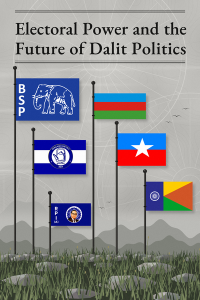
Electoral Power and the Future of Dalit Politics

Since February, a group of mostly lifelong BJP voters from the Brahmin community has been meeting in Lucknow to plan the party’s defeat in Uttar Pradesh. They have formed the Rashtriya Adhikar Morcha (RAM), led by former judicial officer Alankar Agnihotri, who resigned in February over the University Grants Commission’s proposed equity rules. Agnihotri has announced that RAM will contest 150 seats in the 2027 Assembly elections and possibly extend unconditional support to Mayawati’s Bahujan Samaj Party (BSP) in the remaining 253. The offer puts the BSP in an awkward position: a party established to challenge upper-caste dominance is being proposed as a vehicle for Brahmins disaffected with the BJP, and the proposal cuts against Mayawati’s stated preference for contesting elections independently.

In his speech “Two Serious Mistakes That Killed the Dalit Movement,” delivered at the BAMCEF Karnataka State Convention in Gulbarga on 22 November 2009, V. T. Rajshekar criticised the Dalit movement’s excessive concentration on electoral politics. The BSP, now courted by the community it was founded to oppose, shows where that concentration can lead.

On 29 January, the Supreme Court stayed the University Grants Commission’s Promotion of Equity in Higher Education Institutions Regulations, 2026, directing that the 2012 regulations remain in force while the legal challenge proceeds. The new rules followed a legal campaign initiated in 2019 for stronger protections against caste discrimination in higher education. Mayawati welcomed the stay, arguing that the UGC should have consulted all stakeholders and ensured adequate representation for upper-caste members on inquiry committees. Her position on the rules is close to Agnihotri’s own objection to them, which gives RAM one reason to look to the BSP.

Mayawati has spoken forcefully against caste discrimination when responding to particular incidents. On 14 August, she condemned the purification of a stage in Haldwani after Congress president Mallikarjun Kharge addressed a rally there, demanding action against those responsible. She also criticised RSS chief Mohan Bhagwat’s suggestion that beneficiaries who no longer need reservations should give them up. These interventions show that the BSP continues to invoke its anti-caste politics but has been notably absent from social movements that have defined the times.

Mayawati’s electoral strategy has increasingly centred on recovering upper-caste support. On her 70th birthday on 15 January, she said the BSP would contest elections independently, leaving open the possibility of future alliances if partners could transfer their votes to the party. She subsequently renewed her outreach to Brahmins, drawing on the BSP’s 2007 Uttar Pradesh victory, when it won 206 Assembly seats with 30.43 per cent of the vote. That coalition brought Brahmin voters into an electoral arrangement with Dalits under the slogan of Sarvajan politics. The strategy now faces a different political landscape. On 5 August, SP president Akhilesh Yadav said that the “P” in his PDA formula, originally standing for Pichhde, Dalit, Alpsankhyak (backward classes, Dalits and minorities), would also include Pandits. At the local level, however, Brahmin discontent with the BJP does not necessarily translate into support for the BSP. Brahmin voters distinguish their dissatisfaction with Narendra Modi from their views of Uttar Pradesh Chief Minister Yogi Adityanath. OBC and Scheduled Caste villagers described local Brahmin political dominance as a source of pressure on land and labour, including allegations that influential figures enabled below-minimum-wage payments and land seizures. The interests of Brahmin voters whom the BSP hopes to attract may therefore conflict with the demands of Dalit and OBC communities whose support the party also needs.

The BSP’s electoral decline has made the coalition issue more urgent. After the death of its lone Uttar Pradesh MLA, Uma Shankar Singh, on 5 August, the party was left without a representative in the state Assembly. It had already lost all its Lok Sabha seats in the 2024 general election, when its Uttar Pradesh vote share fell to 9.39 per cent, against the SP’s 33.59 per cent. Its organisational decisions have also exposed the concentration of authority around Mayawati. In September, she removed her nephew Akash Anand from his national convenor position and expelled him from the party, before appointing his younger brother Ishan to the post. After Akash apologised publicly on 2 October, Mayawati reinstated him and restored his position on 5 October. The repeated reversals have left senior party responsibilities dependent on Mayawati’s personal decisions. The BSP also failed to win a seat in the May 2026 Assembly elections in West Bengal, Tamil Nadu or Kerala, polling less than one per cent in each state. In Bihar’s 2025 Assembly election, it won one seat. Its response to the Special Intensive Revision of electoral rolls in Uttar Pradesh followed the same pattern of distance from other Opposition parties. The final roll, published on 10 April, contained 13.39 crore electors, down from 15.44 crore before the exercise; more than 2.04 crore names had been removed, while approximately 84 lakh were added during the claims-and-objections period. Mayawati called for more time to protect poor people and migrants from exclusion, but the BSP did not join the wider Opposition campaign against the revision. These developments point to a party whose electoral reach and organisational depth have contracted while its leadership remains committed to controlling its political direction independently. Rajshekar described this vulnerability in a movement that puts office ahead of institutions of its own.

Chandrashekhar Azad’s Aazad Samaj Party (Kanshi Ram) has pursued a different route, combining street mobilisation with electoral expansion. Azad first gained prominence through the Bhim Army, founded in 2015 to organise Dalit communities against caste discrimination and violence. His participation in protests against the Citizenship Amendment Act and National Register of Citizens, the 2020 Hathras case and other caste atrocities established him as a Dalit activist before he entered Parliament by winning the Nagina Lok Sabha seat in 2024 with 5.12 lakh votes. In July 2026, he announced plans for a political front outside both the BJP-led NDA and the INDIA bloc. His party subsequently named 45 constituency in-charges for the 2027 Uttar Pradesh Assembly elections: 18 from Scheduled Castes, 16 from OBCs, 10 Muslims and one Sikh. The composition signals an effort to build a wider Bahujan constituency. Mayawati has accused Chandrashekhar Azad of undermining the BSP and Bahujan unity, portraying him and other rival leaders as opportunists seeking political mileage from Dalit issues, while Azad has continued to raise issues concerning caste violence and the exclusion of marginalised voters. His trajectory shows how mobilisation outside electoral institutions can create a route into Parliament. Aazad Samaj Party must now turn Chandrashekhar Azad’s individual electoral presence into an enduring political organisation rooted in Dalit movements and capable of building a broader political base.

In Tamil Nadu, the Viduthalai Chiruthaigal Katchi (VCK), led by Thol Thirumavalavan, won two Assembly seats in the 2026 election as part of the DMK-led alliance. After Vijay’s Tamilaga Vettri Kazhagam (TVK) emerged as the single-largest party with 108 seats but fell short of a majority, reports citing VCK sources said the party had discussed seeking the deputy chief minister’s post for Thirumavalavan and cabinet positions for its legislators if it joined a TVK government. Thirumavalavan subsequently announced unconditional outside support for TVK, saying the aim was to prevent President’s Rule, while maintaining that VCK would remain in the DMK-led alliance and would not join the government. The shift from reported discussions over a share in power to support without government participation leaves VCK with a problem: how a Dalit party can translate its electoral presence into executive influence while preserving its independent political position.

In Maharashtra, Prakash Ambedkar’s Vanchit Bahujan Aghadi (VBA) has sought to rebuild its electoral position through alliances and legal challenges concerning voting rights. After winning no seats in the 2019 Maharashtra Assembly election or the 2024 Lok Sabha election, it allied with Congress for the January 2026 municipal elections but failed to win a seat in Mumbai’s Brihanmumbai Municipal Corporation or Nanded-Waghala; it won four seats in Latur. The party has also challenged Maharashtra’s Special Intensive Revision of electoral rolls. In October, the Bombay High Court deferred its hearing on a petition filed by two Mumbai residents, including VBA youth president Sagar Ramesh Gawai, after being told that related questions were before the Supreme Court. The petition sought safeguards against voter exclusion and an interim direction preventing deletions from the state’s rolls. Prakash Ambedkar has also urged Rahul Gandhi to bring opposition parties and organisations together to challenge the Election Commission’s process. Yet during the November 2024 Maharashtra Assembly election, he declared that the VBA would support whichever party or alliance could form the government, adding, “We will choose power!” This emphasis on access to power sits uneasily with his appeal for opposition unity around the electoral-roll issue. Rajshekar’s criticism of a movement that concentrates on office applies to this emphasis. If the VBA seeks to build an independent political force, its alliance strategy has to reconcile electoral bargaining with the causes it claims to represent.

Within the BJP-led NDA, Chirag Paswan and Jitan Ram Manjhi have clashed over how Scheduled Caste and Scheduled Tribe reservations should be distributed. On 29 August 2026, Paswan, the chief of the Lok Janshakti Party (Ram Vilas), demanded that Manjhi and his son, Bihar minister Santosh Kumar Suman, resign over their support for sub-classification and the creamy-layer principle. Manjhi, founder of the Hindustani Awam Morcha (Secular) and a member of the Musahar community, has argued that communities such as Musahars, Bhuiyas, Nats and Doms remain underrepresented and need a greater share of existing quotas. Paswan rejected sub-quotas, arguing that they would divide Dalits and weaken their collective position. In its August 2024 judgment in State of Punjab v. Davinder Singh, the Supreme Court permitted states to sub-classify SC and ST reservations on the basis of evidence of unequal representation.

Ramdas Athawale’s Republican Party of India (Athawale), another NDA ally, has called for any decision on sub-classification of Scheduled Caste reservations to follow the publication of caste census data. Athawale has argued that the population of individual SC communities should guide the distribution of Maharashtra’s 13 per cent quota, raising particular concerns about the Matang community. His position differs from Paswan’s opposition to sub-quotas. Athawale has also faced repeated disputes over the RPI(A)’s share of electoral opportunities within the BJP-led alliance. The BJP and Eknath Shinde-led Shiv Sena excluded the party from their seat-sharing agreement for the January 2026 Mumbai civic elections, prompting Athawale to accuse them of betraying the alliance; the RPI(A) subsequently fielded candidates independently in Mumbai. Ahead of the 2027 Uttar Pradesh Assembly elections, Athawale has demanded 25 seats for his party and said it would contest independently if an agreement with the BJP failed. His continued presence in the Union government has not secured his party a dependable share of electoral space, leaving it to negotiate its position with a much larger ally.

The fortunes of these parties unfold alongside a much wider field of Ambedkarite and anti-caste organising. At the University of Hyderabad, the Ambedkar Students’ Association (ASA) launched an indefinite relay hunger strike in May after the administration imposed a ₹5,000 fine on a student accused of assaulting and subjecting Dalit student Anuj Kumar to casteist abuse. ASA demanded the release of a fact-finding committee report and stronger disciplinary action, arguing that the punishment failed to address the seriousness of the allegations. Outside electoral politics, Dalit and Bahujan mobilisation has continued around the distribution of reservations, caste discrimination within institutions and access to land. In Maharashtra, Ambedkarite organisations representing 59 Scheduled Caste communities mobilised against the proposed sub-categorisation of SC reservations, demanding withdrawal of the Badar Committee report. In Bihar, the Aarakshan Badhao, Samvidhan Bachao Sangharsh Samiti marched in Patna to demand restoration of the 65% reservation quota struck down by the Patna High Court, alongside reservation in private-sector employment and government contracts. The All India Independent Scheduled Castes Association (AIISCA), led by Rahul Sonpimple, has taken the demand for private-sector reservation beyond individual states, announcing a nationwide campaign for reservation in private employment and private educational institutions. The issue of institutional accountability has also driven sustained mobilisation in Mumbai after IIT Bombay student Sahil Wakode’s death. AIISCA, Aamchi Padhai Aamchi Ladhai, the Progressive Students Union and the Samyak Vidyarthi Andolan have joined protests demanding an independent inquiry into his family’s allegations of caste discrimination and harassment. Activists formed a Justice for Sahil Joint Action Committee at Azad Maidan, taking the demand beyond the campus. Elsewhere, the Kula Vivaksha Vyatireka Porata Sangham and Dalit Shoshan Mukti Manch in Andhra Pradesh have mobilised over land rights and living conditions in Dalit settlements. Dalit Christians have organised around caste-based exclusion from state protections: on 10 August, organisations marked Black Day with protests demanding Scheduled Caste status. The Telangana Christian Joint Action Committee demonstrated at Jantar Mantar, while the Vellore Catholic Diocese SC/ST Committee, the CSI Church’s Vellore Diocese and the All Minorities Federation organised a protest involving more than 400 people in Vellore. These campaigns differ in their immediate demands, yet each has involved organised pressure on institutions and governments over decisions affecting Dalit and marginalised communities. Rajshekar asked for institutions of the community’s own; these campaigns mostly press existing ones.

The BSP’s decline and the relative irrelevance of Dalit parties more broadly sit alongside the continuing activity of anti-caste organisations, and the parties that have gained ground are those doing movement-style work. Together these point to a distinction between electoral strength and the capacity to organise politically. Electoral results show whether a party can win seats and exercise power, but they do not capture the ability of a movement to mobilise communities or force institutions to answer for caste discrimination. The BSP’s rise rested on an organisation that mobilised Dalit voters and brought other Bahujan communities into a wider political coalition. Its decline shows what happens when electoral strategy outlasts the organisational base that once sustained it. Azad, Thirumavalavan, Prakash Ambedkar and Athawale have pursued different routes to representation, from independent mobilisation to alliances with larger parties. Their trajectories however show the fragile possibilities of converting electoral presence into independent political power.

V. T. Rajshekar argued that electoral victories could not sustain a Bahujan movement without independent institutions and political education rooted in the community. The campaigns around reservations and caste discrimination suggest that social movements may offer greater scope for political change than electoral parties currently do. Dalit and anti-caste communities continue today to organise collectively and challenge the institutions that sustain caste, even as the future relationship between these movements and electoral politics remains unresolved.
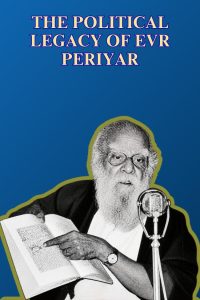
The Political Legacy of EVR Periyar

Archival Note

Published in Dalit Voice (Vol. 24, Issue No. 5, 1 March 2005), this essay by Rajendra of Ambedkar Pratishthana defends Periyar E.V. Ramaswamy against attempts to portray him as anti-Dalit. The essay recalls Periyar’s role in the anti-caste struggle, his break with the Congress and his relationship with Dr. B.R. Ambedkar. It asks the present generation to remember Periyar alongside Phule, Ambedkar and Shyam Sunder as part of the history of the anti-caste struggle.

The essay places particular emphasis on Periyar’s relationship with Ambedkar. It recalls Periyar’s efforts to bring Ambedkar into the Jat-Pat-Todak Mandal conference and the mutual respect between the two leaders. For Rajendra, Periyar’s importance lies in a politics of self-respect that directly challenged Brahminical social authority. He also presents Periyar within a wider Bahujan politics, arguing that Dalits and Backward Castes have a shared stake in fighting Brahminism. This makes the essay an important record of a political tradition that saw Ambedkar and Periyar as connected figures in the anti-caste movement rather than as representatives of opposing camps.

Published in September, the month of Periyar’s birth anniversary, the essay speaks to a contemporary tendency to divide anti-caste politics between Ambedkarite and Periyarist traditions, particularly in Tamil Nadu. That division can obscure the historical connections between the two movements and the different ways in which they confronted caste. Periyar’s emphasis on self-respect remains important because it locates caste oppression in the social relations and cultural authority that make hierarchy appear natural. His work also shows why anti-caste politics must challenge the ideas and institutions through which caste reproduces itself, alongside the struggle for political and legal rights. Revisiting Periyar through this history helps recover a broader anti-caste tradition in which his contribution and Ambedkar’s can be understood together without treating them as interchangeable.


Periyar E.V.R. As Champion Of Dalits

Periyar E.V. Ramaswamy is a leader of international repute and is hailed as a great thinker, reformer, revolutionary and humanist. The United Nations itself recognised this during his lifetime.

So any discussion on his sterling qualities and services to the oppressed people, victims of Brahminism, is ridiculous. Some Dalits under Brahminical influence have lately started branding Periyar as anti-Dalit. They should not be ungrateful to the extent of falsifying history itself. Dr. Ambedkar wanted his children to be sincere and truthful.

The present generation should know the history of their progress and the services and sacrifices of elders like Phule, Periyar, Babasaheb and Shyam Sunder.

Vaikom struggle: Periyar’s self-respect movement began in an aggressive way at Vaikom, in the present Kerala. It was on behalf of the Untouchable castes who were not allowed even to walk on a street right before a temple. Periyar rushed there and fought on their behalf.

This historic agitation led by Periyar attracted Muslim leader E.V.K. Abdulla and Christian leader Gorge Joseph. Gandhi, as a true Hindu, criticized Periyar for supporting the Untouchables. Sikhs came from Punjab and ran the free kitchen (langar). This will establish the truth of Periyar’s universal leadership.

Periyar was then arrested by the Trivancore state police and kept in prison for this agitation. Yet the agitation continued. Finally, the Untouchables won the right to walk on the road. This may not be a material gain, but a self-respect achievement for Untouchables. The agitation became famous as “Vaikom struggle”. Dr. Ambedkar wrote an Editorial about this historic achievement in his journal, Mooka Nayak.

Declaration to destroy Congress: The Congress, the original Brahmin party of India, passed a resolution in 1917 showing its concern for the welfare of Untouchables. M.K. Gandhi, the dictator of the Congress, claimed credit for this action of the Brahmin party. But the truth is Gandhi came to know about the British giving recognition to Untouchables and providing political rights based on the census of 1911, for which Prince Agha Khan was responsible.

From that day onwards, Congress started discussing social reforms in its sessions. But even such discussions were stopped when the Brahmins set fire to the Congress session pandal in Maharashtra. At the Madras session of the Congress, Periyar Ramaswamy, who was then an active worker of the Congress, forced a discussion on social problems, mainly Untouchability.

Rowdies engaged by Brahmins then dragged Periyar out of the pandal and thrashed him. Periyar declared on the spot that he would destroy the Congress in Tamil Nadu and he did it. The Congress is wiped out in Tamil Nadu.

Dr. Ambedkar respected Periyar: Dr. Ambedkar had great respect for Periyar and Periyar had respect for Dr. Ambedkar. It was Periyar who advised the organizers of Jat-Pat-Todak Mandal of Lahore, when they invited him to the conference, to invite Dr. Ambedkar, being a better person, well read, better informed and able to speak English.

Jat-Pat-Todak Mandal approached Dr. Ambedkar, who agreed and prepared a speech for the conference. But Gandhi planned his usual trick, which resulted in Dr. Ambedkar cancelling his engagement.

Later, Dr. Ambedkar got his speech published as a book, titled Annihilation of Caste.

Three greatest personalities: Some Dalit leaders are critical of Periyar just because he belonged to a Backward Caste. They also quote and misquote Dr. Ambedkar on the subject. They know only the title of this book. But they do not know the history behind this book.

Dr. Ambedkar always made it a point to meet Periyar when he visited Madras. One such visit was when Jinnah attended the Muslim League meeting at Madras. On this occasion, all the three greatest personalities of the day, Dr. Ambedkar, Jinnah and Periyar, met and discussed the Indian caste problem. A photo with these three taken during that meeting of the great statesmen is in my possession. Another important photo with me is of Periyar with the great Bheem Sena leader Shyam Sunder.

Birthday celebration in UP: Kanshi Ram is another great revolutionary of India. He organised the Bahujan Samaj Party which came to power in UP and celebrated Periyar’s birth anniversary.

Kanshi Ram knows who is who among the Bahujans. If Periyar had been anti-Dalit, as made out by some Dalits in Tamil Nadu, would India’s topmost Dalit leader praise Periyar? Similarly, our Editor has assigned the No.2 place to Periyar among the three greatest revolutionaries of “independent” India.

With all these facts, why do some Dalits call Periyar anti-Dalit? The mistake is not of Dalits but of the Backward Castes. It is easy to call it Brahminism.

The pity is the Backward Castes are the agents and foot-soldiers of Brahmins.

They ill-treated Dalits all over India, including Tamil Nadu, pushing Dalits to Islam at Meenakshi Puram 25 years ago. The BCs must mend their attitude towards Dalits, Muslims and Christians.

Dalits are duty bound to lead the entire Bahujan Samaj. That can be fulfilled only when BCs, at least the Most Backward Castes (MBC) like the barber, dhobi, potter, blacksmith etc., understand the importance of building Bahujan Samaj. Muslims and Christians also are distancing themselves from BCs. As an Ambedkarite, I call upon the BCs to join Dalits to fight Brahminism.

Periyar spent his whole life in this work for over half a century.

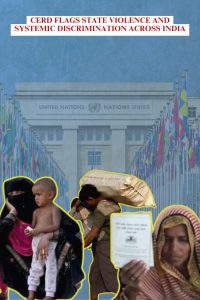
CERD Flags State Violence and Systemic Discrimination Across India

The UN Committee on the Elimination of Racial Discrimination (CERD) has raised serious concerns over the treatment of some of India’s most marginalised communities, including Dalits, Adivasi and tribal peoples, Rohingya, Bengali-speaking Muslims, migrants and asylum-seekers. Its findings follow the first review of India by the Committee since 2007 and examine the country’s combined 20th and 21st periodic reports under the International Convention on the Elimination of All Forms of Racial Discrimination.

The findings were issued after CERD’s 118th session, which also examined Finland, Honduras and Kuwait. This was part of the Committee’s regular review of states that have signed the Convention. CERD’s concluding observations are not court judgments and do not have the force of law. They assess how governments are implementing their obligations under the Convention and identify areas where the Committee finds serious problems.

In India’s case, CERD raised concerns spanning caste, ethnicity, religion, citizenship and policing. One of its gravest concerns was the alleged conduct of law-enforcement agencies towards Indigenous and Tribal Peoples, Scheduled Tribes, Scheduled Castes, particularly Dalits, ethnic and ethno-religious groups and non-citizens. CERD recorded reports of excessive force, racially motivated violence, extrajudicial killings, arbitrary and prolonged detention, torture, ill-treatment and sexual violence. It called for prompt, thorough and impartial investigations, with accountability where violations are established.

The reference to Dalits and Scheduled Castes also brings an older disagreement into the review. The Indian government maintains that caste should not be treated as equivalent to race or “descent” for the purposes of CERD. Its submissions nevertheless contain information on Scheduled Castes and Scheduled Tribes and measures intended to address their disadvantages. CERD’s treatment of caste within its examination of descent and discrimination places caste exclusion within the scope of the Committee’s scrutiny, even as the Indian state rejects that equivalence.

CERD also drew particular attention to Rohingya, Bengali-speaking Muslims, migrants and asylum-seekers. It noted an increase in law-enforcement operations involving these groups, particularly after a 2017 Home Affairs order and the April 2025 Pahalgam attack. Reports of police stops and identity checks based on racial profiling allegedly resulted in arbitrary arrests and detention, torture and other mistreatment. The Committee also raised concerns about deportations and forcible returns involving people who may require international protection.

During the review, CERD Country Rapporteur Stamatia Stavrinaki referred to independent monitoring that recorded more than 1,300 anti-Muslim hate-speech incidents in 2025, including recurring rhetoric attributed to senior officials. India’s delegation responded that legislation enacted in 2023 criminalises acts amounting to hate speech and hate crimes, with additional protections applying when offences target Scheduled Castes and Scheduled Tribes. It also pointed to freedom of religion as a constitutional guarantee.

But CERD’s observations focused on what these protections mean in practice. Alongside the government’s account of its legal safeguards, the Committee recorded concerns about discrimination, hate speech, violence and the conduct of law-enforcement agencies. It called on India to address hate crimes against Rohingya, Bengali-speaking Muslims, migrants and asylum-seekers, refrain from collective expulsions and ensure access to international protection. This includes respecting non-refoulement, the principle that people should not be returned to a place where they face a serious risk of persecution or other grave harm.

The findings also address citizenship and documentation. CERD noted the absence of adequate disaggregated data on Indigenous and Tribal Peoples, ethnic and ethno-religious groups, migrants, refugees, asylum-seekers and stateless people. It highlighted the categorisation of Bengali-speaking Muslims as “non-original inhabitants” and reports that they face more stringent scrutiny during National Register of Citizens verification. The Committee also noted that much of India’s available data on Scheduled Castes, Scheduled Tribes and refugees still derives from the 2011 Census, while acknowledging the delayed 2026 Census and its proposed collection of caste data through self-identification.

The treatment of Bengali-speaking Muslims in the NRC process raises a broader question about how citizenship is administered. CERD’s concern is not simply that documentation is required, but that particular ethnic and religious groups are reportedly subjected to different levels of scrutiny. In a political environment where Muslims are repeatedly cast as outsiders or demographic threats, administrative categories such as “non-original inhabitants” can acquire consequences beyond paperwork. The NRC thus becomes part of a wider system in which belonging is subjected to heightened state verification.

The concerns around Rohingya also sit within a longer history of UN scrutiny. A 2025 communication by UN Special Procedures carried allegations that deportation operations against Muslims, including Rohingya, intensified after the Pahalgam attack, involving raids, arrests, ill-treatment and forcible returns. Those allegations came through a separate UN process and were not findings by CERD or a judicial determination.

India is not a party to the 1951 Refugee Convention or its 1967 Protocol and has no comprehensive national refugee law. UNHCR therefore carries out protection-related functions for refugees and asylum-seekers in the country. This absence has become more significant alongside changes to India’s citizenship and immigration regime.

The Citizenship (Amendment) Act, 2019 was defended by BJP ministers as addressing the unfinished business or “wrongs” of Partition. Yet the CAA was not a refugee law. It created a religion-based route to accelerated citizenship for specified non-Muslim communities from Pakistan, Bangladesh and Afghanistan. It did not establish a general system of refugee protection based on persecution or the risk of serious harm.

And in 2025, Parliament enacted the Immigration and Foreigners Act, replacing four earlier laws governing the entry and treatment of foreign nationals. The new law consolidated the state’s immigration powers without creating a corresponding refugee protection framework. CERD’s call for protection against collective expulsions and respect for non-refoulement therefore comes alongside a strengthened legal machinery for controlling and removing foreign nationals, while India still lacks a dedicated process for determining who requires refugee protection. For Rohingya and other asylum-seekers, that leaves a basic question: what domestic procedure requires the danger they may face after removal to be considered before the state deports them?

India’s delegation, led by Solicitor General Tushar Mehta, defended the country’s legal framework and its claims of pluralism and equality. The government reiterated its position that caste should not be equated with race or “descent” under the Convention and pointed to legislation addressing hate speech and protections for Scheduled Castes and Scheduled Tribes.

CERD’s findings place those claims alongside reports of how state institutions operate on the ground. The Committee’s concerns cover law-enforcement violence against Dalits and Adivasi and tribal communities, anti-Muslim hate speech, racial profiling of Bengali-speaking Muslims and Rohingya, and the treatment of people whose citizenship or immigration status is under scrutiny.

For Dalit and Adivasi communities, and for Muslims and other minorities whose belonging is increasingly subjected to state scrutiny, the findings also expose how Hindu nationalism operates through state power. Caste discrimination, communal targeting, citizenship enforcement and policing are often treated as separate questions, even as they converge in the lives of communities whose relationship with the state is shaped by unequal power. CERD’s observations bring these questions into the same examination of discrimination and direct attention towards the institutions through which unequal treatment is carried out.

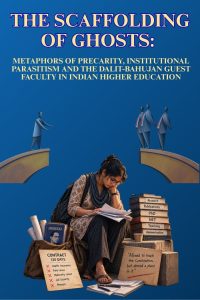
The Scaffolding of Ghosts: Metaphors of Precarity, Institutional Parasitism and the Dalit-Bahujan Guest Faculty in Indian Higher Education

“They take our sweat to cement the arches of their intellectual temples, but reserve the sanctuary for their own kin. We are allowed into the university only as day-laborers of the mind, expected to clean the dust of their theories and vanish before the sun sets.”

— Notes from an Unappointed Ad-Hoc Scholar


I. Introduction: The Ivory Plantation and the Underground Specters

The modern Indian university is not an agora of enlightenment; it is a meticulously landscaped plantation whose ivory towers are held upright by bamboo scaffolding made of invisible hands. If you walk through the marble corridors of Delhi University, the red-brick courtyards of Hyderabad, or the ancient stone arcades of state universities in Uttar Pradesh and Maharashtra, you will breathe an air thick with the incense of academic grandiosity. High-table seminars deliberate on post-colonial subalternity, international journals publish lavish treatises on “decolonizing the mind,” and vice-chancellors deliver pious speeches on national progress. Yet, step beneath the floorboards of this grand theater, into the subterranean basements where tutorial sheets are evaluated and attendance registers are marked, and you will encounter an army of specters. They are the Guest Faculty, the Ad-Hoc Scholars, the Temporary Lecturers—disproportionately hailing from Dalit, Bahujan, and Adivasi communities—who inhabit the university not as citizens of letters, but as unacknowledged day-laborers of the intellect.

To understand the crisis of the Dalit-Bahujan guest lecturer is to understand a sophisticated, modernized form of institutional untouchability. It is a system that does not banish the untouchable body from the temple of learning, but rather admits it on the condition that it remains eternally temporary, economically broken, and structurally voiceless. The old caste order barred the Shudra and Ati-Shudra from listening to the Vedas by pouring molten lead into their ears; the modern neoliberal-feudal university permits them to teach the Vedas, the Constitution, and Quantum Mechanics, but ensures that their monthly stipend of a few thousand rupees arrives six months late, without healthcare, without maternity leave, and with the permanent threat of instant dismissal at the end of every 120-day contract cycle.


IIA. The Reservation Bypass: How Public Universities Invented the “Academic Coolie”

For seven decades, the Indian Constitution guaranteed that public universities—the primary engines of social mobility for marginalized communities—would reflect the demographic reality of the nation through affirmative action (Reservation). However, the Savarna oligarchy that controls the levers of academic administration executed a masterstroke of systemic evasion. Rather than directly opposing reservations—which would invite constitutional penalties and street protest—they rendered the permanent faculty position an endangered species. By deliberately freezing regular recruitment for decades, university administrations created an artificial vacuum, which they then filled with temporary, contract, and guest faculty.

Consider the brutal arithmetic of this institutional fraud. When a university advertises a permanent Assistant Professor position, it is legally bound to apply the constitutional quota (15% SC, 7.5% ST, 27% OBC, alongside EWS). But when the university hires a “Guest Lecturer” or “Ad-hoc Teacher” to take the exact same classes, grade the exact same papers, and invigilate the exact same examinations, the reservation roster is blithely discarded under the legal pretext that guest teaching is “hourly engagement” or “contingent work.”


IIB. The Reservation Bypass: Institutional Anomie: Higher Education Disparity Data

  • 33%+ Sanctioned Faculty Vacancies Left unfilled across Central and State universities.
  • 50% Undergraduate Teaching Load Executed by guest, ad-hoc, and contract labor.
  • 4.2% SC/ST Full Professors Representation in premier institutions.

This is the Reservation Bypass Architecture. By shifting the bulk of teaching workloads onto unreserved, arbitrarily appointed guest arrangements, university syndicates have successfully preserved permanent professorships as exclusive fiefdoms of elite caste networks. The Dalit-Bahujan scholar who spent a decade earning a PhD from a premier central institution, publishing peer-reviewed papers, and passing the National Eligibility Test (NET), arrives at the university gates expecting the fulfillment of constitutional promises. Instead, they are directed to the guest room—a cramped closet under the stairs—and handed an hourly wage contract that pays less than the daily minimum wage of an industrial supervisor.


III. The Metaphor of the Academic Plantation: The Sugar Mill of the Mind

To capture the existential dread of the guest faculty, one must discard the sterile vocabulary of human resource management and turn to the literature of plantation economies. The guest scholar is the cane-cutter of the academic sugar mill. Every morning, they arrive at the campus with bundles of intellect harvested from nights of lamp-lit reading, only to feed them into the administrative crusher. The sweetness—the tuition fees paid by students, the accreditation scores (NAAC) awarded to the college, the university’s ranking metrics—is extracted by the administration to polish the institution’s facade. The leftover bagasse—the exhausted, underpaid, un-benefited human being—is swept out at the end of the term.

There is a cruel satire in how elite institutions market their commitment to social justice. A college will organize a national seminar on “Ambedkarite Hermeneutics” or “Post-Colonial Subalternity,” funded by public grants. The keynote speaker, a tenured professor enjoying a six-figure salary, housing allowances, and sabbatical privileges, will deliver an impassioned address on the plight of the marginalized. Meanwhile, the microphone is adjusted, the water glasses are refilled, and the attendance registers are compiled by a guest lecturer who holds a Doctorate in Marathi Literature, belongs to the Mahar or Matang community, and is wondering if their bank balance of ₹412 will stretch to cover next month’s room rent.

“We are asked to lecture on human rights in the morning and beg the clerk for our unpaid honorarium in the afternoon. The university teaches equality through our mouths while practicing feudalism on our throats.”

This paradox is structural rather than incidental. The tenured Savarna academic elite requires the guest faculty in the same way the Victorian aristocracy required domestic servants. The presence of a vast, desperate reserve army of unemployed and underemployed Dalit-Bahujan PhDs allows tenured professors to reduce their own teaching workloads, delegate tedious administrative drudgery, pursue prestigious foreign fellowships, and maintain an aura of Olympian intellectual detachment. The guest lecturer becomes the institutional sponge that absorbs all the friction, labor, and anxiety of the educational machine, allowing those above them to glide seamlessly through the realm of pure thought.


IV. The 120-Day Executioner: Contracts, Caste Privilege, and Psychological Castration

The contract structure of guest and ad-hoc appointments is designed with psychological precision to break the spirit of resistance. In many state and central universities, appointments are made for 120 days, 89 days, or purely on a “per-lecture” basis (capped at a paltry monthly maximum). At the end of every term, the guest faculty undergoes a symbolic execution: their contract terminates, their temporary library pass expires, and they are cast back into the abyss of non-existence.

To be re-appointed for the next term, the scholar must perform a ritual of submission. They must court the favor of Departmental Heads, College Principals, and Governing Body members. In a society where social capital is coterminous with caste networks, this ritual is deeply stacked against Dalit-Bahujan scholars. A Savarna candidate, connected through family ties, alumni networks, shared dietary habits, and cultural codes, effortlessly navigates the informal corridors of power. They engage in light banter over filter coffee or tea with the Principal, discussing shared acquaintances and theoretical inclinations. The Dalit-Bahujan candidate, lacking this inherited cultural currency, enters the administrative office carrying the heavy burden of historical exclusion, acutely aware that any slip of tongue, any display of political assertion, or even a lack of “servile deference” can result in immediate, unwritten blacklisting.

Satire turns into horror when one examines the “Interview Boards” for ad-hoc and guest panels. Every few months, thousands of scholars line up outside principal offices across university towns like cattle at an auction. They hold thick files containing books they have written, research articles published in Scopus-indexed journals, and certificates of national awards. They are called into the interview room for precisely 90 seconds. 90 seconds to justify ten years of doctoral labor. The committee members—often bored, scrolling through their smartphones—ask a superficial question, check the candidate’s last name (a transparent proxy for caste identity in the Indian context), and make a silent mark on their scorecards. The process is repeated term after term, year after year, converting vibrant young intellectuals into anxious, sycophantic mendicants.


V. The Political Economy of Silence: Why the Academic Subaltern Cannot Speak

Why do guest faculty not unionize and shut down the university until their demands for regularisation are met? The answer lies in the totalizing nature of their precarity. Tenured faculty can go on strike because their salaries are protected by civil service rules and UGC regulations. Permanent staff have trade unions, legal representation, and tenure protection. The guest lecturer has none of these shield walls.

If a guest teacher speaks out against administrative corruption, caste discrimination, or delayed payments, they are not served with a show-cause notice—they are simply not invited back next semester. No order is issued; no explanation is required. The phone simply stops ringing. Their name disappears from the timetable as quietly as a drop of water evaporating on a hot slate. This form of retaliation is clean, silent, and untraceable. It is the bureaucratic equivalent of an extra-judicial disappearance.

Furthermore, this precarious labor market actively fractures solidarity among the oppressed. When fifty Dalit-Bahujan PhD graduates are competing for two temporary guest slots paying a meager hourly wage, the university successfully pits victim against victim. Solidarity is replaced by a desperate, panicky competition for survival. The scholar who raises their voice against an unjust workload is instantly replaced by another scholar whose rent is due tomorrow and whose family is waiting for a remittance back in the village.


VI. A Personal Monologue: A Letter from the Shadows

Let me speak to you not as an abstract sociological voice, but as Mujammil Shahin Siraj Shaikh—a chronicler who has watched the brightest minds of my generation wither in the waiting rooms of higher education.

I have seen my friend—a man who spent six years translating obscure 19th-century anti-caste manuscripts, a scholar whose mind burns with the brilliance of a supernova—standing outside the account section of a state university in the scorching summer heat of June. He was not there to collect a research grant or a publication prize. He was begging a clerk, who was half-asleep under a whirring ceiling fan, to release his lecture fees for the previous semester—money that had been withheld for seven months because a signature on a voucher sheet was missing a middle initial. His mother in the village needed insulin; his landlord had threatened to lock his room by the weekend. In his pocket was a copy of Antonio Gramsci’s Hegemony and the Intellectuals, a book he had taught to fifty eager undergraduate students that very morning.

What does it do to a human soul to articulate theories of freedom, justice, and human dignity on the lectern, while living a personal reality of complete disenfranchisement? It creates a profound, tearing schizophrenia. The guest scholar lives in two worlds simultaneously: in the morning, they are “Doctor,” an authority figure guiding the next generation toward critical thought; in the evening, they are a pauper, calculating whether they can afford egg curry or must settle for plain rice to survive till the end of the month.

This humiliation is explicitly gendered and caste-coded. Bahujan women guest lecturers face a double furnace of oppression. They navigate not only the structural precarity of temporary contracts and caste bias but also the insidious sexual harassment and paternalistic condescension inherent in hierarchical university departments, where renewal of contracts is frequently dangled as a weapon of behavioral control by senior male academics.


VII. The Imperial Caste-Class Trap: Data, Statistics, and Structural Reality

The tragedy of the guest faculty is not a temporary glitch in an otherwise healthy educational system; it is the logical outcome of a neoliberal state colluding with a feudal social structure. Let us examine the national indicators that illustrate this structural betrayal:

  • Systemic Vacancies as Policy: According to official data presented in Parliament and AISHE reports, thousands of faculty positions remain vacant across Central Universities, IITs, and NITs. The vast majority of these unfilled posts belong to the reserved categories (SC, ST, OBC). By leaving these posts vacant under the pretext of “Non-Availability of Suitable Candidates” (NASC)—a notorious administrative euphemism used for decades to reject qualified Dalit-Bahujan applicants—universities fill the operational gap by hiring guest lecturers at a fraction of the cost.
  • The Economic Exploitation Ratio: A permanent Assistant Professor under the 7th Pay Commission earns a starting basic pay of approximately ₹57,700 plus allowances (totalling upwards of ₹85,000 to ₹1,000,000+ monthly). A Guest Faculty member teaching the exact same course load is capped at a maximum ceiling (often ₹50,000 in central norms, but frequently down to ₹12,000 – ₹20,000 in state universities), with zero pay during vacations, zero health insurance, zero Provident Fund, and zero annual increments. The university extracts 100% of the labor value while paying less than 20% of the cost.
  • The Psychological Toll: Studies on academic precarity show alarming rates of chronic anxiety, depression, and existential despair among ad-hoc and guest educators. When social identity (caste stigma) combines with economic instability, the result is an intolerable mental crucible. The tragic institutional suicides of scholars like Rohit Vemula and Payal Tadvi are merely the visible tip of an underwater iceberg of silent, slow-motion institutional violence inflicted on thousands of contract educators daily.


VIII. Reclaiming the Temple: A Call for Radical Academic Emancipation

We must strip away the romantic mythologies of the Indian university. The university is not a sanctuary of pure scholarship; it is a battleground of social power. As long as higher education relies on an underclass of disenfranchised, underpaid, and structurally vulnerable Dalit-Bahujan guest faculty, every degree awarded by these institutions is tainted by the sweat of unfree labor.

To dismantle this modern plantation system, we do not need incremental policy tweaks or patronizing sympathies from academic senates. We require radical structural restructuring:

  • Immediate Abolition of the “Guest/Ad-Hoc” Bypass: Higher education regulatory bodies (UGC, Ministry of Education) must mandate that any teaching position required for more than one academic term MUST be converted into a regular, permanent position subject to constitutional reservation rosters.
  • Equal Pay for Equal Work: Until regularisation is achieved, guest faculty performing identical teaching, evaluation, and administrative duties must receive equal hourly and monthly remuneration, along with full health coverage and seasonal pay continuity, in strict compliance with Supreme Court mandates on labor rights.
  • National Audit of Reservation Rosters: A high-powered, independent judicial commission comprising Dalit, Bahujan, and Adivasi jurists must audit the faculty recruitment records and vacancy distributions of all central and state universities to expose and penalize administrative manipulation of reservation panels.
  • Democratization of Departmental Governance: Departmental chairs and university committees must be stripped of arbitrary, unilateral power over contract renewals. Evaluation of teaching staff must be transparent, peer-reviewed, and protected against personal and caste-based bias.

Until these measures are implemented, the Dalit-Bahujan intellectual will remain a ghost in the machine—hired to teach the youth how to think, but forbidden from claiming a place to exist. But let the managers of the academic plantation take warning: ghosts do not remain silent forever. The scaffolding of precarity is rotting from within, and when it collapses, it will take the ivory tower down with it.


Mujammil Shahin Siraj Shaikh is a Pune-based independent researcher and prospective PhD scholar examining structural inequality, public policy and institutional power in modern India.

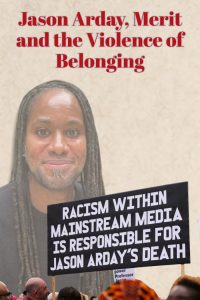
Jason Arday, Merit and the Violence of Belonging

Jason Arday was a sociologist, a teacher, a writer, a son, a partner, a father, a brother and a man whose life had already contained extraordinary difficulties and achievements long before Cambridge made him a symbol. He was 41 when he was found dead at his home in south London on August 14, nine days after resigning from the University of Cambridge amid allegations concerning plagiarism, his academic record and aspects of the life story he had publicly told. The Metropolitan Police said his death was unexpected but not believed to be suspicious. An inquest is to determine the circumstances of his death.

His life was more than his Cambridge appointment, more than the allegations against him and certainly more than the controversy that consumed his final weeks. He had spoken about being diagnosed with autism and other developmental difficulties as a child, about remaining non-verbal until he was 11 and about his difficulties with reading and writing. He nevertheless went on to earn a PhD, teach across several British universities, write about race and education, and become Cambridge’s youngest Black professor in 2023.

The allegations against Arday were presented as a matter of academic misconduct without sufficient scrutiny of their origin and validity. What is disturbing about the Arday affair is the point at which scrutiny of an individual appeared to become a much larger argument about who deserves to occupy an elite institution.

NewsCord’s review counted 249 distinct articles about Arday across 15 British national outlets between July 24 and the evening of August 14. Of these, 188 appeared in the nine days after his resignation. That amounted to an average of 20.9 articles a day after he had already stepped down.

There was plainly a story to investigate. But the coverage did not remain confined to his academic work. His childhood, memoir, personal claims, sporting achievements and biography became subjects of repeated public examination. NewsCord’s account documents coverage that moved into ridicule, speculation and commentary about parts of his life that went far beyond the original academic allegations.

The most troubling context is that some of the controversy was explicitly connected to arguments about race and diversity. The academic who brought the plagiarism allegations to wider attention, Nathan Cofnas, has described himself as a “race realist” and has previously written about racial representation in elite professions in terms that explicitly invoke supposedly innate differences in ability. He has since said that his concern was with diversity, equity and inclusion rather than personal hostility towards Arday. Cofnas, now sacked from his institute, must nonetheless be held accountable for the chain of events he initiated. The positions and politics he espouses form part of the context in which Arday’s case was interpreted and circulated, and of a wider social order in which Black and other oppressed communities are made to experience institutions as spaces of conditional belonging.

What happened to Arday, then, cannot be understood only as a dispute over one academic’s work. The larger question is what happens when the presence of someone from a historically excluded community inside an elite institution is treated as something that must continually be justified.

For many of us in India, there is something painfully familiar in that question.

The specific histories are different. Arday was a Black British academic; caste is a different system from race, with its own history and mechanisms. But the experience of being treated as an exception whose presence requires explanation has recognisable parallels.

Think about the Dalit student who enters an elite university. The Dalit scholar who gets a faculty position. The first-generation student who enters medicine, the civil services or a prestigious professional institution. Their achievement is often not allowed to remain simply an achievement. A question enters the room before they do: Did they actually deserve this?

That question is rarely asked in isolation. It arrives carrying the weight of caste. Reservation makes that question explicit. “Merit” becomes the language through which caste privilege can present itself as a neutral achievement. We are seeing this today in India, where Delhi’s designated protest site has a sit-in by Reservation Hatao Andolan, a group of snowflake oppressor-caste members who cannot ask for structural change from the state and would rather espouse casteist statements of exclusion and degradation on camera while claiming victimhood.

The same logic that asks whether a Black professor really belongs at Cambridge can, in another context, ask whether a Dalit professor really belongs in a university at all. The language changes. The hierarchy does not.

This is why the mythology of merit matters. The mythology of merit depends on forgetting the conditions under which merit is produced. Before a person sits for an examination, submits a PhD application or interviews for an academic job, they have already travelled through a social world. Some people grow up with educated parents, private schooling, books, stable housing, English-language fluency, professional networks and the confidence that elite institutions are places where they naturally belong. Others encounter those institutions after crossing barriers that were never faced by their supposedly more “meritorious” peers.

Yet once the final credential is produced, all of that history disappears behind an apparently objective label: merit. Caste makes this contradiction impossible to ignore.

For generations, education and professional authority were overwhelmingly concentrated among particular castes. Property, literacy, institutional familiarity, social networks and cultural capital accumulated across families and communities. When the descendants of those histories arrive at elite universities, their inherited advantages are rarely described as an intervention into merit. They appear as merit itself. Reservation disrupts that story because it makes social exclusion visible.

That is why the rhetoric around merit can become so vicious. Merit is presented as a timeless measure of individual worth, when in practice institutions decide what counts as merit, how it will be measured and who gets the opportunity to demonstrate it.

The same baton is used to beat affirmative action in different contexts: DEI in the West and reservations in India. In both cases, policies intended to address historical exclusion are recast as threats to a supposedly neutral system that was never neutral to begin with.

Once this idea of merit is entertained, the presence of a Black professor or a Dalit professor can become suspicious before anything about their work is examined. Their success is treated as something requiring an explanation. Their mistakes become evidence of a larger failure. Their credentials become open to a level of scrutiny that their social position was already unlikely to protect them from.

This is what makes the racial invocation against Arday’s career so pernicious. The question moves from a basic inquiry, “Did this individual meet the standards?”, to “Why was someone like this here in the first place?”

The second question may present itself as a defence of objectivity, but it is not really interested in objectivity, real or imagined. It is about belonging. It is about who gets to occupy the public arena without having their presence continually explained, defended or justified.

And that is where Arday’s story speaks beyond itself. Because many people from historically oppressed communities recognise the particular pain of entering spaces that were not built with them in mind and then discovering that their right to be there remains permanently open to question.


Mangesh is a law student from Mumbai, Maharashtra.

Who Gets to Roar Like a Tigress? Neoliberalism, Marketised Education and Caste Inequality

India has expanded education as a formal right while simultaneously allowing the conditions under which that right is exercised to become increasingly differentiated by market capacity. Because market capacity is structured by caste and class, the marketisation of education can undermine the equalising function that constitutional education rights were intended to serve.


Article 21A, inserted through the Constitution (Eighty-Sixth Amendment) Act, 2002, establishes free and compulsory education as a fundamental right for all children between six and fourteen years of age. The Right of Children to Free and Compulsory Education Act, 2009, provides the statutory framework for implementing this constitutional guarantee. This places an obligation on the government to ensure that free and compulsory education reaches children across the most disadvantaged sections of society.

However, there is an evident gap between what the Constitution proclaims education must be, namely, not a private commodity, and what is happening under a neoliberal economic structure. While the right to education is formally universal, as it should be, the quality and conditions under which that right is delivered remain deeply unequal, disproportionately affecting the most vulnerable sections of society, particularly students from SC/ST communities.

In India, there are broadly two types of institutional spaces that provide education and shape the kind of education, exposure, infrastructure, and social networks available to a child: private schools and public schools. Private schools operate through fees and market demand, with annual fees ranging from thousands to several lakhs of rupees, and reaching as high as ₹28–30 lakh in some elite schools. Their appeal is often associated not only with classroom teaching but also with advanced infrastructure, English-language education, extracurricular opportunities, technology, and claims of global exposure. Government schools, by contrast, depend substantially on public expenditure and government provision. A 2025 national survey indicates that average annual household expenditure per child in non-government schools was ₹25,002, compared with ₹2,863 in government schools, making household expenditure on non-government schooling nearly nine times higher.

The government budget for School Education and Literacy, as per the latest available Union Budget 2026–27, is ₹83,562 crore, of which around 70–80% goes towards salaries and administrative costs, leaving substantially less budget for infrastructure, school advancements, and labs. This substantially impacts the passing rate of students and the quality of education they receive.

When a private-educated student and a public-educated student enter a university, the field becomes unequal and highly disadvantageous for public-school students. It is within this unequal field that the neoliberal commodification of education becomes particularly important, as access to better educational opportunities increasingly depends on one’s ability to pay.

Neoliberalism places considerable emphasis on markets, competition, individual choice, and the withdrawal or restructuring of direct state provision. When applied to education, these principles can transform education from a predominantly public responsibility into a service increasingly mediated by market mechanisms. It drives the privatisation of government schools, turning education into a marketable commodity driven by competition, choice, and profit. This is what can be seen in the Indian education system.

Rather than increasing funding and upgrading public schools, the right-wing government has used policies to systematically transfer school ownership, management, or funding to private entities. This has resulted in the closure or merger of 94,000 government schools since 2014, as per a NITI Aayog report. That is 25 public schools per day. On the other hand, private unaided schools grew from 2.88 lakh to roughly 3.39 lakh.

This systematic institutional mobility of schools has resulted in two major shifts. First, the migration of public-school students towards private schools, numbering around 86 lakh. Second, those unable to transfer to or pay for private schools were denied their fundamental right to education.

Such consequences of this marketisation cannot be separated from India’s existing social structure. The ability to choose between schools is itself socially differentiated in India, as income, wealth, social capital, geography, and caste are already unequally distributed.

According to the UDISE+ (Unified District Information System for Education) school database system, around 68.7% of ST students and 62.4% of SC students rely on government schools. For them, public schools continue to function as a major educational lifeline.

A wealthy household facing declining public provision can respond by purchasing private education. A poor household may not have that option. The same policy therefore produces different consequences for different social groups. And therefore, when public education is weakened and monetised, the consequences are not distributed evenly across society, with SC and ST communities bearing a disproportionate share of the impediment.

Furthermore, the incumbent government has allocated just 4% of its GDP to education instead of the 6% recommended by NEP 2020. This gap in allocation, combined with the residual income gap among people, inadequate facilities, and caste domination in government schooling, provides a stark contrast between the constitutional right to formal educational inclusion and substantive equality in education.

In this class and caste divide, SC and ST students are among the most vulnerable. The inequality that begins with access to education continues into the opportunities available to students, eventually contributing to economic inequality. This creates a vicious circular system of unequal education.

unequal schooling → unequal educational attainment → unequal skills and credentials → unequal employment opportunities → reproduction of economic inequality.

Public schooling in India is not simply about education; it is also a political question. In India, neoliberal governance and right-wing politics are lovers, bound together in the making and remaking of the state’s approach to public education. Here, neoliberal restructuring can generate social and economic crises that produce grievances and uncertainty, which right-wing populism can then mobilise politically. In turn, right-wing populism can reinforce the same neoliberal restructuring by redirecting these grievances, generating doubt and distrust towards alternative political and economic narratives, and weakening challenges to the prevailing order.

The recent “School Thik Karo” movement by CJP provides a contemporary illustration of such a love story. The campaign involved visits to government schools, interaction with students, and demands for improvements in educational infrastructure and facilities. What government should fear a demand for better schools? However, rather than being understood simply as a demand for better schools, the campaign encountered political resistance, including restrictions on access to schools in Rajasthan and an FIR in Maharashtra.

This points to a broader tension: government schools are public institutions intended to deliver a constitutional right, yet demands for better infrastructure and greater accountability can become politically contentious. And once again, the consequences fall most heavily on those who have the fewest alternatives: SC and ST students.

Their inability to purchase education, or their household’s lack of the resources necessary to exercise that choice, is a systemic failure of neoliberalism. As neoliberal marketisation increasingly determines who can access quality education, the danger is that education itself, which is intended to enable social mobility, may instead reproduce the inequalities it was expected to overcome.

Dr. Babasaheb Ambedkar said, “Education is the milk of a tigress, and he who drinks it will not fail to roar.”

But what happens when that milk is filtered by income, caste, and market access? The milk is no longer the same for everyone. Some receive it diluted and adulterated, while others receive what allows them to roar. Who gets which kind of milk, and who decides?


Mrunal Madhuri Milind Dupte is a development economics researcher, anti-caste writer and public speaker working on inequality, Dalit and Buddhist economics.

Annihilation of Caste

This piece, adapted from Chapter 2, “Annihilation of Caste,” in Caste – A Nation Within the Nation, has been abridged, edited, and selectively rephrased to highlight the conjoined conceptual rigor and moral conviction that animate V. T. Rajshekar’s writing. The purpose of this version is to reveal the enduring force of his argument and its continued relevance to the present moment of caste politics and thought. In this essay, Rajshekar dissects caste as the central ideological and structural principle of Indian society—an all-encompassing system that determines not only social hierarchy but also access to political power, knowledge, and morality. He argues that caste cannot be dismantled through moral persuasion or partial reform because it is the very grammar of Hindu social order. Drawing from Ambedkar yet extending beyond him, Rajshekar exposes how religion, law, and politics work in concert to preserve Brahminical dominance. For him, annihilation means confrontation: a total break with the social, spiritual, and epistemic order that legitimizes caste. The essay stands as both critique and declaration, demanding not reconciliation but the assertion of Dalit consciousness as the ground for any true democratic transformation.

However, Rajshekar’s forceful framing also opens up crucial points of tension worth registering. His deployment of the language of “nation” and “national minorities” for Bahujans—though strategically potent—risks reproducing the very nationalist grammar that has historically absorbed, redirected, or neutralized anti-caste energies. The presumption that “nationhood” is a stable or emancipatory horizon for Bahujans overlooks how nationalism in the subcontinent has routinely demanded caste-erasure at the symbolic level while sustaining caste power in practice. A critique aligned with Ambedkar’s own caution would remind us that the nation is not automatically a vehicle of justice; rather, it has often operated as the ideological shield for Brahminical majoritarianism. Any appeal to national belonging must therefore be critically examined so that it does not reinscribe the homogenizing impulses it seeks to break.

Similarly, the text suggests a sharp opposition between caste-bound villages and propaganda-driven cities, as though the former naturally preserve anti-Hindutva potential and the latter incubate Brahminical hegemony. This distinction, already unstable in Rajshekar’s time, is even less tenable today. Rural India has never been uniformly resistant to Hindutva, nor have urban centres been coherent sites of caste blindness. The circulation of media, the penetration of welfare networks, the transformation of local political economies, and the recomposition of rural–urban migration have all produced a far more entangled terrain. Village social order does not automatically protect Bahujan interests; it can reproduce the violence of caste more directly, even as it occasionally generates solidarities unavailable in urban anonymity. Any contemporary evaluation must abandon this binary and analyze how caste power now moves fluidly across both spaces.

Finally, Rajshekar’s argument that Hindutva remains a primarily Brahminical project does not fully anticipate the demographic restructuring of the Hindu Right. Today, its organizational strength and electoral reach depend heavily on OBC and non-Brahmin participation—not only as foot soldiers but as ideological and political actors within the movement. This does not invalidate Rajshekar’s critique of Brahminical dominance; rather, it complicates the picture by showing how caste power adapts, absorbs, and redeploys the aspirations of groups historically positioned outside the Brahminical core. Any contemporary reading must therefore account for how Hindutva now functions through a broadened social base, and why anti-caste politics must confront this expanded constituency rather than an imagined Brahmin minority alone.Taken together, these tensions do not diminish the power of Rajshekar’s intervention; they sharpen it by situating his insights within a transformed political landscape. The stakes of annihilation today demand both the fidelity to Ambedkarite confrontation and a critical rethinking of the categories—nation, village, caste bloc, majority/minority—through which the struggle has been historically articulated.


V. T. Rajshekar


Hindu Angle of ‘Caste Annihilation’

It is the Hindus who stand to gain most from the caste system, for caste is another name for Hinduism. If caste is destroyed, Hinduism collapses. Gandhi knew this and opposed any fight against caste, for his defense of “Varna Dharma” safeguarded Hindu order. No Hindu is prepared to give up caste; caste is the source of their power.

Why then have Hindus suddenly begun talking of “caste annihilation”? Are they ready to sacrifice their privileges? Some honest vaidiks, like the Puri Shankaracharya, openly declare that Bahujans are not Hindus and hence outcastes; we have no quarrel with such honesty. Our problem is with the deceitful “socialist” Brahmins who cloak themselves as Gandhians, Marxists, or nationalists while preserving caste.

Their “caste annihilation” means the abolition of caste-based reservations, not the destruction of caste itself. They want to preserve their superiority while preaching equality — taking Dalits into temples but never allowing them priesthood, welcoming them into Brahmin-owned hotels but never letting them own one. Their idea is to change form without changing content, to keep the power hierarchy intact. They advise the scavenger to take pride in cleaning toilets instead of demanding liberation. This Gandhian hypocrisy, perfected by institutions like Sulabh International, is what they call “caste annihilation.”

Bahujan Angle of ‘Caste Annihilation’
For Bahujans, annihilating caste means destroying the power structure itself. Ambedkarites understand caste as an ascending scale of reverence and a descending scale of contempt. Gandhi’s temple-entry and inter-dining gimmicks never touched this structure. As Dr. Babasaheb Ambedkar showed, the root of untouchability is the caste system; the root of caste is religion; and the root of that religion is Brahminical authority sustained by power.

Ambedkar sought to transform the very body of caste, not its surface symptoms. He knew that deprivation and humiliation were political, not moral, conditions. Unless the powerless are empowered, the powerful will never treat them as equals. The Ambedkarite view holds that social equality follows political and economic power. Reservation, therefore, is not charity but an assertion of human rights — a corrective to centuries of exclusion. When rights are restored, the oppressed gain power; when power shifts, equality begins.

Hindus wish only to soften the feelings emanating from caste while leaving the structure untouched. Bahujans aim to destroy its foundation. Hindus cure the symptoms of the disease; Bahujans aim to cure the disease itself.

Hindu Opposition to the Bahujan Angle
Hindus object that caste-based empowerment will strengthen caste, harm national integration, and endanger Hindu unity. Their real fear is that an empowered Bahujan consciousness will destroy the Hindu social order. When they call for caste annihilation, they mean the abolition of resentment among the oppressed — not the privileges of the oppressor. They fear that Dalit assertion will polarize society and lead to a “caste war,” which indeed would end the caste system and minority Hindu rule.

The Brahmins, masters of contradiction, understand Ambedkarism better than most Bahujans. They exploit caste divisions to protect Hindu supremacy. Many Bahujans, seduced by Brahminical media and “secular” rhetoric, fail to see that what the Hindus hate, they should love — and what Hindus love, they should question.

Ambedkarite interpretation of caste annihilation strengthens castes

The Hindu claim that caste-based reservations strengthen caste is only half true. It is true that caste must first consolidate before it can be dismantled. Caste-based representation requires the collective strength of each deprived group; it is a necessary stage in annihilating hierarchy. The Constitution itself recognizes caste as the basis for remedy, granting reservations to Scheduled Castes and Backward Classes. This recognition has empowered Dalits politically and psychologically, enabling them to become a force in national life.

Those who oppose caste identity while benefiting from reservation are deluded. Without caste identification, there would be no eligibility for justice. The so-called “creamy layer” debate further exposes the Hindu anxiety: upper castes resent any rise in Dalit or OBC power. Reservation has created a new confidence — a ladder the privileged now want to kick away.

Ambedkar sought to employ caste-based reservation to consolidate the oppressed as a political community capable of challenging Brahminical domination. Every assertion of caste identity among the marginalized weakens the monopoly of the Hindu minority. Gujarat’s caste wars of the 1980s proved this; Dalit anger, when misdirected against Muslims, only helped consolidate Hindu rule. The lesson remains clear — caste consciousness, not religious nationalism, is the path to equality.

Struggle and Identity
Every struggle for power begins with the assertion of a distinct identity. The oppressor always denies the separate existence of the oppressed to sustain domination. As Dr. Y. N. Kly observed in International Law and the Dalits in India, the Dalits form a distinct people, historically denounced as “outcastes” outside Hinduism. Their forced inclusion as “Scheduled Castes within Hinduism” after independence was a political act — to consolidate India under Hindu dominance. Recognition of Dalits as a separate national minority was deliberately erased from the Constitution.

The 1950 Presidential Order, by denying minority status to Dalits, imposed a Hindu identity on them. Such an identity is an aggression on self-respect. True emancipation requires its rejection. As Ambedkar argued through the Mahad and Nasik agitations, liberation demands independent representation and political power — not inclusion under Hindu paternalism.

Other oppressed peoples, from Eelam Tamils to Chechens, have shown that asserting distinct identity is the first step toward self-determination. Similarly, when SCs, STs, and OBCs demand caste-wise representation, they signal that they are not Hindus but distinct nations within India’s social geography. Their demand for power-sharing amounts to a declaration of self-rule — not secession, but autonomy in shaping their destiny.

This is why the Hindu minority fears caste consolidation. Bahujan identity is their greatest threat. Every move — from Gandhism to Marxism to Hindutva — has sought to dissolve that identity in a false national unity. But each has failed in the face of resurgent caste consciousness.

Failure of ‘Hindu Unity’
The Aryan bid for “Hindu unity” has repeatedly collapsed against India’s resilient village social order, which, though oppressive, remains immune to urban Brahminical propaganda. The BJP’s Hindutva thrives in cities where media and money rule, but it cannot easily penetrate caste-based village structures. Villages preserve both the oppression and the consciousness of caste — a double-edged reality.

When Hindu leaders attempt to dissolve caste distinctions under the banner of unity, they face resistance from the very structure they exploit. Their project depends on manufacturing an external enemy — historically the Muslim — to divert the anger of Dalits and Bahujans. In Gujarat, Dalit participation in anti-Muslim violence marked the tragic success of this manipulation, where caste pride was replaced by Hindu pride.

Yet the same Gujarat also showed that when Dalits fought upper castes, it exposed the core contradiction of Hinduism. Caste identity remains the best defense against Hindutva, the surest means to frustrate Brahminical rule through a silent, bloodless revolution. The villages of India, however unequal, remain fortresses of this social truth — that Hindutva cannot erase caste, and caste, once politicized, can dismantle Hindutva.

Our confusion lies not in the villages but in the cities. Urban Dalits and OBCs, intoxicated by Brahminical media, fail to distinguish between Ambedkar’s programme of caste annihilation and the Hindu deceit of the same name. True annihilation begins with self-respect and ends with equality of power — not with assimilation under Hinduism.

Conclusion

Caste annihilation cannot mean the erasure of caste identity while caste power endures. It must mean the destruction of the hierarchy that sustains it. The Bahujan path, grounded in Ambedkar’s vision, demands empowerment before erasure, equality before unity, and power before reconciliation.

The struggle for identity, dignity, and representation is not contrary to annihilation; it is its necessary condition. Only when the oppressed define themselves can they redefine the nation. Until then, every slogan of “Hindu unity” or “caste annihilation” from above is another mask of domination.

The road to freedom lies in consolidating Bahujan identity, transforming caste into a weapon of liberation, and reclaiming power from those who have ruled in its name. Caste, once the chain, becomes the site of struggle — and in that struggle lies the true beginning of its annihilation.

Uncompromising: The Life and Vision of V.T. Rajshekar

VTR was born in 1932 in a modest rural household in Vontibettu, along the lush coastal belt of Karnataka — in the twilight of pre independence India. His mother passed away when he was still a child, and being raised first by an extended family and later by a stepmother left an indelible mark on his inner world. Throughout his life, he kept his mother’s photograph close — a silent witness to his journey. Surrounded by green fields, forests, and a tapestry of Jain, Hindu, Christian, and Muslim traditions, his childhood was culturally rich but materially meagre. His father, an incorruptible government official with eight children to raise, held the large farming household together with quiet discipline, ensuring there was always enough, if little to spare. That VTR managed to earn a degree in such circumstances was nothing short of a miracle.

He was born into the Shudra Bunt community — a group that falsely claimed Kshatriya status — whose people spoke Tulu, a Dravidian language rooted in the soil of coastal Karnataka. Their world was one of ancestral worship and devotion to snakes and spirits, though Sanskritisation remained relentless, as evident in the blockbuster film Kantara, an RSS distortion of their lived truths. Life was simple and harsh. Fish was the staple diet, with poultry or wild boar reserved for those who could afford such luxuries. Walking miles to reach a school or a doctor was ordinary. The rhythm of the village revolved around agriculture, sustained by fisheries and forestry. From an early age, VTR saw, with troubled clarity, the cruel hierarchies that governed everyday life — the humiliation of the “Harijans,” and the quiet subjugation of women and minorities. These experiences became the moral ground on which his lifelong defiance would stand.

All of this shaped not only the man VTR became but also the convictions that defined him. Even as he found his way, almost by accident, into journalism, the pursuit of social justice remained his enduring compass. Throughout his life, he stood with rural India — with farmers, fisherfolk, and Adivasis — whose struggles he knew not as abstractions but as lived realities. Though his work took him through Bangalore, Delhi, and Bombay, the pull of the soil never left him. In his later years, he returned to Mangalore, and eventually to his ancestral village, where his long journey came full circle. He was cremated there on November 20, 2024 — among the people and land that had first taught him the meaning of dignity.

For many in the South Kanara district, the only route out of poverty was to board a “steamer” to Bombay and seek a livelihood in the city of dreams. VTR did the same, finding work for a time in a textile mill — a small foothold in an unforgiving metropolis. Like countless restless young men of his generation, he discovered in Marx and the language of workers’ rights a moral and intellectual awakening. Yet it did not take him long to see through the casteist rot within India’s communist leadership. Disillusioned but unbroken, he carried that insight into journalism. As a journalist, he threw himself into trade union work and later led a major strike against the Ramanath Goenka management of The Indian Express in Bangalore — an act of defiance that cost him his job but never his integrity.

VTR turned to Ambedkar and Periyar early in his journey and absorbed their thoughts with the seriousness of a seeker who had found his true teachers. Their writings confirmed what he already sensed — that caste was the spine of oppression in India, and liberation required nothing less than a moral and spiritual break from it. He renounced Hinduism and embraced Buddhism, not as a symbolic gesture but as a complete reorientation of life and politics. His convictions were radical, uncompromising, and far ahead of their time — the kind of politics that would scarcely survive in today’s repressive climate. Encouraged by Mulk Raj Anand, VTR launched Dalit Voice — a publication that was not merely a magazine but a movement in print, a start-up like no other.

Nothing was off-limits in his lifelong war against injustice. In a profession dominated — then as now — by upper castes, no senior journalist in mainstream India dared to be as openly anti Brahminical and anti-RSS in both speech and print as he was. His pursuit of equality and rationalism was fearless and absolute. He took on Hindu godmen and temples, the Muslim clergy, the Christian establishment, even Judaism, corporate capital, and the communist parties — sparing no institution that thrived on hierarchy or hypocrisy. His admiration for China’s success only deepened his ideological defiance. By founding the India–China Friendship Association and leading delegations there, he managed to antagonize every Indian regime — from the Congress to the BJP. Convinced that India’s hidden apartheid against Dalits had to be exposed to the world, he sought solidarity across borders — between the Dalit Panthers, the Black Panthers, and all oppressed peoples struggling for dignity. That internationalism was too much for the guardians of India’s caste order. When he returned from an international conference organized by Gaddafi in Tripoli, his passport was impounded in Delhi — silencing his travel for nearly two decades but never his voice.

As the Dalit movement fractured under electoral pressures and internal caste tensions, VTR watched with heartbreak as many of its leaders — men and women he had personally mentored — were seduced by financial rewards and government posts. His closest ideological ally of national stature was Kanshi Ram, yet their visions diverged on one crucial point. While Kanshi Ram believed Dalits were ready to seize political power, VTR held that true liberation had to begin with Ambedkar’s triad — Educate, Agitate, Organize — and that without these foundations, capturing the state would only reproduce its rot. He was unwavering in his conviction that until Dalits built and controlled their own media, they would remain voiceless before the upper-caste monopoly and the venom of the RSS. With remarkable foresight, he persuaded Kanshi Ram to co-found a media house in Haryana; they had even chosen a site and arranged resources for a printing press. But Kanshi Ram’s untimely death at seventy-four ended that dream before it could take shape. I often wonder what might have been — had he lived two more decades and that media house been born, it could have transformed India’s public discourse forever.

Both Kanshi Ram and VTR believed deeply in Bahujan unity — a broad alliance of Dalits, backward castes, and minorities standing shoulder to shoulder against caste tyranny. After Kanshi Ram’s passing, VTR carried this vision further, translating it into action with unflinching conviction. He stood firmly with Muslims, Christians, and Sikhs whenever they were attacked, insisting that the fight for justice could not be waged in isolation. The call to unite Dalits with Muslims and OBCs, naming the Savarnas as the common oppressor, unsettled many within the Dalit movement — but predictably, it never deterred him. Confrontation was second nature to VTR. Legal cases under TADA, POTA, and other draconian laws became a constant feature of his life; it was not unusual to find a police van stationed outside our home. Yet the price he paid for his principles was immense. His support for Sikh self-determination led to his arrest — handcuffed and taken incommunicado from Bangalore to Chandigarh — where he was locked in the high-security Burail Jail for a fortnight.

Every attack from the Savarnas only strengthened his resolve — and expanded his reach. With each controversy, Dalit Voice found new readers among the Avarnas, and reading groups began mushrooming across districts in the country. Subscriptions poured in. I still remember the huge registers that occupied one corner of our small rented home (which my mother had been allotted under rent control as a central government employee — something I doubt exists anymore!). Every subscriber’s name and address were carefully handwritten, one after another. VTR travelled tirelessly, announcing his visits to various cities; readers would organize meetings not just in state capitals but in small towns and district hubs as well. One of Dalit Voice’s most remarkable features was its “Letters to the Editor” section, where every opinion found space, creating lively debates among readers. Each letter was answered personally by VTR — most of them typed by yours truly, which is how I became a super-fast typist.

It would not be an exaggeration to say that no other publication shaped the discourse on Dalit liberation as profoundly as Dalit Voice did between 1982 and 2011. Few publications anywhere have survived that long without corporate or donor support. The movement’s voice resonated beyond English, finding life in Hindi, Urdu, Malayalam, Telugu, Punjabi, and many other languages. There were many occasions when there was simply no money to pay the printer or postage, yet VTR never missed a single edition — except during his imprisonment. He was offered countless inducements over the years — political positions, a Rajya Sabha seat, ministerial posts, even land deals — but he refused them all. He chose integrity over power, independence over comfort. It was a decision that came at enormous personal cost to my mother, who carried the burden of being the family’s sole breadwinner for decades.

VTR tried to keep Dalit Voice alive from Mangalore after moving back there, but the city’s deep RSS entrenchment made it nearly impossible. Printers were threatened and intimidated into silence, forcing the presses to halt. Yet even in that suffocating atmosphere, he refused to yield. VTR has often been described as fearless, but even that word doesn’t do him justice. His courage was not the absence of fear — it was the refusal to let fear dictate what could or could not be said. He faced the full force of a casteist state and society with nothing but conviction, intellect, and an unshakeable belief in equality. For him, the written word was not a profession but a weapon — one forged in truth and wielded in solidarity with the oppressed.

He died as he had lived: uncompromising, unbought, unbowed. In his fire and clarity, VTR left us a challenge — to keep speaking, writing, and fighting until the dream of liberty, equality, and dignity is no longer deferred but realized.


Salil Shetty is a human rights activist and former Secretary General of Amnesty International. He previously led the UN Millennium Campaign and was Chief Executive of ActionAid. He is also the son of V. T. Rajshekar.