Archival Note
Published in Dalit Voice (Vol. 24, Issue No. 5, 1 March 2005), this essay by Rajendra of Ambedkar Pratishthana defends Periyar E.V. Ramaswamy against attempts to portray him as anti-Dalit. The essay recalls Periyar’s role in the anti-caste struggle, his break with the Congress and his relationship with Dr. B.R. Ambedkar. It asks the present generation to remember Periyar alongside Phule, Ambedkar and Shyam Sunder as part of the history of the anti-caste struggle.
The essay places particular emphasis on Periyar’s relationship with Ambedkar. It recalls Periyar’s efforts to bring Ambedkar into the Jat-Pat-Todak Mandal conference and the mutual respect between the two leaders. For Rajendra, Periyar’s importance lies in a politics of self-respect that directly challenged Brahminical social authority. He also presents Periyar within a wider Bahujan politics, arguing that Dalits and Backward Castes have a shared stake in fighting Brahminism. This makes the essay an important record of a political tradition that saw Ambedkar and Periyar as connected figures in the anti-caste movement rather than as representatives of opposing camps.
Published in September, the month of Periyar’s birth anniversary, the essay speaks to a contemporary tendency to divide anti-caste politics between Ambedkarite and Periyarist traditions, particularly in Tamil Nadu. That division can obscure the historical connections between the two movements and the different ways in which they confronted caste. Periyar’s emphasis on self-respect remains important because it locates caste oppression in the social relations and cultural authority that make hierarchy appear natural. His work also shows why anti-caste politics must challenge the ideas and institutions through which caste reproduces itself, alongside the struggle for political and legal rights. Revisiting Periyar through this history helps recover a broader anti-caste tradition in which his contribution and Ambedkar’s can be understood together without treating them as interchangeable.
Periyar E.V.R. As Champion Of Dalits
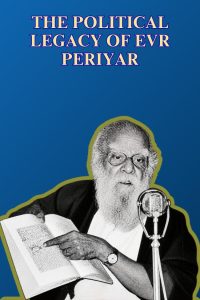
Periyar E.V. Ramaswamy is a leader of international repute and is hailed as a great thinker, reformer, revolutionary and humanist. The United Nations itself recognised this during his lifetime.
So any discussion on his sterling qualities and services to the oppressed people, victims of Brahminism, is ridiculous. Some Dalits under Brahminical influence have lately started branding Periyar as anti-Dalit. They should not be ungrateful to the extent of falsifying history itself. Dr. Ambedkar wanted his children to be sincere and truthful.
The present generation should know the history of their progress and the services and sacrifices of elders like Phule, Periyar, Babasaheb and Shyam Sunder.
Vaikom struggle: Periyar’s self-respect movement began in an aggressive way at Vaikom, in the present Kerala. It was on behalf of the Untouchable castes who were not allowed even to walk on a street right before a temple. Periyar rushed there and fought on their behalf.
This historic agitation led by Periyar attracted Muslim leader E.V.K. Abdulla and Christian leader Gorge Joseph. Gandhi, as a true Hindu, criticized Periyar for supporting the Untouchables. Sikhs came from Punjab and ran the free kitchen (langar). This will establish the truth of Periyar’s universal leadership.
Periyar was then arrested by the Trivancore state police and kept in prison for this agitation. Yet the agitation continued. Finally, the Untouchables won the right to walk on the road. This may not be a material gain, but a self-respect achievement for Untouchables. The agitation became famous as “Vaikom struggle”. Dr. Ambedkar wrote an Editorial about this historic achievement in his journal, Mooka Nayak.
Declaration to destroy Congress: The Congress, the original Brahmin party of India, passed a resolution in 1917 showing its concern for the welfare of Untouchables. M.K. Gandhi, the dictator of the Congress, claimed credit for this action of the Brahmin party. But the truth is Gandhi came to know about the British giving recognition to Untouchables and providing political rights based on the census of 1911, for which Prince Agha Khan was responsible.
From that day onwards, Congress started discussing social reforms in its sessions. But even such discussions were stopped when the Brahmins set fire to the Congress session pandal in Maharashtra. At the Madras session of the Congress, Periyar Ramaswamy, who was then an active worker of the Congress, forced a discussion on social problems, mainly Untouchability.
Rowdies engaged by Brahmins then dragged Periyar out of the pandal and thrashed him. Periyar declared on the spot that he would destroy the Congress in Tamil Nadu and he did it. The Congress is wiped out in Tamil Nadu.
Dr. Ambedkar respected Periyar: Dr. Ambedkar had great respect for Periyar and Periyar had respect for Dr. Ambedkar. It was Periyar who advised the organizers of Jat-Pat-Todak Mandal of Lahore, when they invited him to the conference, to invite Dr. Ambedkar, being a better person, well read, better informed and able to speak English.
Jat-Pat-Todak Mandal approached Dr. Ambedkar, who agreed and prepared a speech for the conference. But Gandhi planned his usual trick, which resulted in Dr. Ambedkar cancelling his engagement.
Later, Dr. Ambedkar got his speech published as a book, titled Annihilation of Caste.
Three greatest personalities: Some Dalit leaders are critical of Periyar just because he belonged to a Backward Caste. They also quote and misquote Dr. Ambedkar on the subject. They know only the title of this book. But they do not know the history behind this book.
Dr. Ambedkar always made it a point to meet Periyar when he visited Madras. One such visit was when Jinnah attended the Muslim League meeting at Madras. On this occasion, all the three greatest personalities of the day, Dr. Ambedkar, Jinnah and Periyar, met and discussed the Indian caste problem. A photo with these three taken during that meeting of the great statesmen is in my possession. Another important photo with me is of Periyar with the great Bheem Sena leader Shyam Sunder.
Birthday celebration in UP: Kanshi Ram is another great revolutionary of India. He organised the Bahujan Samaj Party which came to power in UP and celebrated Periyar’s birth anniversary.
Kanshi Ram knows who is who among the Bahujans. If Periyar had been anti-Dalit, as made out by some Dalits in Tamil Nadu, would India’s topmost Dalit leader praise Periyar? Similarly, our Editor has assigned the No.2 place to Periyar among the three greatest revolutionaries of “independent” India.
With all these facts, why do some Dalits call Periyar anti-Dalit? The mistake is not of Dalits but of the Backward Castes. It is easy to call it Brahminism.
The pity is the Backward Castes are the agents and foot-soldiers of Brahmins.
They ill-treated Dalits all over India, including Tamil Nadu, pushing Dalits to Islam at Meenakshi Puram 25 years ago. The BCs must mend their attitude towards Dalits, Muslims and Christians.
Dalits are duty bound to lead the entire Bahujan Samaj. That can be fulfilled only when BCs, at least the Most Backward Castes (MBC) like the barber, dhobi, potter, blacksmith etc., understand the importance of building Bahujan Samaj. Muslims and Christians also are distancing themselves from BCs. As an Ambedkarite, I call upon the BCs to join Dalits to fight Brahminism.
Periyar spent his whole life in this work for over half a century.