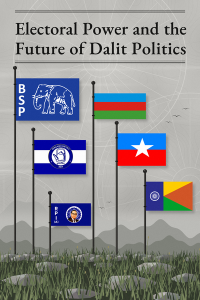
Electoral Power and the Future of Dalit Politics

Since February, a group of mostly lifelong BJP voters from the Brahmin community has been meeting in Lucknow to plan the party’s defeat in Uttar Pradesh. They have formed the Rashtriya Adhikar Morcha (RAM), led by former judicial officer Alankar Agnihotri, who resigned in February over the University Grants Commission’s proposed equity rules. Agnihotri has announced that RAM will contest 150 seats in the 2027 Assembly elections and possibly extend unconditional support to Mayawati’s Bahujan Samaj Party (BSP) in the remaining 253. The offer puts the BSP in an awkward position: a party established to challenge upper-caste dominance is being proposed as a vehicle for Brahmins disaffected with the BJP, and the proposal cuts against Mayawati’s stated preference for contesting elections independently.

In his speech “Two Serious Mistakes That Killed the Dalit Movement,” delivered at the BAMCEF Karnataka State Convention in Gulbarga on 22 November 2009, V. T. Rajshekar criticised the Dalit movement’s excessive concentration on electoral politics. The BSP, now courted by the community it was founded to oppose, shows where that concentration can lead.

On 29 January, the Supreme Court stayed the University Grants Commission’s Promotion of Equity in Higher Education Institutions Regulations, 2026, directing that the 2012 regulations remain in force while the legal challenge proceeds. The new rules followed a legal campaign initiated in 2019 for stronger protections against caste discrimination in higher education. Mayawati welcomed the stay, arguing that the UGC should have consulted all stakeholders and ensured adequate representation for upper-caste members on inquiry committees. Her position on the rules is close to Agnihotri’s own objection to them, which gives RAM one reason to look to the BSP.

Mayawati has spoken forcefully against caste discrimination when responding to particular incidents. On 14 August, she condemned the purification of a stage in Haldwani after Congress president Mallikarjun Kharge addressed a rally there, demanding action against those responsible. She also criticised RSS chief Mohan Bhagwat’s suggestion that beneficiaries who no longer need reservations should give them up. These interventions show that the BSP continues to invoke its anti-caste politics but has been notably absent from social movements that have defined the times.

Mayawati’s electoral strategy has increasingly centred on recovering upper-caste support. On her 70th birthday on 15 January, she said the BSP would contest elections independently, leaving open the possibility of future alliances if partners could transfer their votes to the party. She subsequently renewed her outreach to Brahmins, drawing on the BSP’s 2007 Uttar Pradesh victory, when it won 206 Assembly seats with 30.43 per cent of the vote. That coalition brought Brahmin voters into an electoral arrangement with Dalits under the slogan of Sarvajan politics. The strategy now faces a different political landscape. On 5 August, SP president Akhilesh Yadav said that the “P” in his PDA formula, originally standing for Pichhde, Dalit, Alpsankhyak (backward classes, Dalits and minorities), would also include Pandits. At the local level, however, Brahmin discontent with the BJP does not necessarily translate into support for the BSP. Brahmin voters distinguish their dissatisfaction with Narendra Modi from their views of Uttar Pradesh Chief Minister Yogi Adityanath. OBC and Scheduled Caste villagers described local Brahmin political dominance as a source of pressure on land and labour, including allegations that influential figures enabled below-minimum-wage payments and land seizures. The interests of Brahmin voters whom the BSP hopes to attract may therefore conflict with the demands of Dalit and OBC communities whose support the party also needs.

The BSP’s electoral decline has made the coalition issue more urgent. After the death of its lone Uttar Pradesh MLA, Uma Shankar Singh, on 5 August, the party was left without a representative in the state Assembly. It had already lost all its Lok Sabha seats in the 2024 general election, when its Uttar Pradesh vote share fell to 9.39 per cent, against the SP’s 33.59 per cent. Its organisational decisions have also exposed the concentration of authority around Mayawati. In September, she removed her nephew Akash Anand from his national convenor position and expelled him from the party, before appointing his younger brother Ishan to the post. After Akash apologised publicly on 2 October, Mayawati reinstated him and restored his position on 5 October. The repeated reversals have left senior party responsibilities dependent on Mayawati’s personal decisions. The BSP also failed to win a seat in the May 2026 Assembly elections in West Bengal, Tamil Nadu or Kerala, polling less than one per cent in each state. In Bihar’s 2025 Assembly election, it won one seat. Its response to the Special Intensive Revision of electoral rolls in Uttar Pradesh followed the same pattern of distance from other Opposition parties. The final roll, published on 10 April, contained 13.39 crore electors, down from 15.44 crore before the exercise; more than 2.04 crore names had been removed, while approximately 84 lakh were added during the claims-and-objections period. Mayawati called for more time to protect poor people and migrants from exclusion, but the BSP did not join the wider Opposition campaign against the revision. These developments point to a party whose electoral reach and organisational depth have contracted while its leadership remains committed to controlling its political direction independently. Rajshekar described this vulnerability in a movement that puts office ahead of institutions of its own.

Chandrashekhar Azad’s Aazad Samaj Party (Kanshi Ram) has pursued a different route, combining street mobilisation with electoral expansion. Azad first gained prominence through the Bhim Army, founded in 2015 to organise Dalit communities against caste discrimination and violence. His participation in protests against the Citizenship Amendment Act and National Register of Citizens, the 2020 Hathras case and other caste atrocities established him as a Dalit activist before he entered Parliament by winning the Nagina Lok Sabha seat in 2024 with 5.12 lakh votes. In July 2026, he announced plans for a political front outside both the BJP-led NDA and the INDIA bloc. His party subsequently named 45 constituency in-charges for the 2027 Uttar Pradesh Assembly elections: 18 from Scheduled Castes, 16 from OBCs, 10 Muslims and one Sikh. The composition signals an effort to build a wider Bahujan constituency. Mayawati has accused Chandrashekhar Azad of undermining the BSP and Bahujan unity, portraying him and other rival leaders as opportunists seeking political mileage from Dalit issues, while Azad has continued to raise issues concerning caste violence and the exclusion of marginalised voters. His trajectory shows how mobilisation outside electoral institutions can create a route into Parliament. Aazad Samaj Party must now turn Chandrashekhar Azad’s individual electoral presence into an enduring political organisation rooted in Dalit movements and capable of building a broader political base.

In Tamil Nadu, the Viduthalai Chiruthaigal Katchi (VCK), led by Thol Thirumavalavan, won two Assembly seats in the 2026 election as part of the DMK-led alliance. After Vijay’s Tamilaga Vettri Kazhagam (TVK) emerged as the single-largest party with 108 seats but fell short of a majority, reports citing VCK sources said the party had discussed seeking the deputy chief minister’s post for Thirumavalavan and cabinet positions for its legislators if it joined a TVK government. Thirumavalavan subsequently announced unconditional outside support for TVK, saying the aim was to prevent President’s Rule, while maintaining that VCK would remain in the DMK-led alliance and would not join the government. The shift from reported discussions over a share in power to support without government participation leaves VCK with a problem: how a Dalit party can translate its electoral presence into executive influence while preserving its independent political position.

In Maharashtra, Prakash Ambedkar’s Vanchit Bahujan Aghadi (VBA) has sought to rebuild its electoral position through alliances and legal challenges concerning voting rights. After winning no seats in the 2019 Maharashtra Assembly election or the 2024 Lok Sabha election, it allied with Congress for the January 2026 municipal elections but failed to win a seat in Mumbai’s Brihanmumbai Municipal Corporation or Nanded-Waghala; it won four seats in Latur. The party has also challenged Maharashtra’s Special Intensive Revision of electoral rolls. In October, the Bombay High Court deferred its hearing on a petition filed by two Mumbai residents, including VBA youth president Sagar Ramesh Gawai, after being told that related questions were before the Supreme Court. The petition sought safeguards against voter exclusion and an interim direction preventing deletions from the state’s rolls. Prakash Ambedkar has also urged Rahul Gandhi to bring opposition parties and organisations together to challenge the Election Commission’s process. Yet during the November 2024 Maharashtra Assembly election, he declared that the VBA would support whichever party or alliance could form the government, adding, “We will choose power!” This emphasis on access to power sits uneasily with his appeal for opposition unity around the electoral-roll issue. Rajshekar’s criticism of a movement that concentrates on office applies to this emphasis. If the VBA seeks to build an independent political force, its alliance strategy has to reconcile electoral bargaining with the causes it claims to represent.

Within the BJP-led NDA, Chirag Paswan and Jitan Ram Manjhi have clashed over how Scheduled Caste and Scheduled Tribe reservations should be distributed. On 29 August 2026, Paswan, the chief of the Lok Janshakti Party (Ram Vilas), demanded that Manjhi and his son, Bihar minister Santosh Kumar Suman, resign over their support for sub-classification and the creamy-layer principle. Manjhi, founder of the Hindustani Awam Morcha (Secular) and a member of the Musahar community, has argued that communities such as Musahars, Bhuiyas, Nats and Doms remain underrepresented and need a greater share of existing quotas. Paswan rejected sub-quotas, arguing that they would divide Dalits and weaken their collective position. In its August 2024 judgment in State of Punjab v. Davinder Singh, the Supreme Court permitted states to sub-classify SC and ST reservations on the basis of evidence of unequal representation.

Ramdas Athawale’s Republican Party of India (Athawale), another NDA ally, has called for any decision on sub-classification of Scheduled Caste reservations to follow the publication of caste census data. Athawale has argued that the population of individual SC communities should guide the distribution of Maharashtra’s 13 per cent quota, raising particular concerns about the Matang community. His position differs from Paswan’s opposition to sub-quotas. Athawale has also faced repeated disputes over the RPI(A)’s share of electoral opportunities within the BJP-led alliance. The BJP and Eknath Shinde-led Shiv Sena excluded the party from their seat-sharing agreement for the January 2026 Mumbai civic elections, prompting Athawale to accuse them of betraying the alliance; the RPI(A) subsequently fielded candidates independently in Mumbai. Ahead of the 2027 Uttar Pradesh Assembly elections, Athawale has demanded 25 seats for his party and said it would contest independently if an agreement with the BJP failed. His continued presence in the Union government has not secured his party a dependable share of electoral space, leaving it to negotiate its position with a much larger ally.

The fortunes of these parties unfold alongside a much wider field of Ambedkarite and anti-caste organising. At the University of Hyderabad, the Ambedkar Students’ Association (ASA) launched an indefinite relay hunger strike in May after the administration imposed a ₹5,000 fine on a student accused of assaulting and subjecting Dalit student Anuj Kumar to casteist abuse. ASA demanded the release of a fact-finding committee report and stronger disciplinary action, arguing that the punishment failed to address the seriousness of the allegations. Outside electoral politics, Dalit and Bahujan mobilisation has continued around the distribution of reservations, caste discrimination within institutions and access to land. In Maharashtra, Ambedkarite organisations representing 59 Scheduled Caste communities mobilised against the proposed sub-categorisation of SC reservations, demanding withdrawal of the Badar Committee report. In Bihar, the Aarakshan Badhao, Samvidhan Bachao Sangharsh Samiti marched in Patna to demand restoration of the 65% reservation quota struck down by the Patna High Court, alongside reservation in private-sector employment and government contracts. The All India Independent Scheduled Castes Association (AIISCA), led by Rahul Sonpimple, has taken the demand for private-sector reservation beyond individual states, announcing a nationwide campaign for reservation in private employment and private educational institutions. The issue of institutional accountability has also driven sustained mobilisation in Mumbai after IIT Bombay student Sahil Wakode’s death. AIISCA, Aamchi Padhai Aamchi Ladhai, the Progressive Students Union and the Samyak Vidyarthi Andolan have joined protests demanding an independent inquiry into his family’s allegations of caste discrimination and harassment. Activists formed a Justice for Sahil Joint Action Committee at Azad Maidan, taking the demand beyond the campus. Elsewhere, the Kula Vivaksha Vyatireka Porata Sangham and Dalit Shoshan Mukti Manch in Andhra Pradesh have mobilised over land rights and living conditions in Dalit settlements. Dalit Christians have organised around caste-based exclusion from state protections: on 10 August, organisations marked Black Day with protests demanding Scheduled Caste status. The Telangana Christian Joint Action Committee demonstrated at Jantar Mantar, while the Vellore Catholic Diocese SC/ST Committee, the CSI Church’s Vellore Diocese and the All Minorities Federation organised a protest involving more than 400 people in Vellore. These campaigns differ in their immediate demands, yet each has involved organised pressure on institutions and governments over decisions affecting Dalit and marginalised communities. Rajshekar asked for institutions of the community’s own; these campaigns mostly press existing ones.

The BSP’s decline and the relative irrelevance of Dalit parties more broadly sit alongside the continuing activity of anti-caste organisations, and the parties that have gained ground are those doing movement-style work. Together these point to a distinction between electoral strength and the capacity to organise politically. Electoral results show whether a party can win seats and exercise power, but they do not capture the ability of a movement to mobilise communities or force institutions to answer for caste discrimination. The BSP’s rise rested on an organisation that mobilised Dalit voters and brought other Bahujan communities into a wider political coalition. Its decline shows what happens when electoral strategy outlasts the organisational base that once sustained it. Azad, Thirumavalavan, Prakash Ambedkar and Athawale have pursued different routes to representation, from independent mobilisation to alliances with larger parties. Their trajectories however show the fragile possibilities of converting electoral presence into independent political power.

V. T. Rajshekar argued that electoral victories could not sustain a Bahujan movement without independent institutions and political education rooted in the community. The campaigns around reservations and caste discrimination suggest that social movements may offer greater scope for political change than electoral parties currently do. Dalit and anti-caste communities continue today to organise collectively and challenge the institutions that sustain caste, even as the future relationship between these movements and electoral politics remains unresolved.
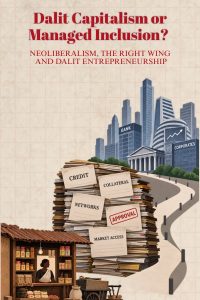
Dalit Capitalism or Managed Inclusion? Neoliberalism, the Right Wing and Dalit Entrepreneurship

Dr. Milind Kamble of the Dalit Indian Chamber of Commerce and Industry said in an interview, “Capital can break caste system… Market and money will defeat anti-capital Marx and Manu.”

His argument might seem attractive, but I disagree. Capital cannot break the caste system because the market is not casteless. It carries caste into every transaction that takes place before the consumer reaches the shop. Certainly, accumulation of capital can improve economic standing, especially among marginalised sections, but it absolutely will not defeat Manu or the caste system. Dr. Kamble is confusing individual economic mobility with the abolition of caste as a social and economic structure. His entrepreneurial agenda does not resolve the concerns that structure and constrain many lives. Who owns land? Who has collateral? Who can access networks? Who can survive a period without income? Who can get a loan without family wealth behind them? Who has the social connections to find suppliers, customers and contracts? And who is trusted when they walk into a bank, a business association or a potential partnership?

Although India, under the leadership of Dr. Manmohan Singh, entered a phase of economic reforms in 1991, opening its economy to liberalised and globalised economic spaces, the trajectory changed significantly since 2014. The post-2014 phase represents a particularly aggressive intensification of neoliberal policies combined with right-wing populist politics. This has manifested through the divestment of profitable stakes in publicly owned companies and their outright sale to private ownership. In post-2014 India, Dalits are being told, again and again, to become entrepreneurs. They are even invited into the market as borrowers, as start-up founders, as “self-made” men and women who can pull themselves up through grit and a bank loan. DICCI has given it a name, “Dalit Capitalism,” asserting that “caste and capital can never co-exist.” However, to assume that capital accumulation can dismantle caste is to ignore how contemporary markets articulate and weaponise pre-existing social hierarchies to maintain structural stratification.It produces hierarchical adverse inclusion, in which Dalits are brought into the market, yet the structures that keep them subordinate remain untouched. This inclusion works through a predatory sorting mechanism where the market invites Dalit actors as economic agents while it simultaneously locks them into asymmetric low-tier commercial arrangements. Such low margin supply roles cannot challenge the pre-existing monopoly of dominant caste. As a result, entrepreneurship functions less as a pathway to mobility and more as a mechanism that reproduces existing hierarchies. Only a small minority are able to move upward through episodic access to capital and networks.

The mix of neoliberal economic policy and right-wing Hindutva politics has reshaped Dalit entrepreneurial inclusion in three connected ways. First, it encourages Dalits to see themselves as entrepreneurial subjects without redistributing land, capital, or other assets. Second, it expands formal credit on paper while leaving caste-structured barriers like collateral, networks, documentation, and bias firmly in place. Third, it depoliticises caste inequality by wrapping it in the language of opportunity, merit and self-help. In this setting, credit and entrepreneurship schemes work less as tools of emancipation and more as mechanisms of managed inclusion within an order that remains deeply unequal.

There is a mutual relationship between right-wing politics and neoliberalism that produces a strong ideological hegemony. On one side, neoliberalism generates social and economic crises that produce grievances, job scarcity, and financial uncertainty, which right-wing populism mobilises politically. Populist politics reinforces neoliberalism by creating doubt and controversy around the causes of economic insecurity, while directing public attention towards cultural and political conflicts rather than the material failures of capitalism. Through this, it delegitimises progressive economic alternatives, framing structural challenges to the free market as corrupt, globalist, or anti-national threats. Pühringer and Ötsch (2018) conceptualised this as a loop that constructs a binary worldview, effectively reorganising societal conflicts by splitting them into two polarised groups. In India, those two groups are the Hindu majoritarian masses versus the progressive dissidents and minority outsiders. Under the Bharatiya Janata Party, a right-wing Hindutva government that fiercely encourages privatisation and entrepreneurship, it is crucial to understand exactly where Dalits stand in the political economic landscape of India. Because the state is pushing for Dalit entrepreneurship by reframing credit and start-ups as the ultimate pathways to empowerment, the populist discourse successfully depoliticises caste inequality, shifting the burden of survival from the state onto the isolated individual.

A central feature of India’s material economy is the unequal distribution of assets. Around 58.4% of rural Dalit households reportedly do not own agricultural land, while at the individual level, around 71% of Dalits work as landless agricultural labourers, cultivating land owned by the dominant caste. The concentration of landlessness is particularly severe in states such as Punjab, Bihar and Haryana, where more than 85% of Dalit households reportedly own no land. At the same time, under the neoliberal policy reforms by the BJP government, the public sector enterprises that historically provided secure jobs with SC/ST-focused affirmative action are being aggressively privatised, and Dalits are being shifted to informal employment. Dalits and Adivasis account for over 40% of seasonal migrants, despite making up just 25% of the total population. In India, short-term labour migration is seven times more common than permanent relocation, and this gap widens to 16 times for these specific communities. Furthermore, these workers are frequently forced into the most dangerous, physically demanding, and toxic jobs in the country.

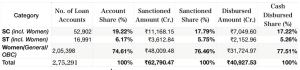
Over the years, the government has launched multiple schemes to provide credit through loans to SC/ST persons, focusing on entrepreneurial activities. For example, through Stand-Up India (2016), it aimed to provide loans of up to ₹ 1 crore to SC/ST and women entrepreneurs. National SC/ST Hubs were formed to give them market access, help with procurement, and training. A special credit-linked capital subsidy is also in place. However, official data presented by the Ministry of Finance compiled by SIDBI (Small Industries Development Bank of India) shows a contrasting view. While Stand-Up India has sanctioned over ₹ 62,000 crore in loans to around 2.75 lakh beneficiaries since 2016, only about 1/5th of these loans has reached SC/ST entrepreneurs with the majority going to general category women.

Table 1: Stand-Up India disbursements by social category, based on Department of Financial Services data.

From 2016 to 2025, around 22.49% of all money disbursed under the Stand-Up India scheme went to SC and ST entrepreneurs together. There are also high documentation requirements and margin requirements of up to 25%. This clearly indicates that even when formal credit is available, structural barriers like collateral, networks, and bureaucratic delays filter most vulnerable Dalit applicants out. Because of the lack of traditional collateral, 82% of Dalit borrowers rely on informal lenders and high-interest borrowing parties.

Furthermore, MUDRA Bank (Micro Units Development and Refinance Agency Bank), formally established in 2015, is a prominent credit scheme of the incumbent government, but the data exposes the structural limitations of the institution’s reality that the government does not want to focus on. Around 51% of MUDRA accounts belong to SC/ST/OBC categories. However, the way these accounts are divided is staggering. Over 70% to 80% of all MUDRA loans fall under the “Shishu” category (under ₹50,000). A loan of ₹30,000 or ₹40,000 cannot build a competitive, wealth-generating start-up. It can only buy a fruit cart, a sewing machine, or open a tiny roadside tea stall. Effectively, such amounts are more suited to small-scale livelihood activities than to building a competitive, wealth-generating enterprise. The state celebrating “start-up culture” is actually promoting necessity entrepreneurship, a term for entrepreneurship born out of an absolute absence of alternative employment options. A study by Jarwal and Kahal (2022) similarly finds that the growth of Dalit entrepreneurship as an impact of liberalisation policy can be positive; however, this has resulted in a proliferation of very small business units, which are mainly engaged in survival activities. The study further states that most Dalit-owned enterprises were established out of the necessity to survive. This is because their owners did not get employment opportunities, and had they received employment opportunities, they would have been earning more than what they are currently earning through necessity entrepreneurship. This necessity entrepreneurship keeps people alive at a subsistence level, but it does not generate institutional capital or challenge upper-caste corporate monopolies. According to official Economic Census Data analysed by the Economic and Political Weekly (2025), 89% of rural and 72% of urban Dalit-owned enterprises are OAEs (Own Account Enterprises). Most do not grow into larger firms; they function primarily as a substitute for daily wage employment and household income to keep the family fed. For many Dalit entrepreneurs, entry into the entrepreneurial market is shaped less by the pursuit of a profitable market opportunity than by the limited availability of secure employment. Entrepreneurship therefore becomes a strategy for economic survival rather than a straightforward pathway to wealth creation. Thus, as scholars have already shown, market inclusion alone is not an explanation of Dalit economic empowerment.

Such divergent scenarios between governmental schemes and Dalit economic conditions make the market an unequal playing field. Along with the unequal access to financial capital, there is also a profound social imbalance: private capital in India does not operate through a socially neutral field, as a mathematical principle unaffected by social forces. Its allocation is shaped by historically embedded caste structures and institutions, concentrated among predominantly Baniya and other mercantile castes. Avichal Dhiwar, founder of 20th March Venture Pvt Ltd, said in an interview, “Despite having complete paperwork, we faced a lot of problems getting loans from banks. They made it so tough for us that we eventually realised that they had no intention of extending us any loan.” This clearly shows the need for a mandatory public credit system to prevent systemic market exclusion of marginalised entrepreneurs. However, even necessary government loans and other forms of financial assistance reach only 10% of Scheduled Caste (SC) units, clearly indicating credit starvation. Furthermore, traditional business chambers, such as FICCI and CII, and trade networks have historically been dominated by these mercantile castes, who hold a monopoly over market trust and proudly flaunt it. When massive corporate monopolies run into billions of rupees in bad loans (Non-Performing Assets), the state steps in to bail them out, absorbing the damage; here, corporate risk is socialised. However, when a marginalised Dalit entrepreneur seeks a micro-loan, the state forces them to take on immense personal credit risk in a volatile market without any state security. Rather than providing security against the risks generated by market participation, right-wing neoliberal policy increasingly encourages historically excluded groups to become market participants and assume responsibility for navigating those risks themselves. For marginalised communities such a market means “competition among wolves and lambs“, as mentioned by Dr. Ambedkar in States and Minorities (1947). As Fischer (2020) argues, social policy under neoliberal restructuring does not necessarily remove structural inequality; instead, policies designed to promote inclusion can produce what he describes as hierarchical or adverse forms of inclusion, in which marginalised populations are incorporated into markets while remaining disadvantaged within them.

For Ambedkar, this distinction was fundamental. Economic reform could not be separated from social reform. Opening the market does not create equality when the social relations governing access to that market remain unequal. Credit can provide an opportunity to enter the market, but it also creates an obligation to repay within an environment where access to assets, networks and stable markets remains highly unequal. Without control over credit, markets will become a field of monopoly and exploitation. An increase in privatisation also results in the government abdicating its responsibility to safeguard its citizens.

In Annihilation of Caste (1936), Dr. Ambedkar said,“The problem of the Untouchables is a unique problem… You cannot have economic reform unless you pursue social reform. … The division of labour under the caste system is not a mere division of labour. It is a division of labourers.” In the private informal sector, Dalits often work as low-tier subcontractors for larger firms, which is not empowerment in any politically, socially, or economically meaningful sense. Here, inclusion into the market happens without dismantling the structural barriers, such as caste networks, which keep Dalit businesses at the periphery. Therefore, targeted entrepreneurial policies under the right-wing government does not dismantle caste-based economic exclusion, but primarily facilitates Dalit participation within markets whose underlying structures remain unequal. The right-wing government is therefore simultaneously promoting Dalit entrepreneurship while leaving many of the structural conditions that constrain Dalit entrepreneurship intact.

What can be done?

Rejecting market participation because caste structures already shape the market and the inability of the government to safeguard rights is not a feasible solution. While under neoliberalism, individual entrepreneurship can function as a form of economic mobility; enterprise can be re-signified as a potent tool for collective social emancipation. Crucially, this social emancipation is not achieved through isolated individuals taking on personal liabilities in a structurally unequal market. Rather, it becomes possible only when market participation is backed by stronger public regulation of credit markets and corporate concentration, along with the development of independent, community-owned institutional capacities.

The government is meant to play a crucial role in enforcing existing policies requiring corporations, such as the policy requiring public sector undertakings (PSUs) to procure 4% of their supplies from SC/ST-owned micro and small enterprises, and entrepreneurs. They are also expected to provide concessional loans through the Venture Capital Fund for Scheduled Castes, etc. However, trusting the right-wing neoliberal regime to implement these policies sincerely or effectively is not realistic. Doing so would directly contradict its ideological alliance with corporate capital. Therefore, there is a need for counter-hegemonic power, where Dalit communities stop acting merely as scattered voters or isolated market actors and instead use their collective leverage to disrupt the system. This can be done by moving from individual credit risk to structural social democracy and by aggregating thousands of small Dalit producers into a large cooperative, so they gain bargaining power to compete against corporate monopolies. Sustained institutional action and litigation can also be used to document state non-compliance with procurement obligations and seek appropriate judicial remedies, including through PILs, while RTIs can be used to obtain the relevant records.

Finally, the Dalit community must construct its own autonomous institutional capacity to provide Dalit entrepreneurs with finance, information, mentorship and bargaining power. It will be a community-led ecosystem that integrates community-owned credit cooperatives, independent capital funds and digital business directories that pool resources to guarantee internal markets. These institutions would be unlike DICCI, which operates primarily as a networking hub within the existing structures of caste capitalism.

Building autonomous Dalit institutions does not absolve the state of its responsibility to safeguard rights and provide social security. Micro-loans alone cannot produce emancipation if they merely manage poverty without changing the conditions under which Dalits participate in the market.


Mrunal Madhuri Milind Dupte is a development economics researcher, anti-caste writer and public speaker working on inequality, Dalit and Buddhist economics.

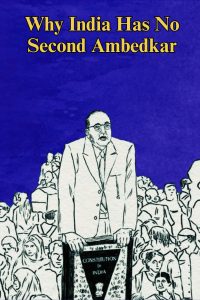
Why India Has No Second Ambedkar

Archival Note

Published in Dalit Voice (Vol. 1, Issue No. 17, 16 June 1982), this essay asks why India has failed to produce intellectuals who can challenge the ruling order rather than serve it. Rajshekar treats intellectual life as a political question, arguing that knowledge has little value when those who possess it refuse to confront power.

The essay places this argument alongside Dr. B.R. Ambedkar’s critique of the Brahminical character of India’s intellectual class. Rajshekar argues that when the intellectual class is tied to caste interests, it becomes an obstacle to the destruction of caste. He also attacks the pressures that push intellectuals towards careers, awards, money and proximity to power, while dissenters are branded as dangerous or “controversial”.

The essay then asks why India did not produce another Ambedkar after independence. Rajshekar connects this to the loss of the limited space he believed Ambedkar had found under British rule, arguing that Dalits and other oppressed communities were left without protection from the ruling order after independence. The essay’s central question is therefore about the political purpose of intellectual life: what happens to a society when those capable of challenging its dominant ideas choose accommodation instead?


The Role of Intellectuals in Society

Every society, every country in the world is shaped and led mainly by its intellectuals. All those who are remembered by history are mostly intellectuals. An intellectual may not get instant recognition by society when alive, but in course of time the person’s greatness will be recognised and recorded on the pages of history. Because an intellectual and intellectual alone can help bring about socio-economic changes.

The Buddha, Plato, Marx, Rousseau, Lenin, Abraham Lincoln, Maxim Gorky, Bernard Shaw, Mao, Thiruvallavar, Mahatma Phule were all great intellectuals. It is intellectuals who not only think but make others think.

After Dr. B. R. Ambedkar, M. N. Roy, Periyar E. V. Ramaswamy and Ram Manohar Lohia, we have hardly produced any intellectual giants in India. India’s Ruling Class has been systematically corrupting any up-and-coming intellectual, and if anyone dares to defy, he is mercilessly crushed. That is why rarely one wants to show originality, innovation. So much so, India has gone into total intellectual bankruptcy.

The very fact that India has not received a single Nobel Prize after it became independent proves that we are a country of mediocre dwarfs. But we are never tired of boasting that we have the second largest scientific manpower in the whole world. If so, what are they doing? Why not a single one has made an international mark?

The one agricultural scientist who received the Magsaysay Award was later found to have got it after making a false claim. But even this man has now taken up a cushy job outside India. This is the disease with our intellectuals. One social scientist, considered very distinguished, is seldom in India and even when at home never rubs the ruling class lest it may upset his lucrative income. Scientists like Khurana have settled down in the USA.

All this is because our society and our value system do not believe in encouraging and promoting intellectuals. India’s Ruling Class wants to make its people surrender their judgement to it. Every intellectual is a suspect. It looks upon him as a source of trouble.

Some of the finest budding, blooming flowers of our society were shot dead, dubbing them as Naxalites. Any person who does not fall in line and conform to the established thinking is considered a threat to society. Dissent is disliked, nay, dangerous. Truth should not be spoken. And those who speak the truth will be branded as “controversial” persons.

Any number of organisations, both govt. and non-govt., are set up to watch and weed out such “dangerous” persons. Innumerable State and private awards are instituted to win over any brilliant writer, scholar, to pocket if not corrupt him.

Courage is an essential prerequisite to become an intellectual. He has to suffer and sacrifice, pay for his commitment. That is why intellectuals and intellectuals alone can lead a society or a movement. An intellectual can lead as well as mislead. But in India, very often our intellectuals have been only misleading the society.

Nobody has painted such an Indian situation better than Dr. B. R. Ambedkar, and things have hardly changed since he wrote it:

“Whether you accept the theory of the great man as the maker of history or whether you do not, this much you will have to concede that in every country the intellectual class is the most influential class, if not the governing class. The intellectual class is the class which can foresee, it is the class which can advise and give lead. In no country does the mass of the people live the life of intelligent thought and action. It is largely imitative and follows the intellectual class.

There is no exaggeration in saying that the entire destiny of a country depends upon its Intellectual class. If the intellectual class is honest, independent and disinterested, it can be trusted to take the initiative and give a proper lead when a crisis arises.

It is true that intellect by itself is no virtue. It is only a means, and the use of means depends upon the ends which an intellectual person pursues. An intellectual man can be a good man but he can easily be a rogue. Similarly, an intellectual class may be a band of high-souled persons, ready to help, ready to emancipate erring humanity, or it may easily be a gang of crooks or a body of advocates of a narrow clique from which it draws its support.

You may think it a pity that the intellectual class in India is simply another name for the Brahmin caste. You may regret that the two are one, that the existence of the intellectual class should be bound with one single caste, that this intellectual class should share the interest & the aspirations of that Brahmin caste, which has regarded itself the custodian of interest of that caste, rather than of the interests of the country.

All this may be very regrettable. But the fact remains that the Brahmins form the intellectual class of the Hindus. It is not only an intellectual class but it is a class which is held in great reverence by the rest of the Hindus. The Hindus are taught that the Brahmins are Bhudevas (gods on earth). The Hindus are taught that Brahmins alone can be their teacher. Varnaram Brahmano Guru. Manu says, “If it be asked how it should be with respect to points of the Dharma which have not been specially mentioned, the answer is that which Brahmins who are Shishthas propound shall doubtless have legal force.”

When such an intellectual class, which holds the rest of the community in its grip, is opposed to the reform of Caste, the chances of success in a movement for break-up of the Caste System appear to me very, very remote.”

A film actor like Amitabh Bachchan or actress like Hema Malini may have millions of fans, but the glamour is temporary. The moment the youth fades, the star sinks. A cricketer or sportsman is adored till his capacity lasts. A wrestler, boxer or a King Kong will be feared until his body strength stays.

A politician like Indira Gandhi or Reagan is adored until the person is in power. Remember, people used to avoid Indira Gandhi like plague when she was defeated by the Janata. Those with money come and go. No Tata or Birla is remembered by history. A beauty queen is glorified till her skin fades.

There is nothing permanent with stars, sportsmen, body-builders, political personalities or wealthy tycoons. But that is not the case with an intellectual. He is respected not only in his lifetime but even after that.

Kalidasa was simply a poet under King Vikramaditya, but the king’s name has faded, but not that of Kalidasa, India’s greatest Sanskrit writer. Sometimes an intellectual is respected and recognised more after his death. Karl Marx’s name will be there as long as history is there. So too Plato, Jesus Christ, Mohamed Paigambar, Lenin, Mao, Martin Luther King.

Progress of any country depends only on its intellectuals. They alone can lead, but in India, alas, our intellectuals have been only misleading the society because they have been impotent and corrupt. That is why they compromise.

Look at the courage of J. B. S. Haldane. He subjected himself to great physical pain by himself becoming a guinea pig of his experiments. Have we produced a scientist of his calibre?

Our scientists are spending their time not in laboratories but in air-conditioned offices, busy pushing files. Intellectuals of India have not given evidence of their courage, their independence of thought and conviction, which are the indices to judge an intellectual.

They are not courageous, because they are so preoccupied with selfish interests. That is why they migrate to foreign countries in search of cushy jobs. Prime Minister Indira Gandhi on June 3 is reported to have expressed concern over “brain drain of scientific talent.” But this is not the first time she and other top leaders are expressing such a concern.

What is the use of a brain that allows itself to be drained? Better not have such brains. What we want is brains with hearts, and such brains will rarely allow itself to be drained. Heartless brains are more dangerous than brainless hearts. Therefore, let the heartless brains go. India will in no way become poorer.

A true intellectual will not sell himself. He can never be bought. He can never seek power and ambition. He will speak the truth, come what may, even at the cost of his life.

The evil has triumphed in India and the country is drifting because our intellectuals do not speak up. So much so, the country has grown sick and its sickness is affecting the outside world as well. But our intellectuals are unperturbed. To them, their caste and cash is more important than the eternal pursuit of truth.

What is the use of learning and knowledge when it does not bring cash or power? Popularity does not depend upon one’s ability but other factors. “Success in life” depends not on learning but on bank balance. In such a society, what use is learning or intellectual pursuits?

Intellectuals are laughed at, despised. Why should we strain the brain when money can be made without it? This is India today.

If our intellectuals are corrupt and spineless, the masses are dumb, deaf and blind because of poverty and illiteracy. The latter are illiterate because they are poor. When they are preoccupied all the time in an endless battle of the belly, where is the time for them to think, even if thinking is possible?

If this is the position of the poorest, what about the educated, employed people who come from this very same revolutionary section, Dalits and other persecuted minorities? The tragedy with this section is they have become easy-going, pleasure-seeking. Not only that. A considerable number of them, particularly the educated Untouchables, hide their identity and turn into bumlickers.

Yes, there are a tiny section of conscientious people among them who are angry. Who wants to rebel?

“The world owes much to rebels who would dare to argue in the face of the pontiff and insist that he is not infallible. I don’t care for the credit which every progressive society must give to its rebels.” (Dr. B. R. Ambedkar, preface to second edition of Annihilation of Caste.)

Ambedkar, however, lived up to the definition of a rebel, an intellectual giant. But such of the rebels are spotted out and finished at the very initial stage. Those who have managed to escape and build up their leadership are recruited by the ever-watchful political parties.

So there is an all-round famine. No ruling class will produce a revolutionary. On the other hand, the revolutionary section is starved to submission by the ruling class.

This answers the oft-repeated question: “Why India has not produced a second Ambedkar?”

Babasaheb lived a major part of his life when India was under the British, who were benevolent rulers. Not only they gave us education, denied to us by Brahmins, but even gave us modern, Western knowledge.

Not only that. If there was any “freedom struggle” and some leaders like Gandhi and Nehru were able to fight the British, it was because of the knowledge they gained from the very British education and the encouragement they gave to fight for liberty and fraternity.

But for the British rule, which in fact meant a Christian rule, India would not have been what it is today. So Ambedkar, despite his open criticism of the British Government, got all the encouragement from the British.

Nobody criticised the British right on their face as Ambedkar did. They gave him all the facilities and also protected him against his enemies. They gave all-out encouragement and built up his leadership.

Once the British were out, Dalits & the persecuted minorities of India had none to protect them. They were virtually thrown to wolves. The independence that India got on Aug. 15, 1947 was the independence given to the high castes to exploit, which they could not do earlier so freely.

The lambs are bound and bundled and handed to wolves on a silver platter. That is the reason why after independence India did not get a second Ambedkar.

No honest, dedicated leadership is tolerated by these ever-watchful headhunters. This is the heinous role played by India’s intellectual class.

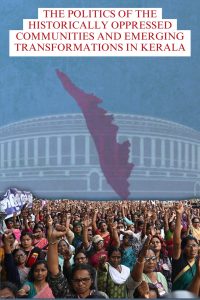
The Politics of the Historically Oppressed Communities and Emerging Transformations in Kerala

Introduction

The recent election campaigns and electoral outcomes in Kerala reveal an important shift in the political economy of the state. Historically oppressed communities, particularly Dalits, Adivasis, Queer people, coastal communities and plantation labour populations, are increasingly reshaping democratic discourse through political responses to unequal development, land alienation, labour precarity, ecological vulnerability and exclusion from institutional power. Kerala’s development model has long been celebrated for its welfare system, literacy and public health achievements. Yet beneath this progressive image, structural inequalities around caste, land ownership, labour relations and representation persisted. The recent elections indicate that the historically oppressed communities are no longer willing to remain silent participants within larger ideological coalitions and are instead asserting independent political agency. A key feature of this shift is the emergence of intersectional solidarity linking caste, labour, ecology, gender, climate vulnerability and democratic representation. The growing assertion of Dalit and Adivasi leadership is therefore not merely symbolic identity politics, but also rooted in struggles over land, labour, rehabilitation, environmental governance and access to state power.


Decline of the Left in Kerala and the Crisis of the “Casteless” Narrative

One of the most significant political developments in Kerala is the visible decline of the CPM and the broader Left among sections of historically oppressed communities. The Left historically built legitimacy through class politics, labour struggles, land reforms and welfare governance. However, many Dalit and Adivasi intellectuals increasingly argue that Left politics failed to adequately confront the persistence of caste within Kerala society. The long-standing “casteless Kerala” narrative often invisibilized continuing inequalities in land ownership, institutional representation, educational access and social dignity. The political posturing around “castelessness,” including within universal welfare and “zero poverty” narratives, was increasingly criticized for masking structural caste inequalities rather than confronting them. This critique intensified further with the Left government’s endorsement of Economically Weaker Sections (EWS) reservation in Kerala. Many Dalit and Adivasi activists viewed this as an ideological shift that diluted the structural basis of caste-based reservation by reframing affirmative action through economic criteria.

Within Dalit intellectual circles, this was interpreted as evidence that the Left was increasingly accommodating upper-caste anxieties and middle-class aspirations rather than deepening anti-caste politics. The implications were both political and ideological. Historically oppressed communities increasingly expect political frameworks that directly address caste, land inequality, ecological injustice and democratic representation instead of subsuming them entirely within class-based narratives. The decline of older ideological certainties has also accelerated the emergence of intersectional solidarities among communities confronting different forms of structural exclusion.


Open Political Assertion by Dalit and Adivasi Leadership

A defining feature of the current political moment is that Dalit and Adivasi leadership in Kerala has increasingly begun to openly assert political positions in the public sphere. Discussions around leaders such as Sunny M. Kapicadu, C. K. Janu, and Manikuttan as potential or symbolic candidates in Kerala elections reflected an important democratic shift. The significance of these discussions lay not only in electoral arithmetic, but also in the broader recognition that historically oppressed communities now expect direct political participation and negotiated representation. Similarly, public declarations of support for the UDF by intellectuals and activists representing 52 organisations and networks, including the press conferences of Geethanandan and Ambujakshan, reflected a new political culture. This demonstrated that the leaders representing the historically oppressed communities were increasingly willing to negotiate alliances publicly.

This marks a departure from older political expectations, where historically oppressed communities were often expected to remain within broader secular or class-based coalitions without independently articulating political positions. Increasingly, intersectional solidarity is becoming the basis for new political alliances and democratic negotiations in Kerala.


Intellectual Assertion and Intersectional Solidarity

The recent transformations in Kerala cannot be understood only through elections. The state has also witnessed the rise of a strong generation of Dalit and Adivasi intellectuals, writers, filmmakers, journalists and public scholars who have reshaped democratic discourse. Intellectuals such as Sunny M. Kapicadu have consistently challenged caste invisibilization within Kerala’s progressive discourse while raising questions of constitutional morality, burial rights, land inequality and dignity. C. K. Janu’s long-standing struggles around Adivasi land rights and displacement continue to shape debates on indigenous justice.

Public intellectuals and scholars, including Dinu Veyil, Dhanya Raman, Rekha Raj, Vinil Paul, Syamkumar, Malavika Binny and many others, have contributed through academic research, anti-caste writing, feminist critique and public engagement. Mainstream media interventions by Rejimon Kuttappan, literary contributions by Dalit and Adivasi poets and writers, including Vedan and cinematic interventions by Dr. Biju, Mrudula Devi, Vinayakan and Leela Santhosh and many more, show how questions of caste, labour, ecological vulnerability and democratic exclusion are increasingly entering Kerala’s public sphere through multiple platforms. One important political framework emerging from these interventions is intersectional solidarity.

More than a slogan, intersectional solidarity is increasingly becoming a political formation through which historically oppressed communities are building collective democratic assertion across caste, labour, gender, ecological and livelihood struggles. Dalit, Adivasi, coastal, feminist, labour and climate-vulnerable communities are increasingly recognizing shared experiences of exclusion while also acknowledging the specificity of caste oppression. Grassroots women leaders such as Gomathi Akka, representing plantation labour women from Idukki; Maglin Philomina, from the fishing community in Thiruvananthapuram; and Ammini K, Adivasi women leader from Wayanad reflect this transformation. Their experiences reveal the intersection of caste, labour exploitation, gender inequality, climate vulnerability and livelihood insecurity. Similarly, the 266-day protest by ASHA workers in Kerala reflected growing anger over low wages and the contradictions within the state’s celebrated public health model, helping build solidarities that extended beyond conventional political and social camps.

The emergence of intersectional solidarity has also been shaped by institutional struggles and public resistance against caste oppression within Kerala’s educational and cultural spaces. Protests and mobilizations around caste discrimination at the K. R. Narayanan National Institute of Visual Science and Arts, caste exclusion within campuses and universities, atrocities against historically oppressed communities and allegations of extrajudicial aggression have contributed to a broader political consciousness among youth and social movements. Historically oppressed communities increasingly responded through protests, demonstrations, public campaigns and collective resistance. These struggles helped make caste violence, institutional discrimination and state accountability central concerns within Kerala’s democratic discourse.


Elections, Representation and the Future of Kerala Politics

The recent elections also revealed a deeper crisis within Kerala’s traditional bipolar political structure. The BJP’s growing vote share, reportedly reaching around 15.18% in certain contexts, reflects not only ideological polarization but also the fragmentation of older welfare-based political coalitions. Economic insecurity, youth unemployment, migration anxieties, agrarian distress and dissatisfaction with established political structures have created conditions for alternative political mobilizations. Historically oppressed communities are no longer electorally peripheral; they are becoming strategically central to Kerala’s political future.

These shifts have also complicated the UDF’s traditional social base, historically associated with sections of upper-caste and Christian communities. As the BJP attempts to expand its influence within these constituencies, the UDF is increasingly being positioned as a broader anti-BJP coalition at the state level, particularly because of the continued presence of the Muslim League within the alliance. For many supporters, this regional electoral arithmetic is also tied to a larger national calculation that strengthening the Congress-led opposition within state legislatures remains necessary to counter the BJP nationally.

At the same time, questions of representation have become increasingly important in the context of the formation of the UDF ministry. The inclusion of three Dalit MLAs as ministers is viewed by many as politically significant because it reflects growing pressure from historically oppressed communities for meaningful participation in governance and institutional power. It also suggests that mainstream political formations increasingly recognize the electoral and political importance of Dalit assertion within Kerala’s changing democratic landscape. However, the continued absence of Adivasi representation within the ministry remains deeply disappointing. In a state where Adivasi communities continue to face land insecurity, displacement, ecological vulnerability and inadequate rehabilitation, the lack of ministerial representation reinforces the long-standing invisibilization of indigenous communities within institutional power.

This contradiction reveals a deeper political economy reality within Kerala society. As historically oppressed communities increasingly build intersectional solidarities and engage more directly with questions of governance, development, representation and resource distribution, dominant social and political interests increasingly perceive this emerging unity as a challenge to existing power structures. The growing assertion of Dalit, Adivasi, coastal, plantation labour and other historically oppressed communities is therefore not merely an electoral development. It is increasingly shaped through solidarities across communities that were historically treated as separate social and political constituencies. This reflects a deeper democratization of political participation, where historically excluded communities are demanding a role in shaping policy, development priorities and governance itself. The central political question facing Kerala today is whether democratic institutions are capable of moving beyond symbolic inclusion toward structural participation and justice.


Conclusion

The recent electoral shifts in Kerala represent more than temporary political dissatisfaction. They reflect a deeper restructuring of democratic consciousness within the state’s political economy. Historically oppressed communities are engaging with politics through questions of land, labour, ecology, dignity, climate justice, rehabilitation and democratic participation, rather than functioning as permanent vote banks for any political formation. The growing visibility of Dalit and Adivasi intellectuals, grassroots leaders, journalists, filmmakers and activists reflects how historically oppressed communities are producing their own political narratives instead of depending on representation through dominant structures.

The future of Kerala politics may depend on how political parties respond to demands emerging from historically oppressed communities. The consolidation of intersectional solidarity among these communities may become one of the defining political developments shaping Kerala’s democratic future. What is unfolding in Kerala is therefore not simply a shift in voting behaviour. It represents the emergence of a new democratic phase in which historically oppressed communities are actively reshaping the political economy of the state.


Jinu Sam Jacob belongs to the Dalit community and is a social development practitioner with 18 years of experience working on human rights, climate justice, governance, urban poverty within and outside India. He has worked with organizations including Plan International, Save the Children, CRY and IIHS. Currently, he is based out of Bengaluru and working as Consultant for development Organisations, CSRs and Philanthropists. He is co-ordinating Alliance of Climate Frontline Communities and engaging in international advocacy with UNFCCC. He is also an advisor for the South Asian Sanitary Labour Network.